
6 months leaves little slack, so the plan comes down to how fast you can decide: the list here runs from save-the-dates and invitations to dresses and suits that need fittings, plus the wedding party, favors and the habits (flexibility, quick decisions, handing off tasks) that keep it all moving.
Start with whatever takes someone else the longest to finish, which means the dress or suit and the invitations go ahead of favors, and let the rest bend around them.
A date like 09.09.2027 on a heart-shaped card can go out the same afternoon, but a gown cannot.
1. Send Save-the-Dates

A save-the-date on a six-month clock does one job: it tells guests to hold the day before anything else claims it. The design can be as simple as a heart-shaped card with a date in numerals, like 09.09.2027, plus your names.
Mail your save-the-dates once the venue is booked and the date is set, since until then the date isn’t really firm.
Email or text costs nothing in postage, which helps a tight budget, and a digital card can go out the same afternoon you finish it.
Keep the details to names, date and location, and let the invitation carry the rest.
2. Wedding Dresses and Suits
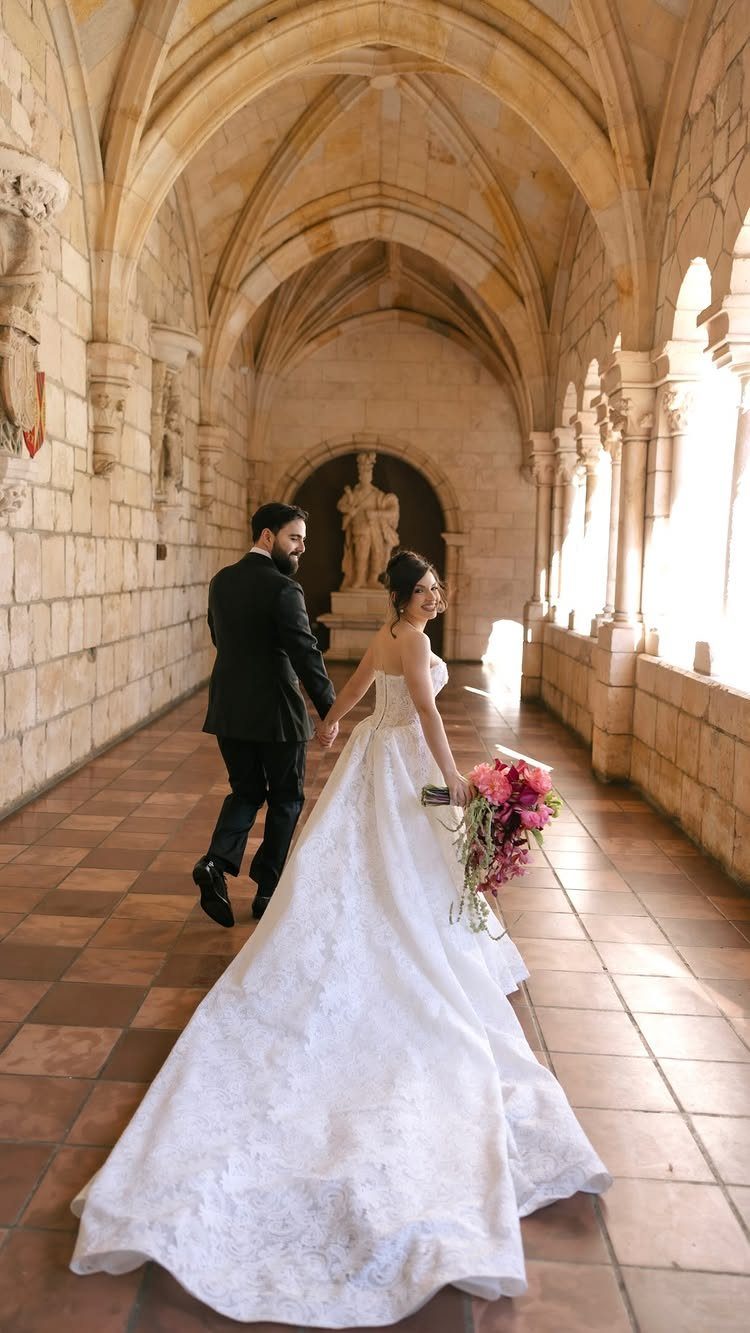
Order the dress first, because lace gowns and tailored suits both need fittings, and a short engagement leaves little room for them. I would start with the dress and book the suit right after.
Decide on a silhouette before you shop. If a gown needs alterations, ask how long they take and plan around that answer.
A suit can be bought off the rack and tailored, or rented, and both usually cost less than a custom order. Choose the one that fits your number.
3. Wedding Invitations
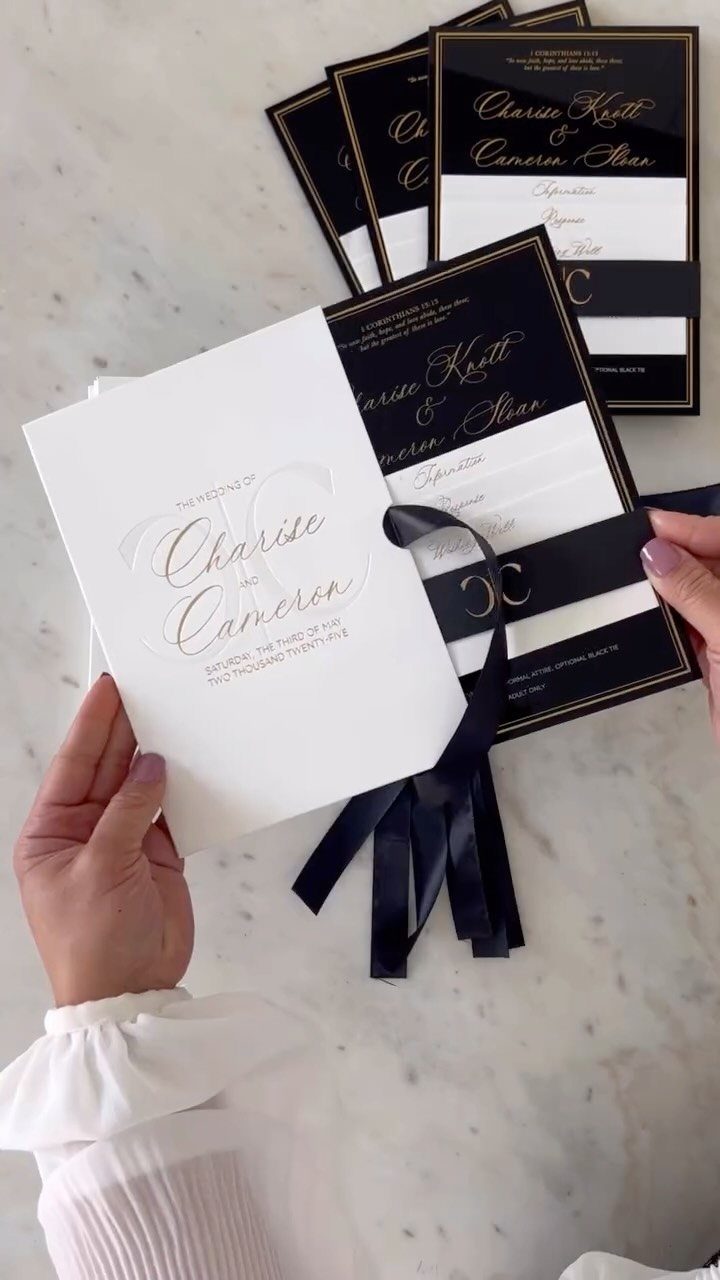
Gold script on white with black ribbon is a lovely suite, but each extra layer adds printing cost and assembly time.
Keep the invitation to a single card, and skip any piece you would have to tie or assemble by hand.
Print the names and date, then list the venue, the time and how to reply. Proof every name and number before the order goes in, since a reprint costs more than the proofreading.
Mail them on time, and give guests a firm reply-by date so your headcount settles early.
4. Wedding Party

Pick your wedding party early, since these people are the ones who will help you plan. I would keep it small: fewer people means fewer outfits to coordinate and fewer opinions to manage.
Matching robes, like satin pink and white ones, make an easy gift for getting-ready photos, and they cost a fraction of what a custom set of anything runs.
Ask in person or by call, and tell each person what you expect from them before they say yes.
5. Order Wedding Favors
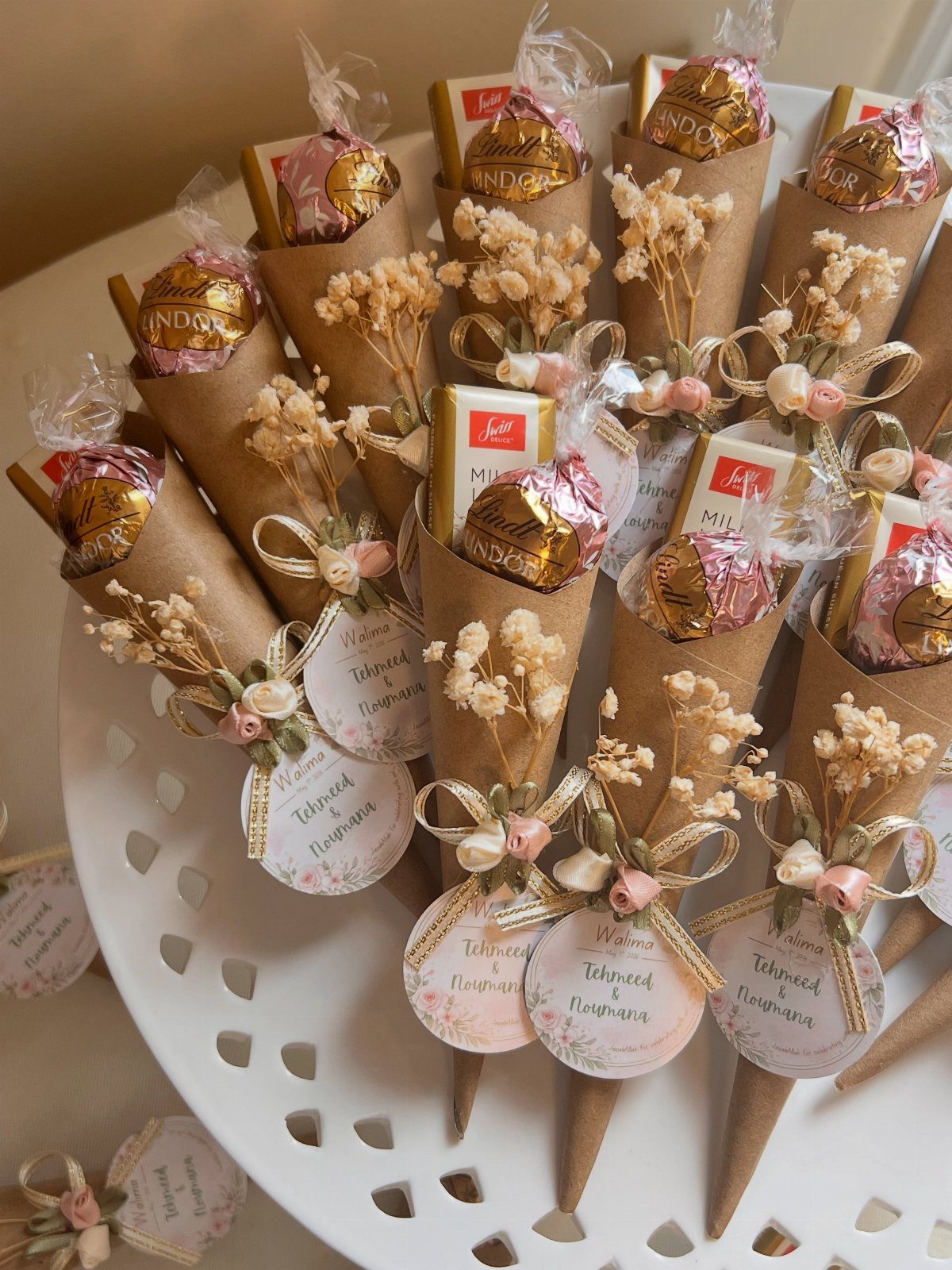
Favors are the first thing I would cut if the budget gets tight, and the last thing I would cut if I wanted guests to remember the day.
Order the cones and tags early, then fill them yourself with helpers a few days before the wedding. Count your confirmed guests first, so you buy only what you need.
Set them on a tray by the door or at each seat.
Flexibility in Planning
Your first-choice date is the one most likely to be gone, so decide now which parts of the plan can bend. Midweek and off-season dates open up venues and vendors that a peak Saturday won’t.
Make a short list of backups for each big booking: a few venues, a florist to call if the first one falls through, a photographer who can step in.
When the top pick says no, you move to the next name the same day instead of starting over.
A smaller trade is easy to forgive.
A shorter wait, less time to overthink and an earlier start on married life make up for a lot, and I would rather you protect the few things that truly matter to you and let the rest flex.
Decision-making Speed
Set a decision deadline for every task and treat it as firm. On a short timeline, a week spent weighing two nearly identical options costs more than picking the slightly worse one.
Once you choose, stop reopening the question. Scrolling through other florists after you have signed with one only breeds doubt.
Trust your first instinct when 2 choices are close. It is usually right, and you will not have time to prove otherwise.
Delegation of Tasks
Give each helper one task with a clear outcome and a due date, then let them finish it their way.
Good jobs to hand off:
- Collecting addresses and tracking RSVPs
- Making vendor research calls and gathering quotes
- Assembling programs or welcome bags
- Coordinating guest transportation and hotels
- Setting up and decorating for the rehearsal dinner
A short timeline rewards trust. Check in once partway through rather than hovering.
Frequently Asked Questions
Can you realistically plan a wedding in 6 months?
Yes, if you decide fast and stay organized. Firm deadlines matter more than perfect picks here: with 6 months to work with, a week lost comparing two near-identical options hurts more than settling on the slightly weaker one.
Booking a Friday, Sunday or weekday, or choosing the colder months, gets you into venues and vendors that are already full on a peak Saturday.
What should be done 6 months before a wedding?
Book the venue first, since until it is booked the date isn’t really set, then hire the other major vendors such as the caterer and officiant.
A venue that bundles catering, bartending and often rentals in one contract can knock out several to-dos with a single signature.
Fittings take weeks, so I’d order the dress or suit now; a short engagement leaves almost no slack for alterations.
What is the groom’s mom responsible for?
By custom, his mother pitches in with planning and often hosts the rehearsal dinner.
Setting up and decorating for that dinner is an easy job to hand off, as long as I name the result I want and the day it’s due.
Is $10,000 a reasonable wedding budget?
It can work, but a six-month timeline calls for a cushion.
Plan to hold back at least 10% for rush fees, last-minute rentals and small upgrades. Venue and catering usually take the biggest share, around 40 to 50 percent, so the other categories have to stay lean.





