Some of these ideas cost almost nothing, like a circled calendar or a letter board, and others need a photographer willing to shoot at sunrise on a mountaintop or follow you into the water.
A prop like a chalkboard or number balloons keeps the cost low, while a skyline or ocean shot depends on where you live and where you can get to without adding travel to the bill.
Whatever you pick, start the schedule from the mailing date: the shoot lands about 6–8 months out, and destination weddings send cards 8–12 months ahead.
1. Pets in Engagement Photos
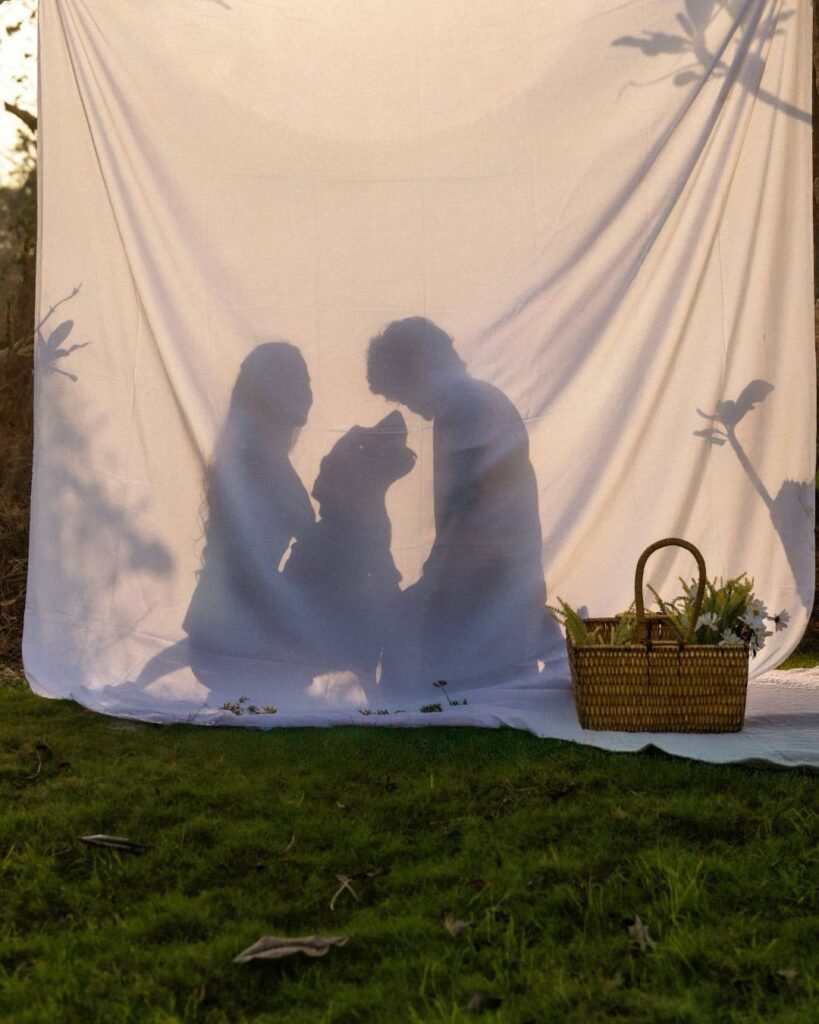
A silhouette behind a backlit sheet works well for pets because the outline of a dog or cat reads at a glance, so pick an animal with a distinctive shape.
Pick a spot where your dog will stay calm, and bring a helper with treats to hold attention while you pose. Keep the pet’s outline clear of yours so it doesn’t blur into the couple.
For a save the date, a pet that looks at the camera does more work than any caption.
2. Romantic Kiss
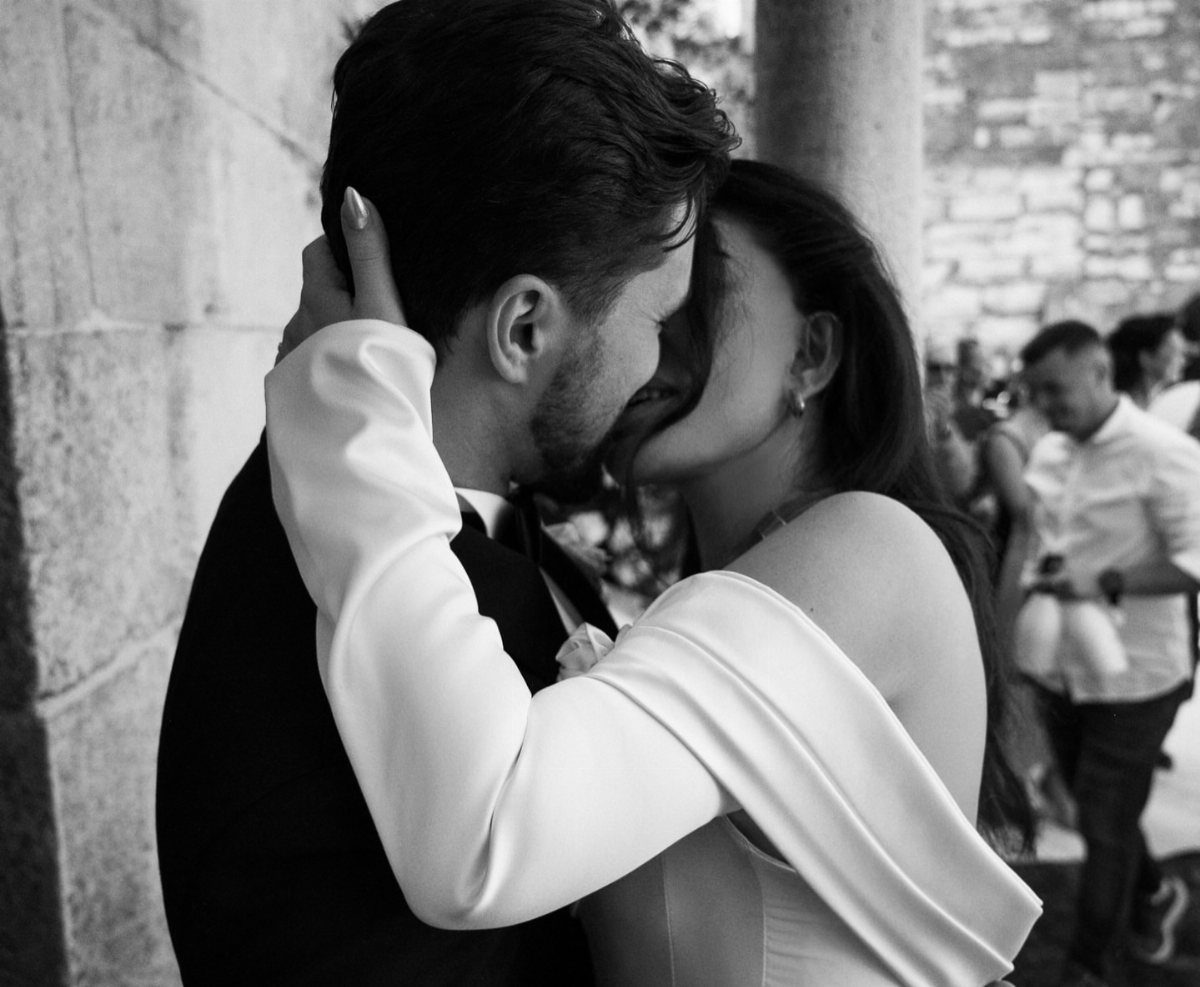
Black and white suits a kiss better than color does, since it strips out distractions and leaves the closeness.
Without the dress and suit hues competing, the eye lands on the contact between 2 faces, and a stone wall adds texture without clutter.
For a formal save the date, I’d go with this one, since the card itself can carry all the details.
Keep the crop tight and leave empty space at one edge, so the date has somewhere to sit without covering anyone.
A kiss is also forgiving for people who feel stiff on camera.
3. The Proposal
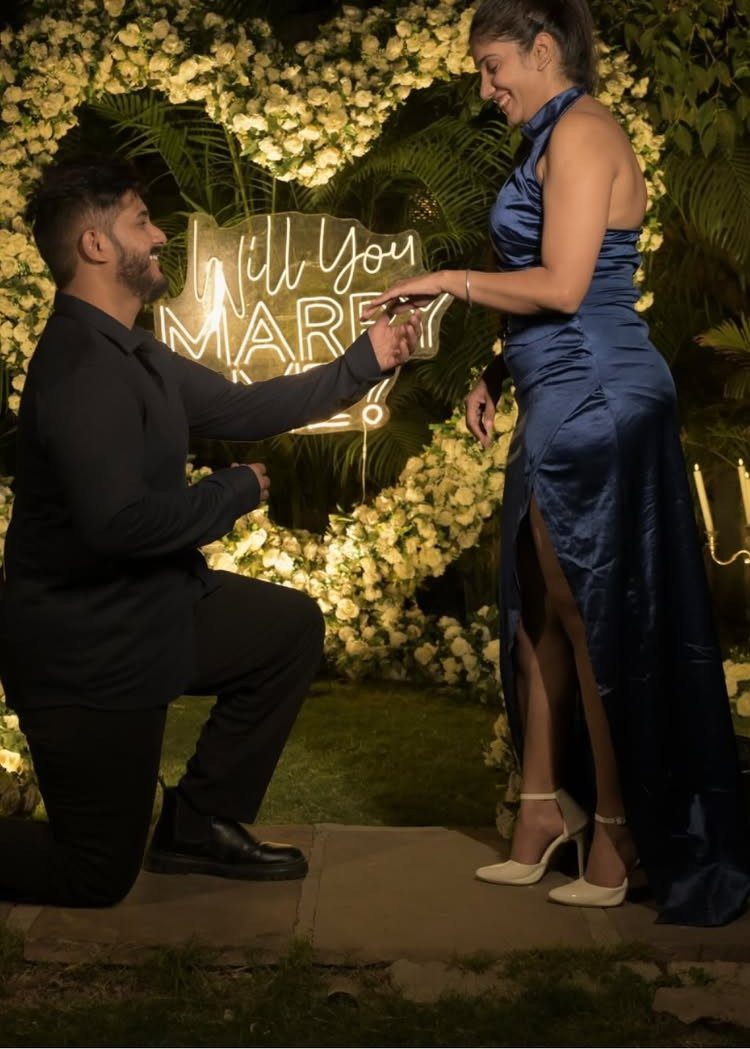
Not every couple gets a photographer at the proposal, so a staged re-creation is a fair option.
Her blue dress stands out against all that white, which is worth copying: pick one color that separates you from the backdrop.
One maker described the feeling as saying it a million times in the soul. That sentiment is worth keeping in mind for the caption.
4. Calendar Page with Date Circled
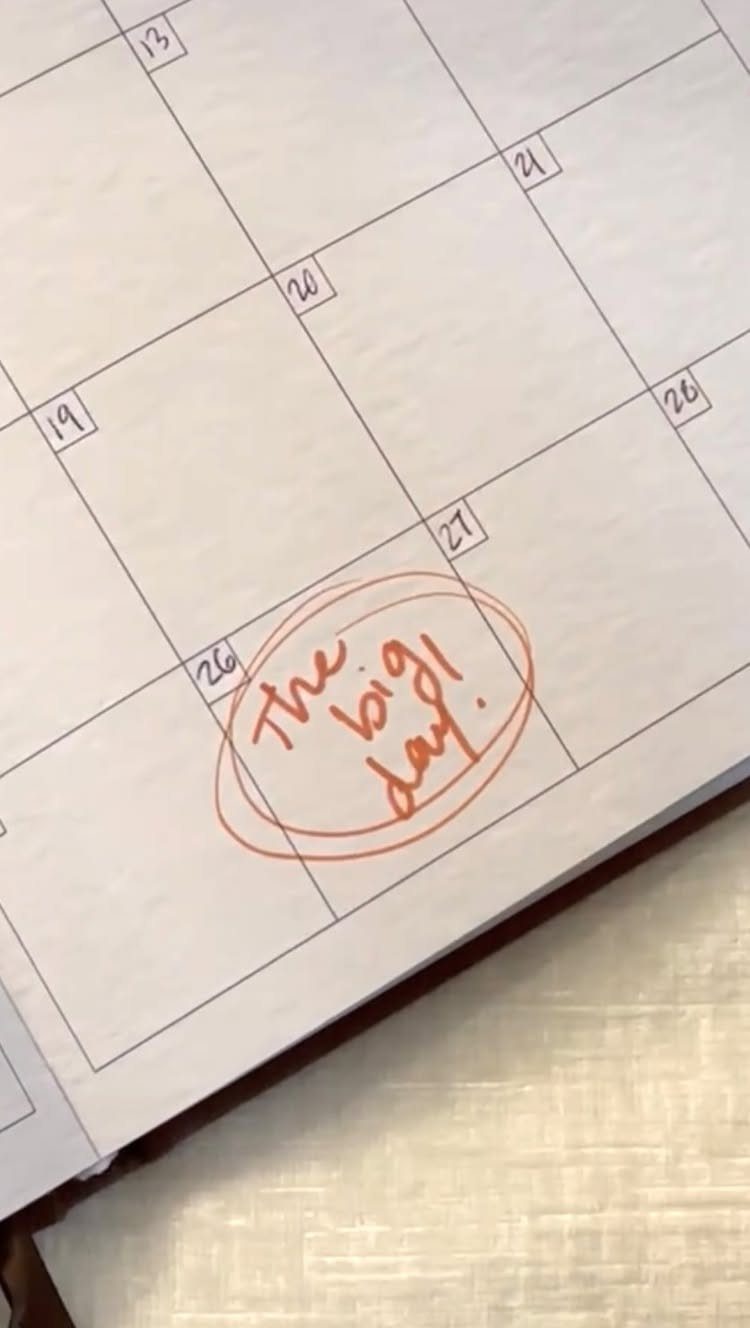
A circled date is the plainest save the date there is, and I like it for that.
A circled calendar date with "The big day!" handwritten inside gives the card a personal voice without any design work, and orange ink stands out on paper.
Use a real paper calendar and a bold pen, and write the note yourself. Your own handwriting is the whole charm.
Check that the month is visible, since a circled number alone leaves guests guessing.
5. Balloons or Number Balloons
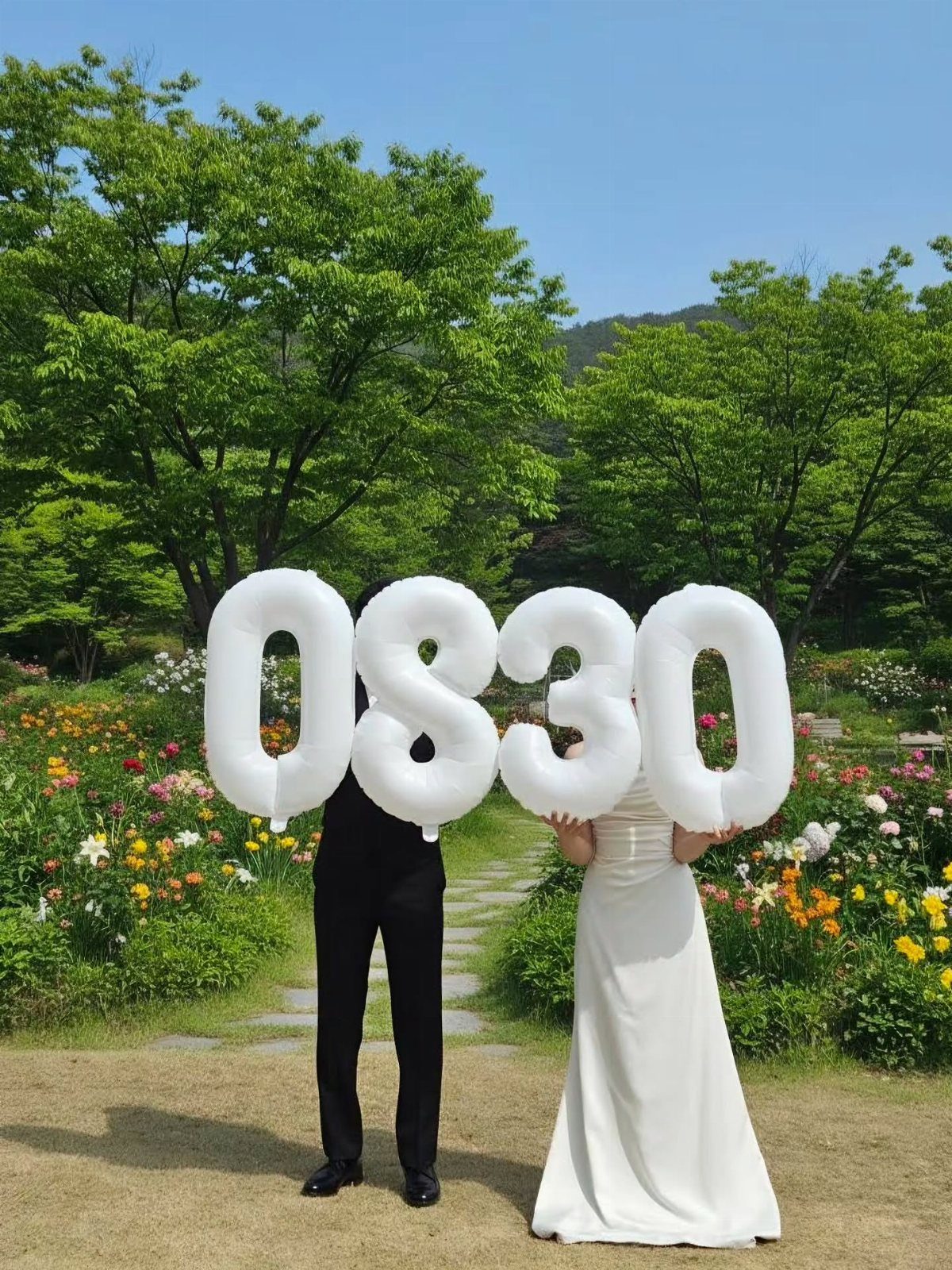
Balloons shaped into numbers let you spell the date with your hands full and your faces free. Large white balloons read cleanly against a garden’s greenery, and a compact format like "0830" works well: month and day, one balloon per digit.
Each person holds two. Stand close so the digits sit side by side at the same height, or the date reads crooked.
Add the year on the card itself instead of buying more balloons.
6. Vintage Clothing
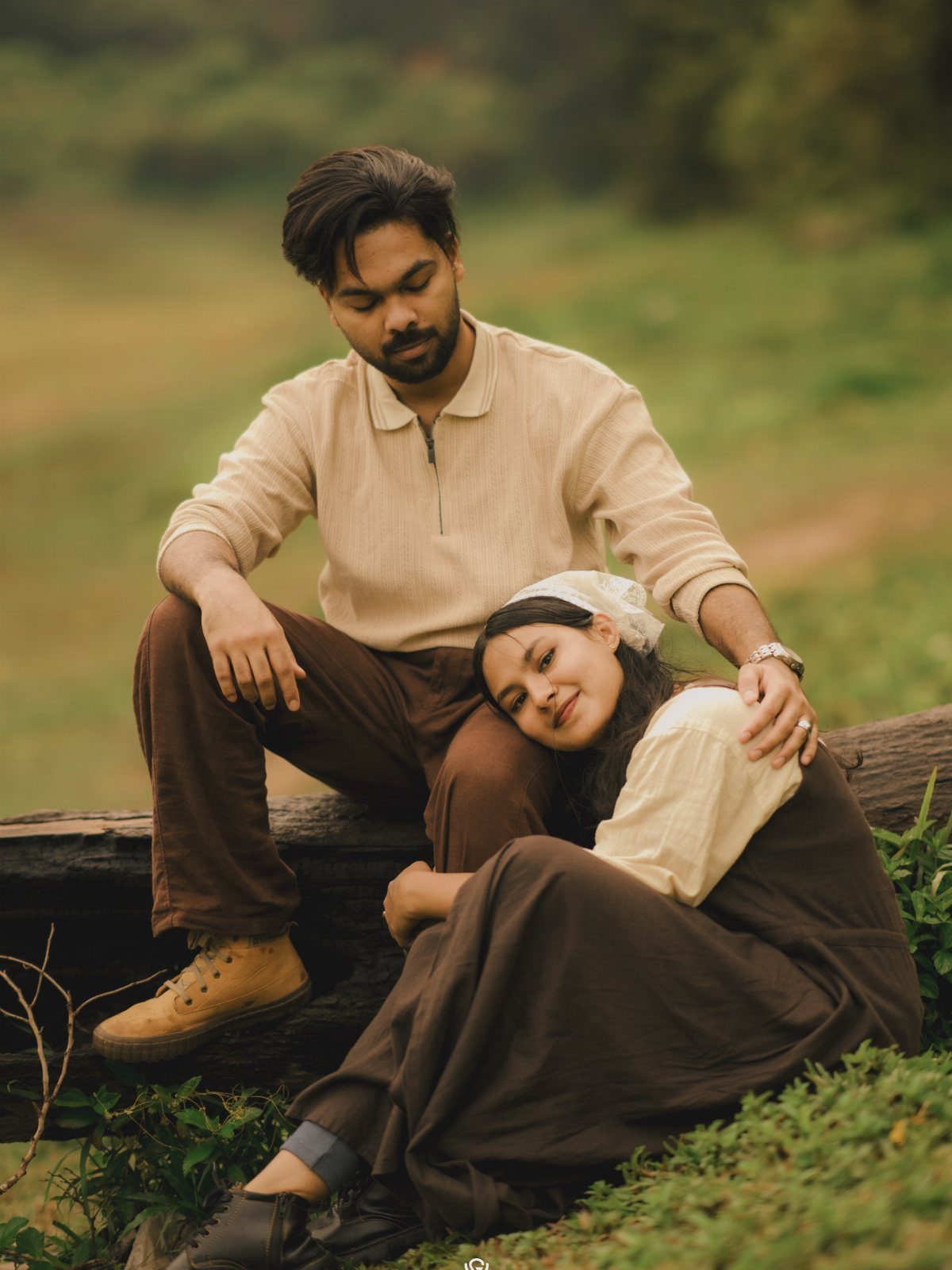
Vintage style works best when the whole outfit sticks to one palette.
Matching beige and brown tones keep a couple looking like a pair, and a fallen log in a grassy spot gives you a rustic seat without hauling in props.
Thrift stores and relatives’ closets are the cheap routes, which matters on a small budget. Try pieces on together before the shoot so the tones agree.
Pick one era and commit to it; mixing decades looks like a costume party.
7. Polaroid-Style Frame
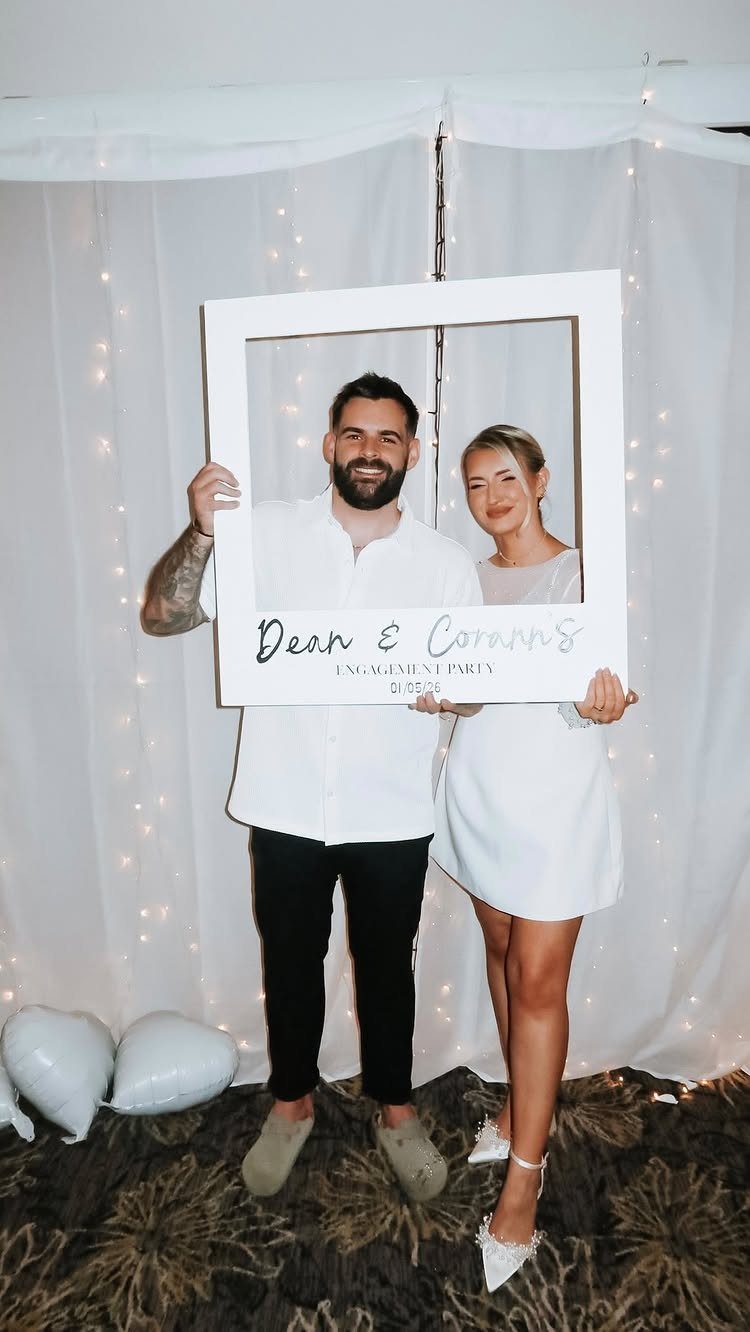
An empty frame held around your faces turns any backdrop into a Polaroid, and it costs almost nothing. Keep the backdrop simple so the frame itself and your announcement stay front and center.
Hold the frame level and lean your heads together so both fit inside. Use a frame large enough for 2 faces, and write the names and date on its bottom border before the shoot.
Short on budget, you could make the frame from white card stock.
8. Heartfelt Hug
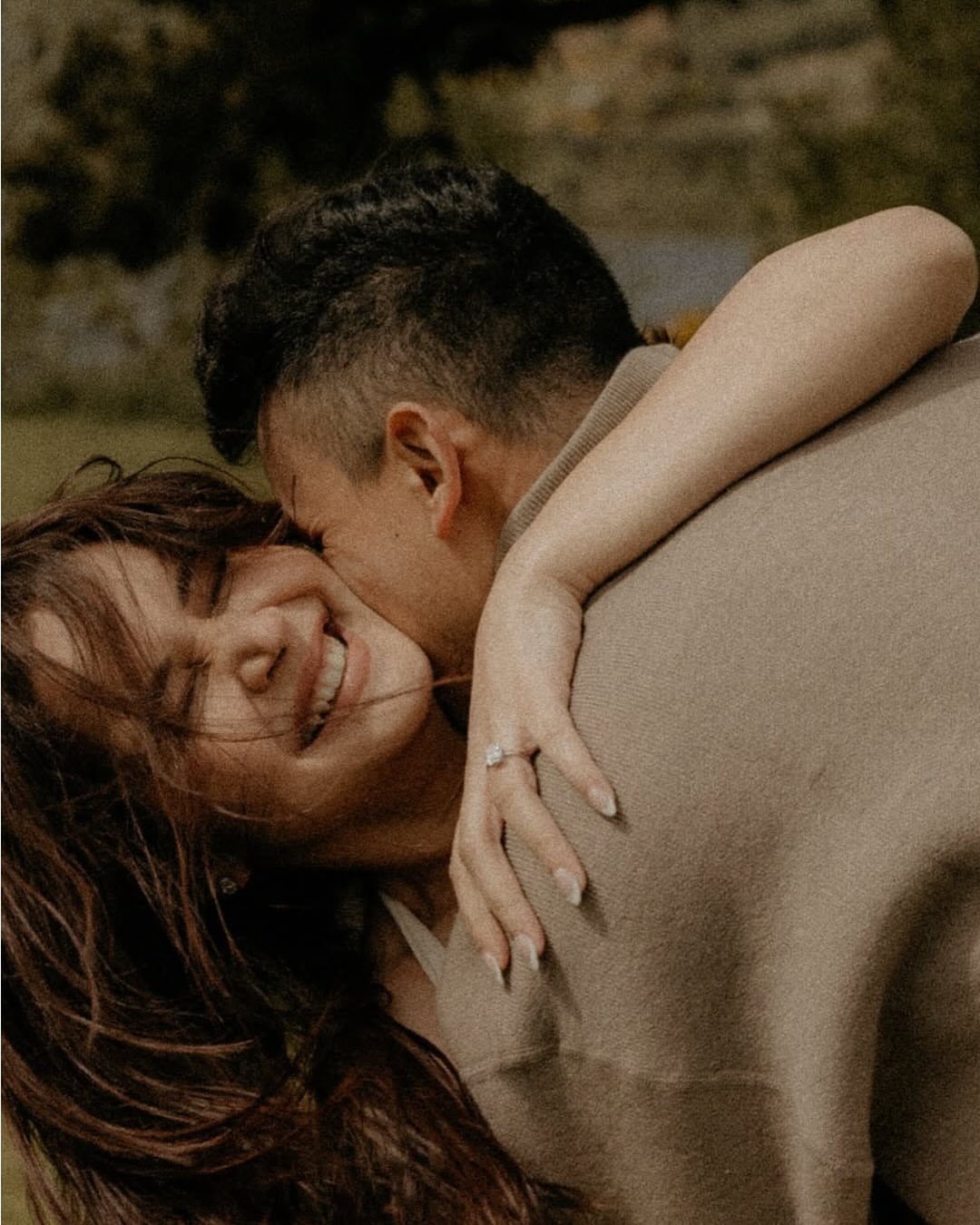
A hug with a cheek kiss shows affection without asking either of you to pose. A tight crop on your hands and faces lets the ring do the announcing.
Stand in a natural outdoor setting and let the hug settle for a few seconds before the photographer fires. Real laughter beats a held pose.
I’d pick this over a formal portrait if you dislike being stared at by a camera, since a hug hides nerves well.
9. Chalkboard or Letter Board
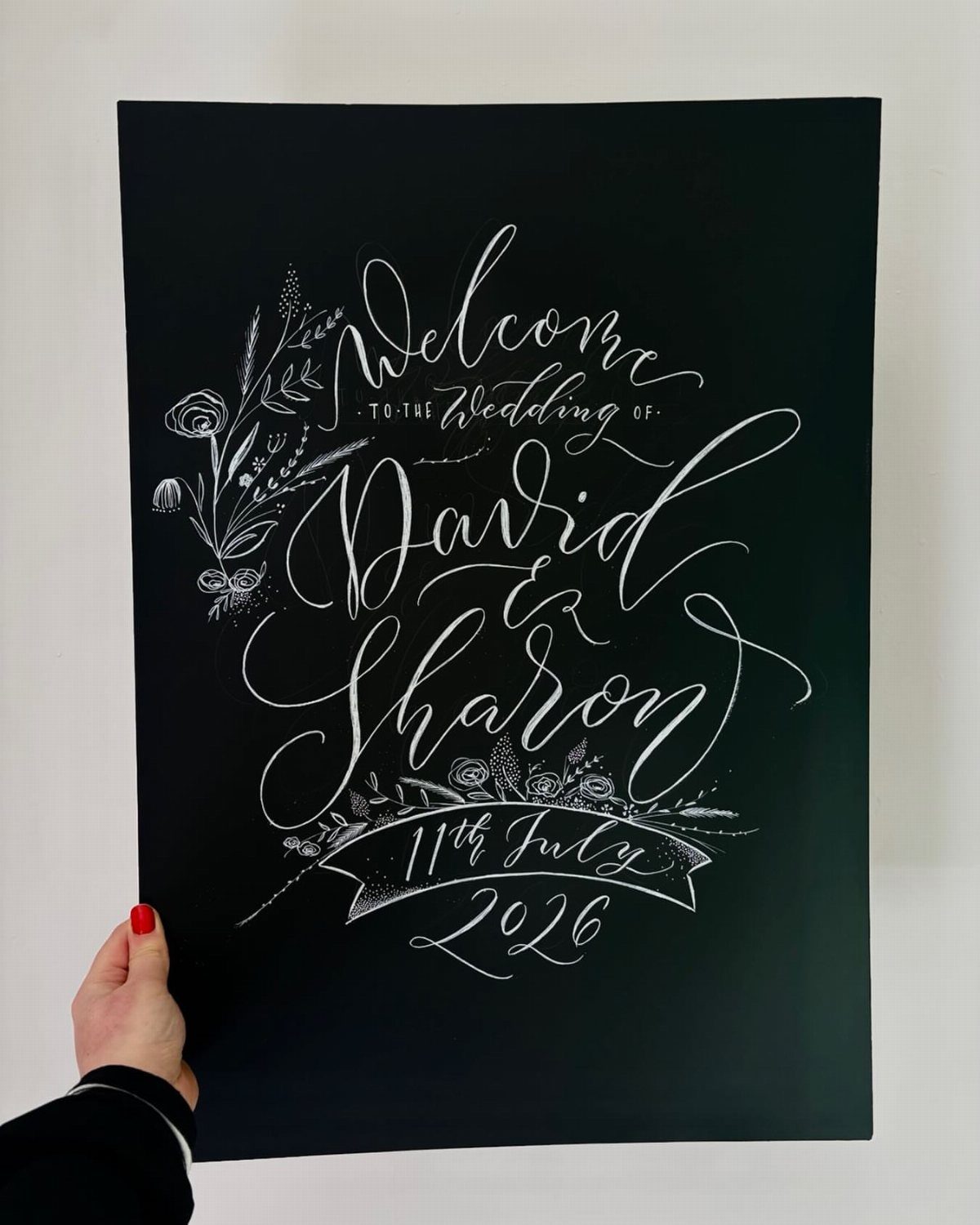
A chalkboard with clean lettering serves as both your announcement and the card’s whole layout. Names and full date, written out as "11th July 2026," leave no room for guesses.
Hand-lettering takes practice, so test on scrap before the final board. If your handwriting worries you, a calligrapher is the pricier route, and I’d weigh that against how much the board matters to you.
Hold it at chest height, with fingers clear of the lettering.
10. Your Wedding City Skyline
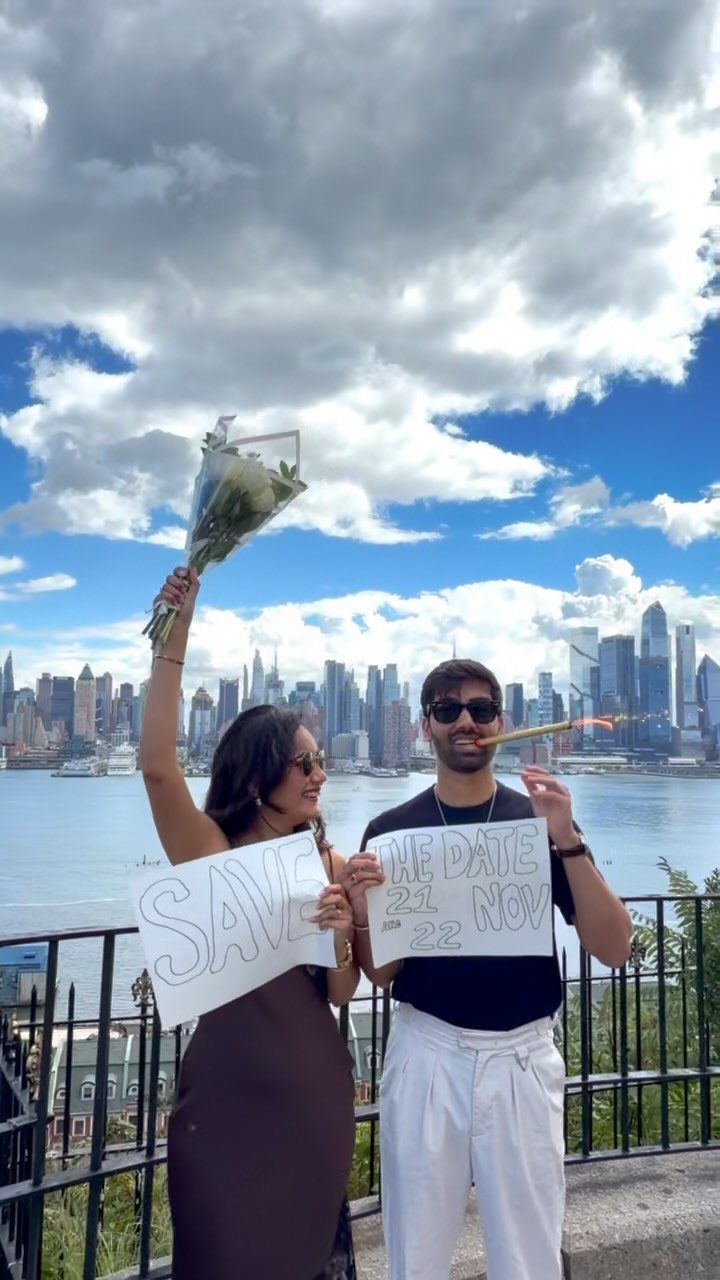
A skyline shot tells guests where the wedding is before they get to the text. Pick a spot where the buildings stay sharp behind you, and angle your signs so the date reads clearly.
A bouquet adds color against the gray city, and I like that for a small cost.
Scout the spot ahead of time, since the view you picture may be blocked from street level. This suits couples marrying in a recognizable city, and skips well if your venue is somewhere quiet.
11. Mountain Overlook
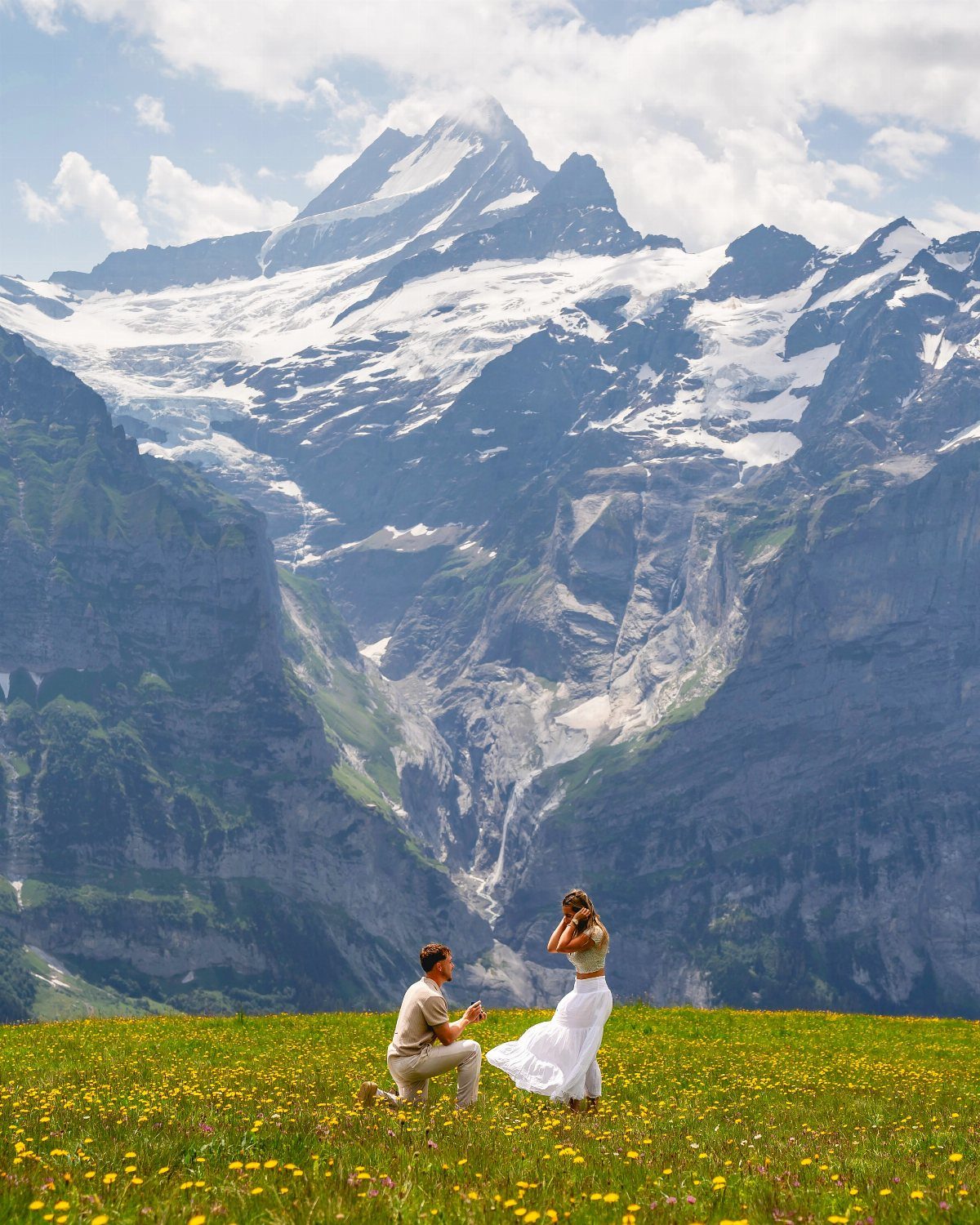
Ask your photographer to shoot wide, then crop later for the card. Keep clothing in a solid color so you stand out against the flowers.
The cost is travel: a spot like this may sit far from home, and that eats into a budget. Choose a location you could reach in a day if money is tight.
12. Meaningful Props
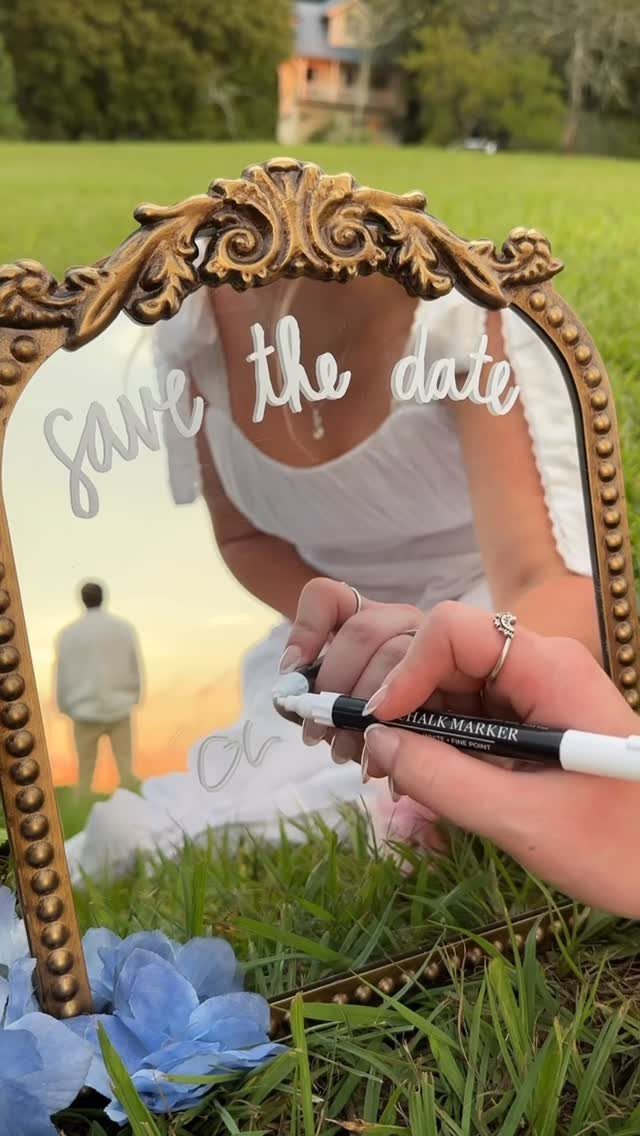
A mirror on the grass with "save the date" written across it in chalk marker gives you a prop and a message in one object.
An ornate gold frame looks expensive even when it came secondhand, which I’d shop for first.
Prop it against something steady and angle it so your reflection lands beside the lettering. Write backward-proof words before you start; chalk marker wipes off glass with a damp cloth if you slip.
Pick a prop that means something to you both, so the picture feels personal.
13. Matching Sweatshirts
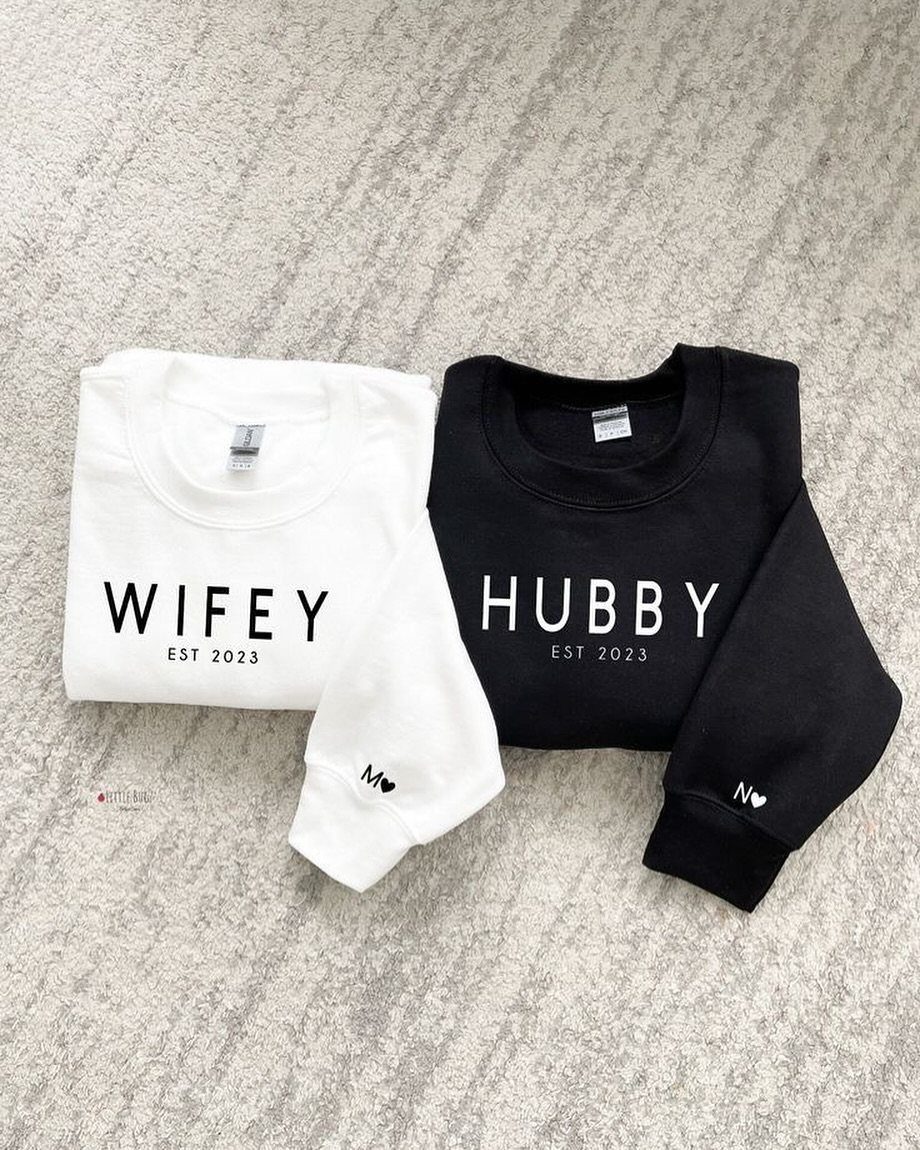
Custom sweatshirts do the announcing for you.
Matching sweatshirts work best as a pair in contrasting colors, like white and black, and a small custom detail such as initials or a heart on the sleeve will read clearly in a tight shot.
Lay them flat on a plain floor and shoot from above, or wear them and keep your arms uncrossed so the lettering stays readable.
Swap the year for your wedding date if you want the shirts to work as the save the date itself.
I’d pick this for a relaxed couple who hate formal posing.
14. Black and White Portrait
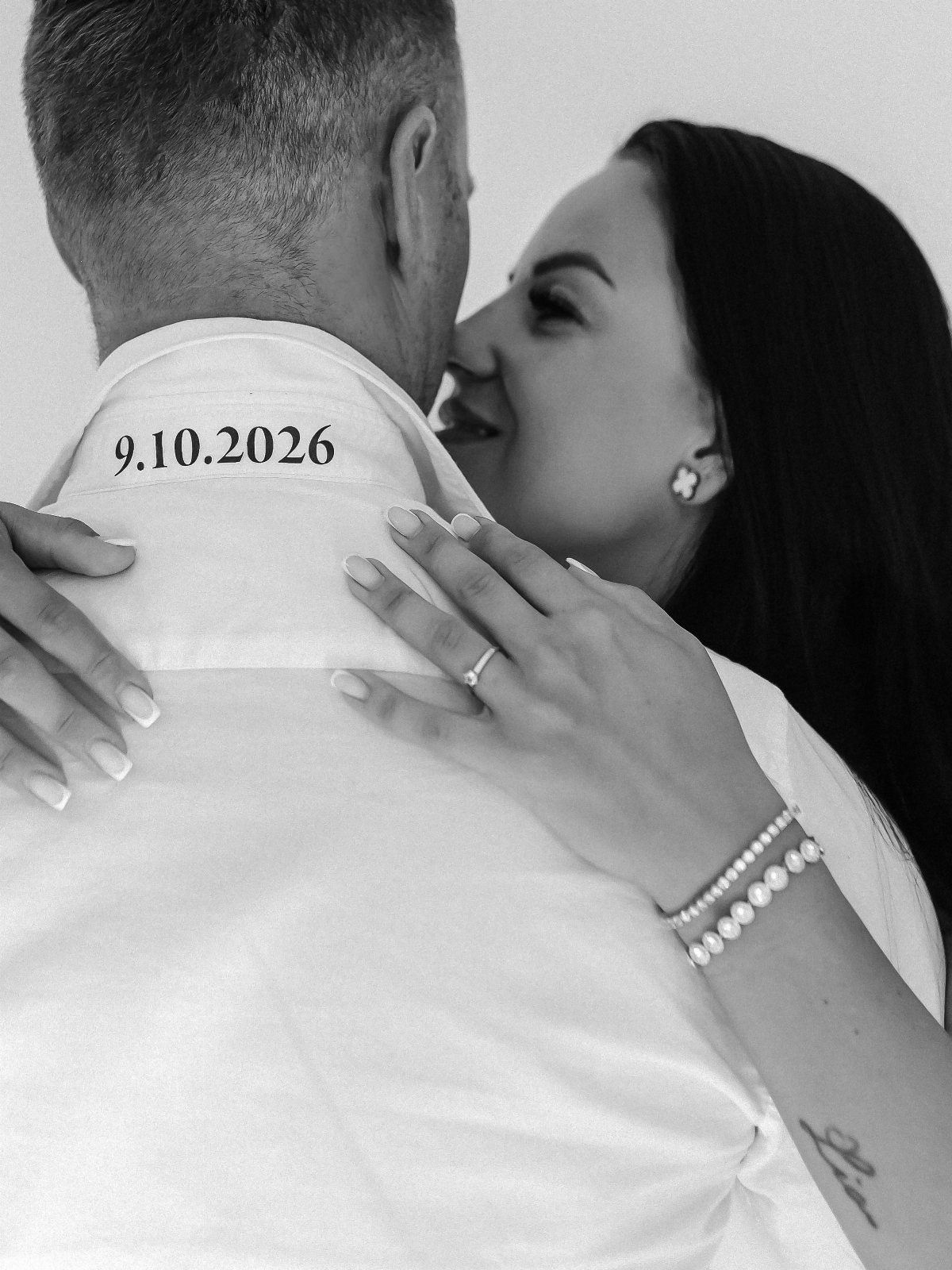
Printing the date on a shirt collar is a quiet way to make a black and white portrait carry information. "9.10.2026" sits small against a white collar, and the plain background keeps the eye on the numbers and the embrace.
Wear a white shirt with a collar wide enough to hold the digits, and test the lettering before the shoot. Keep the background empty so nothing competes.
Black and white reads as timeless, and I like that it makes the date feel like part of the portrait rather than a label.
15. Traditional Attire in a Boat
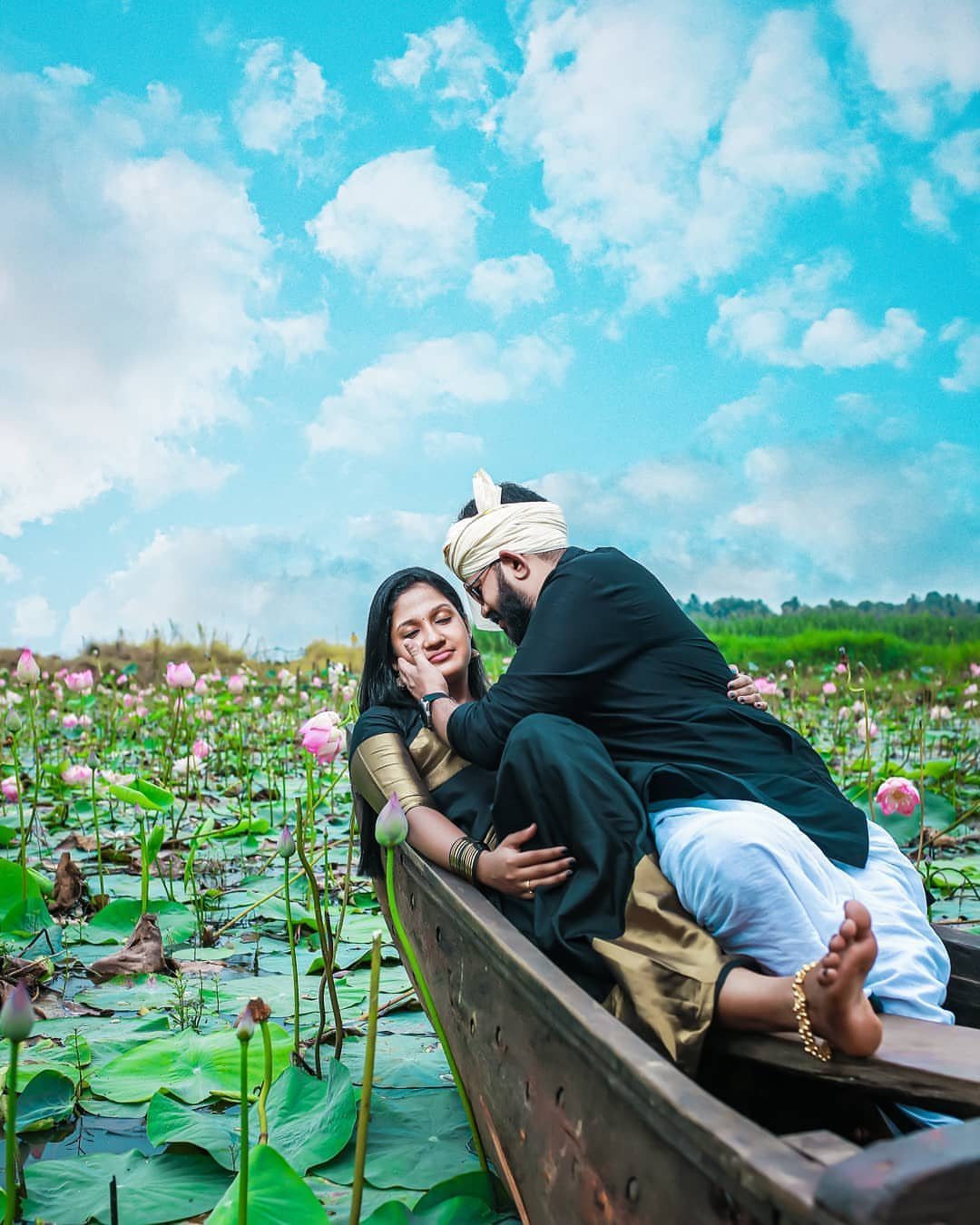
Ornate traditional clothing looks richest when the setting stays simple. A wooden rowboat on water dotted with pink lilies gives you color and a clear sky without extra props, so the outfits do the talking.
Sit close and lean toward each other; a small boat leaves little room for stiff poses. Ask your photographer to shoot from the shore or a second boat, and check that the location allows boats before booking.
Wear your finest pieces, since the blue behind you lets embroidery stand out.
16. Lying on the Grass
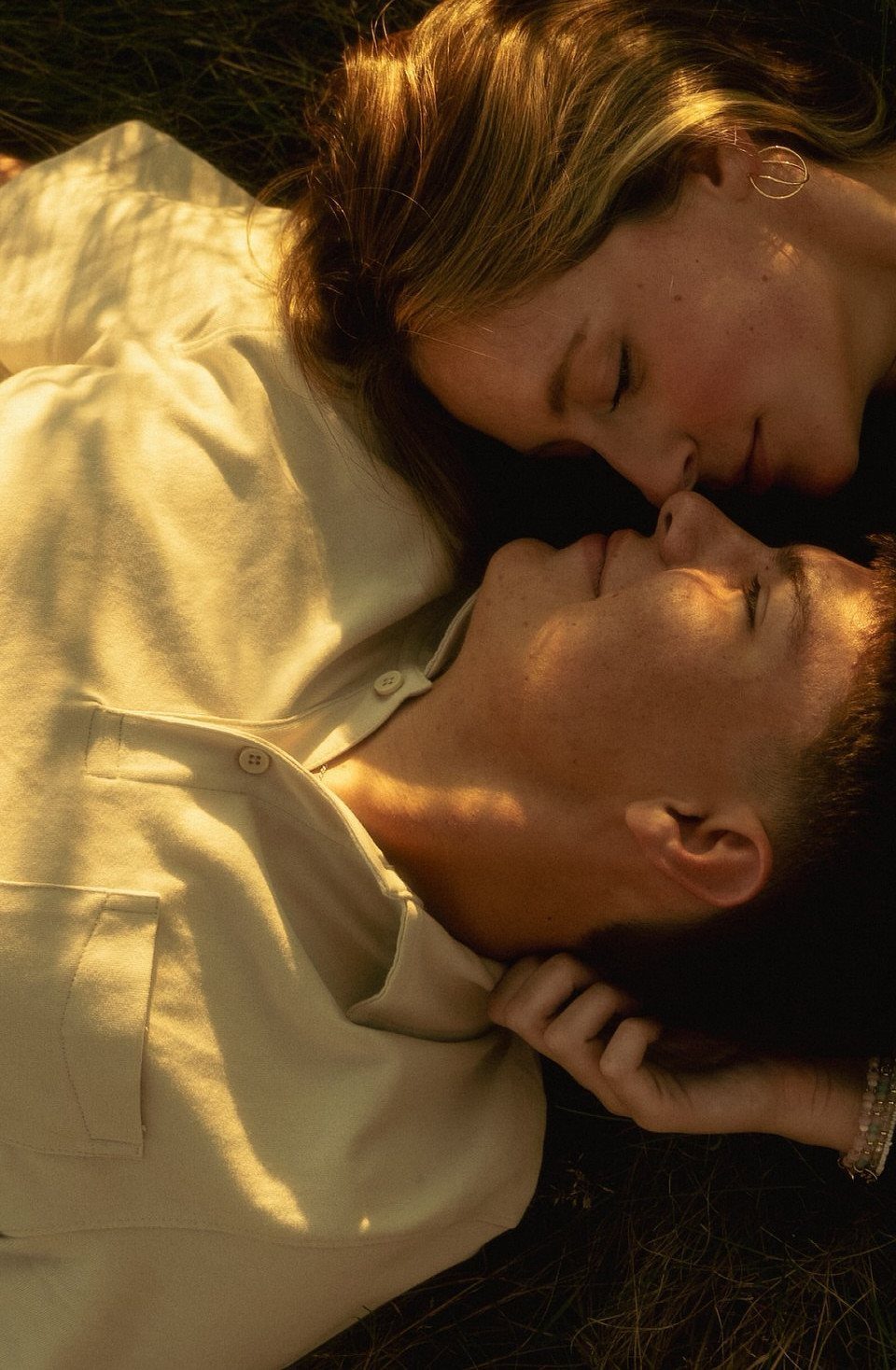
Lying head-to-head puts your foreheads together and keeps your faces relaxed, since closed eyes mean nobody has to perform. Light-colored shirts glow against grass in golden hour, so schedule the shoot for that warm light.
Lie back with your heads touching and have the photographer shoot close from directly above, which fills the frame with the two of you and hides the messy background.
Check the ground for damp or bugs first, and pick a lawn that’s been cut short.
17. Cozy Indoor Cafe Vibe
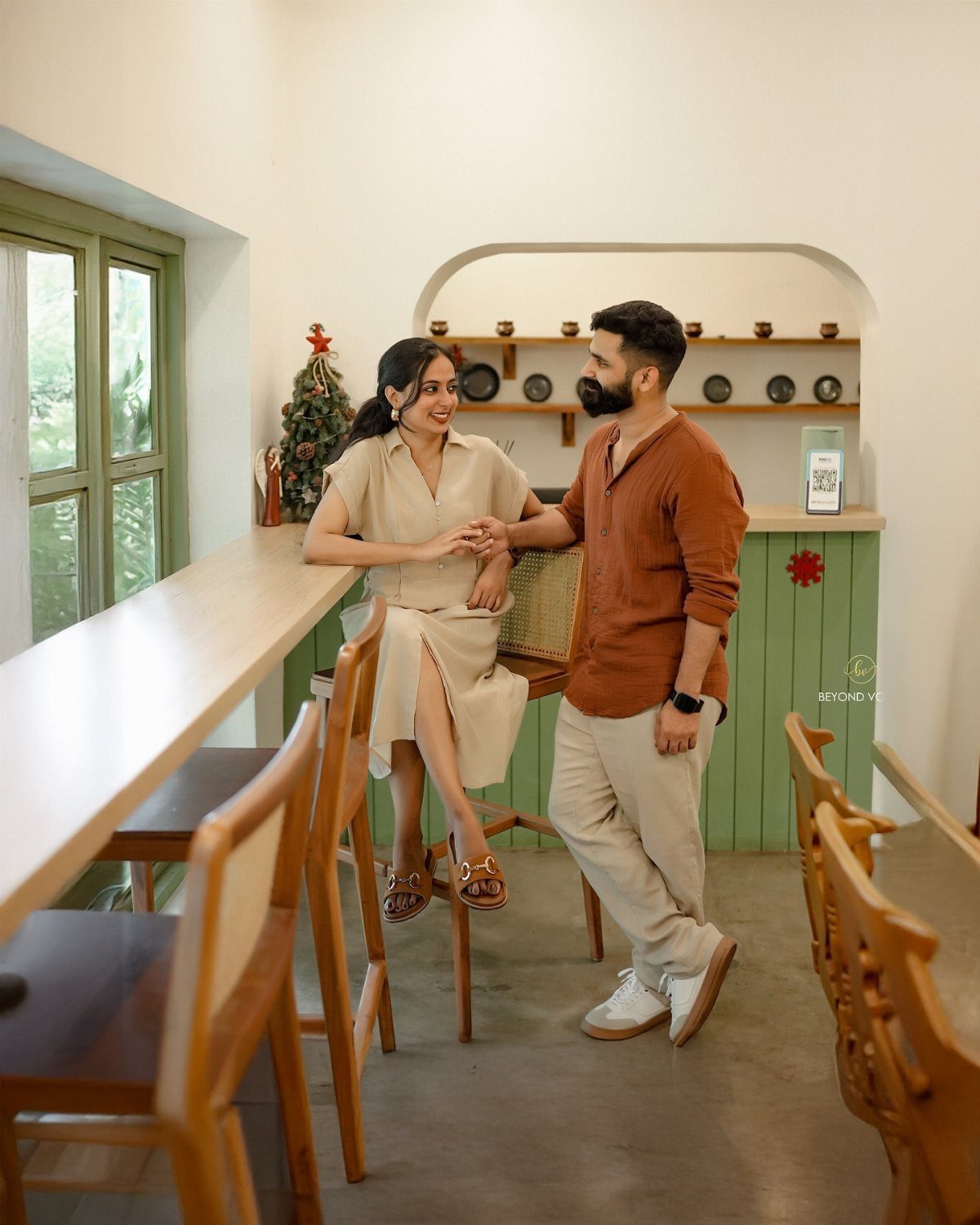
Holding hands across a cafe counter looks effortless, and it costs a coffee order rather than a location fee.
A bright, light-colored room with wooden furniture makes casual outfits look polished, and a small Christmas tree gives a seasonal touch if you shoot in winter.
Ask the owner for permission and a quiet hour, since staff and customers will wander through the frame. Keep your outfits relaxed and your hands visible.
I’d choose this over a staged studio look if you want your personalities to show.
18. Mid-Air Flower Toss
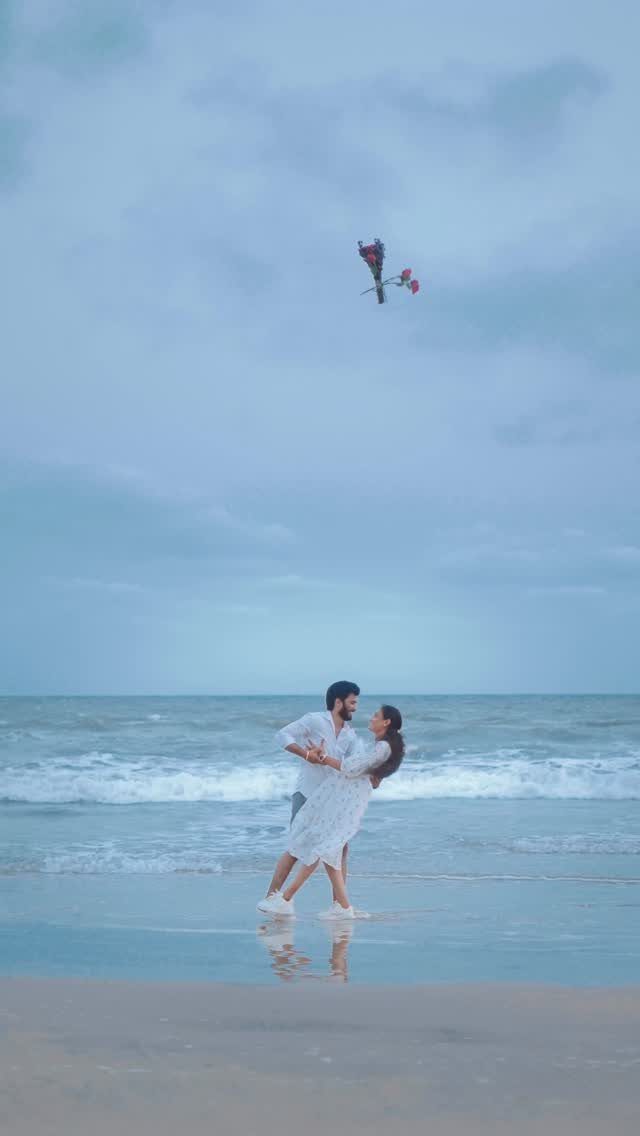
A bouquet caught in mid-air above an embrace adds motion to a still photo. On a cloudy beach, white outfits and the floating flowers supply all the contrast you need.
Have a helper toss the bouquet while you hold each other, and expect many tries to catch it at the right height.
Burst mode is worth requesting, since the best flower position lasts a fraction of a second and one frame out of 20 will catch it.
Use a bouquet you don’t mind losing; sand and wind are rough on flowers. Faux flowers keep the cost low and survive repeated throws.
19. Engagement Ring Close-Up
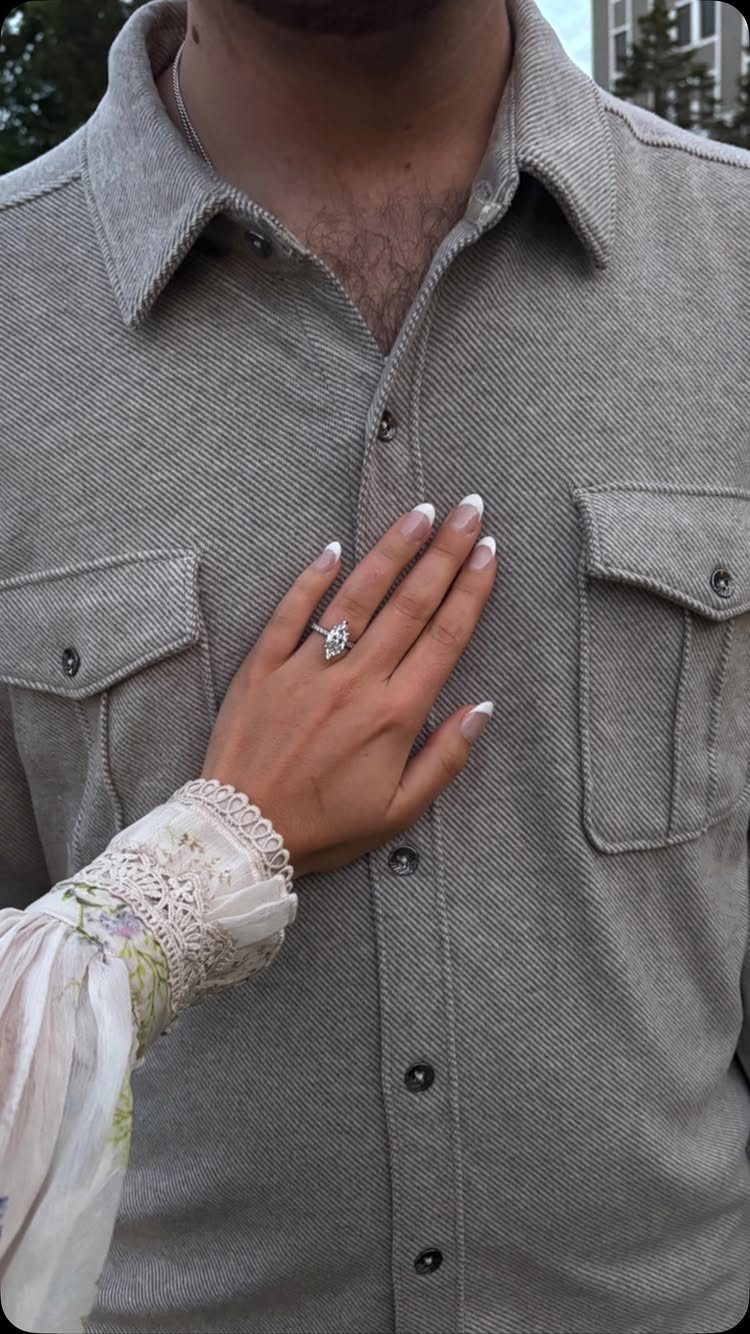
Pick a plain, solid-colored shirt for the backdrop, since a quiet texture like lace or soft cotton near the hand lets the diamond catch the light without competing.
Keep the nails clean and the hand relaxed, fingers slightly apart so the stone catches light. Ask your photographer to focus on the ring and let the shirt blur.
I’d pick this over a full portrait when you want the card to feel quiet.
20. Rainy Umbrella Pose
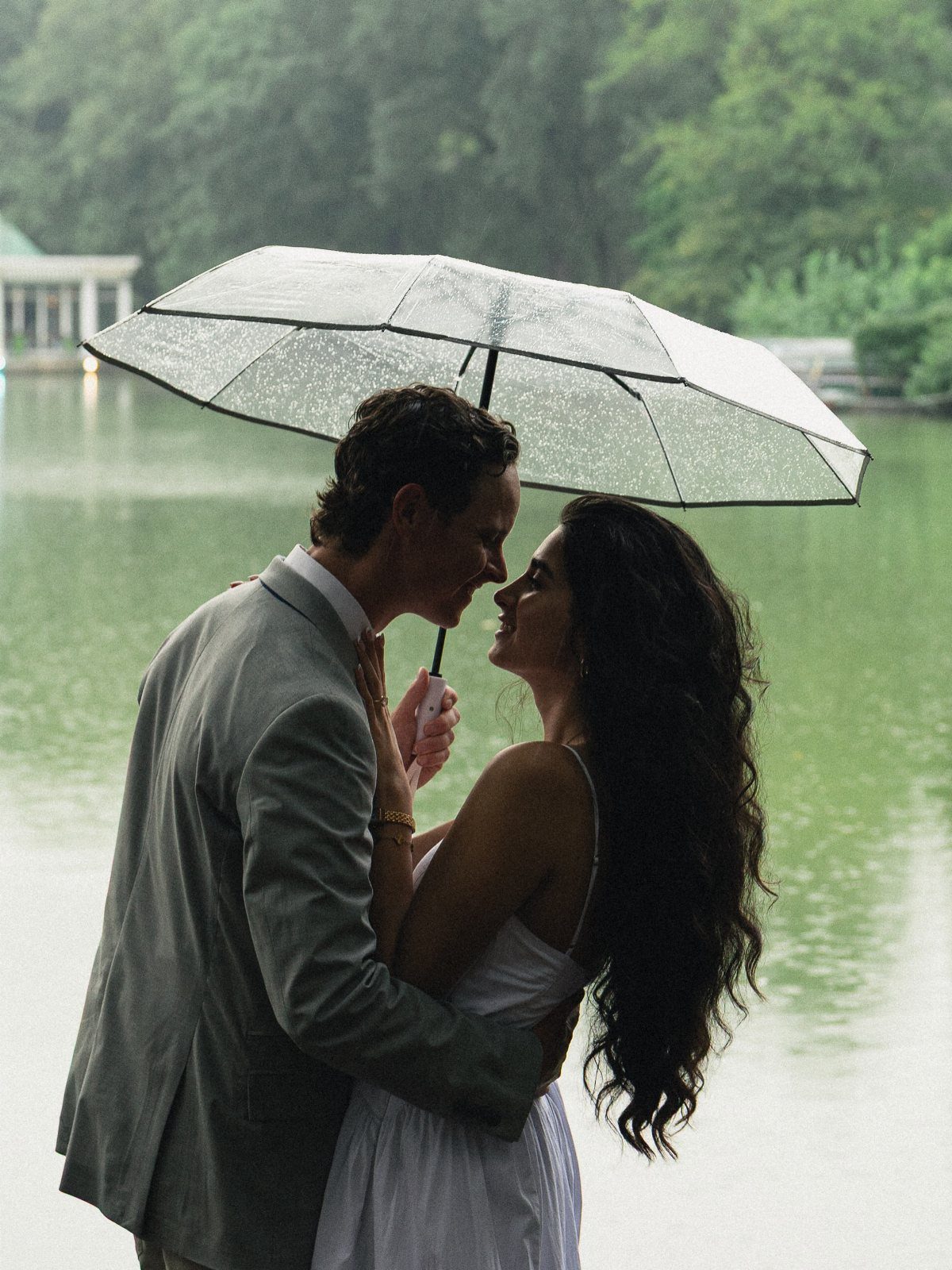
Rain usually cancels a shoot, but a clear umbrella lets you keep it and still see the lake and trees behind you.
Pick a clear umbrella large enough to cover both heads, and lean into each other so the embrace sits under the canopy. Hold the handle steady with one hand.
Check the forecast, since a light drizzle photographs better than a downpour. Cover your camera or phone, too.
21. Sunset Ocean Dip
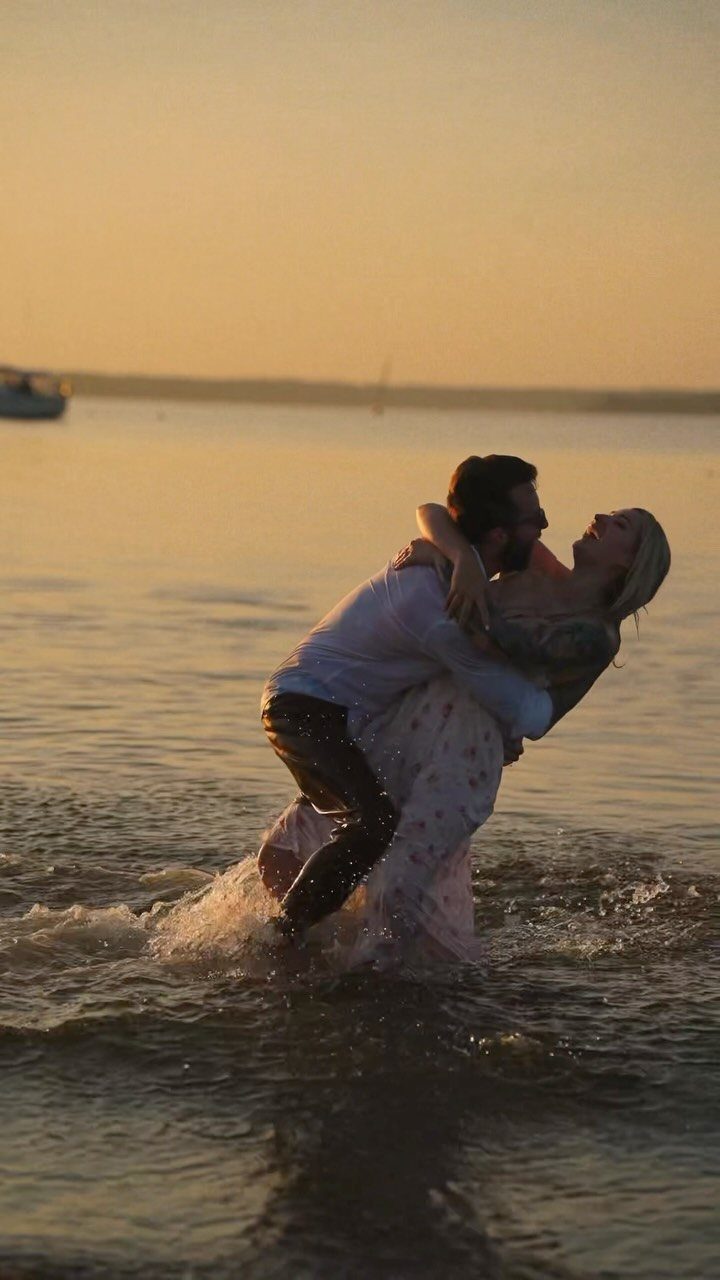
Standing ankle-deep at sunset, with the man dipping the woman back, gives you a pose that feels like a movie ending. Shallow water keeps it simple: no swimwear needed, only clothes you can roll up or let get wet.
Practice the dip on dry sand first. Bend your knees, support her back with your whole forearm, and hold the pose for a few seconds so the photographer can fire several frames.
Arrive early, since golden light fades fast. This one costs travel if you live inland, so I’d save it for a coastal wedding.
Choosing the Right Location
Start with a short list of places tied to your story: where you met, where you had a first date, or a spot linked to something you do together.
Any of them gives a photo a backstory that guests pick up on right away.
A shared hobby works as a location too.
If you bonded over a sport, a stadium makes a fitting backdrop. If you spent hours talking about the outdoors, the woods or a favorite hiking spot does the same job.
I’d pick one place and stay there instead of squeezing in several. A single story reads clearly on a card, and a favorite photo from that spot is the one to send.
Your wedding location is another option if it has a view worth showing. Choose whichever place says the most about the two of you, scenic or urban.
When to Take Engagement Photos
Work backward from the mailing date.
Destination weddings need more runway, so those cards go out 8–12 months ahead. I’d put the shoot about 6–8 months out, since the cards still have to be designed and printed before anything goes in the mail.
If you can, go earlier.
The first 2 months after getting engaged is the best window: you’re still enjoying the news, and planning has barely started. Photos taken then also give you practice in front of a camera before the wedding itself.
An early shoot has another use. If you’re still hiring a wedding photographer, booking an engagement session with a candidate shows you how that person works and whether you click.
I’d treat it as a trial run that costs little compared with finding out on the wedding day.
Frequently Asked Questions
Do you put pictures on save the dates?
Not required, but I’d include one. Plenty of card templates have no photo space and work fine, yet a picture gives the card personality and helps distant guests put faces to names.
Do engagement photos have to match the wedding theme?
No. Most couples mail these cards 6–8 months out, often before the colors or decor are chosen, so the photo only needs to look like the two of you, and the formal theme can wait for the invitation.
A photo that shows who you are as a couple matters more than matching colors or style.





