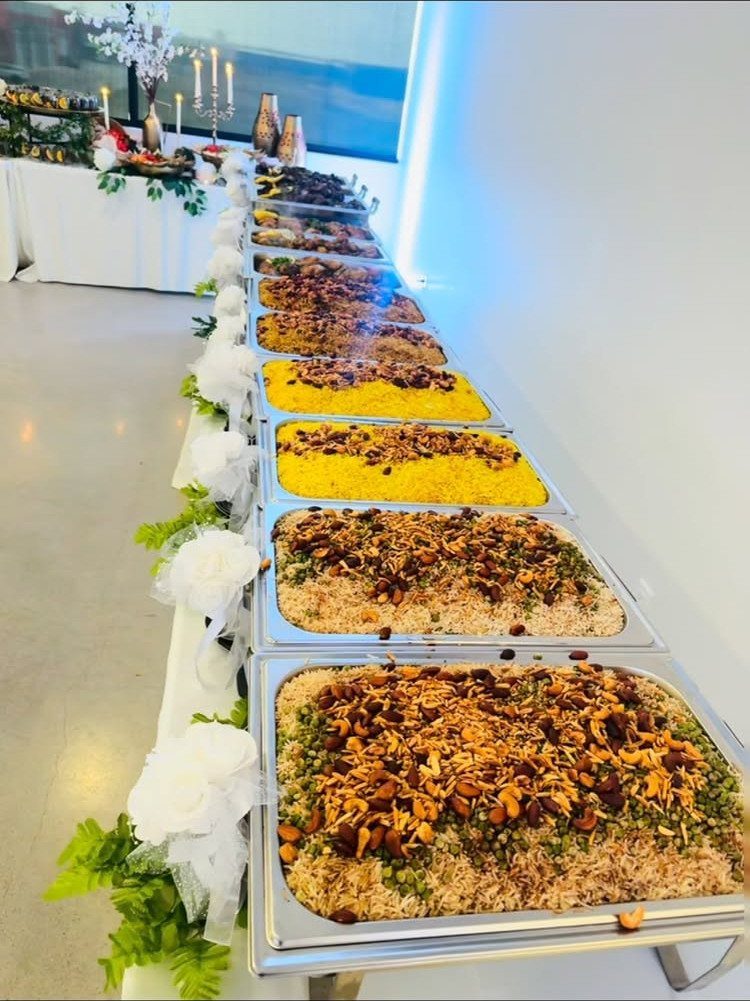
The ideas run from heavy appetizers and drop-off catering to a baked potato bar, a food truck, a cheese wheel cake and a live grill station, and what sorts them is how much hired labor you can afford on the night.
Buffet service averages about $27 per person against roughly $40 for plated, so a menu that needs fewer cooks and servers on site stretches the catering money furthest.
1. Heavy Appetizers
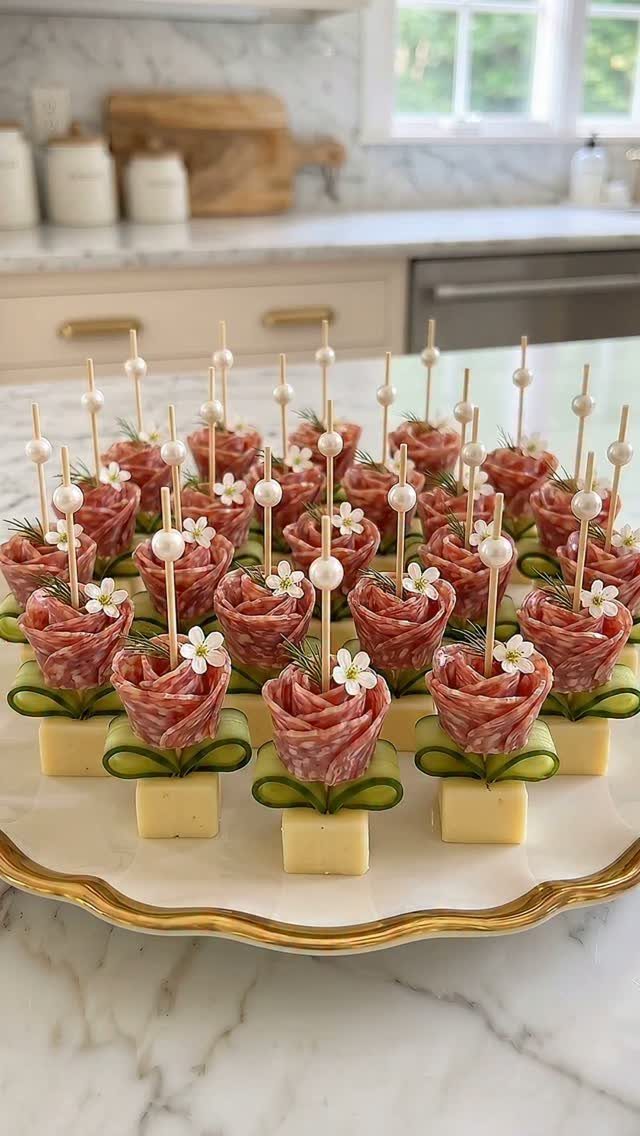
Salami roses on cheese and cucumber cubes fill guests up without a seated meal, and they cost far less than plated courses. Cucumber cubes sit under the salami, and tiny edible flowers finish the piece.
Build them in volume, not as a few showpiece platters. Cubes of cheese and cucumber stretch the meat, so a platter looks generous while the pricey part stays small.
I would pair this with a cocktail-hour reception and skip the formal dinner entirely, rather than serving it before a full meal you also pay for.
2. Drop-off Catering
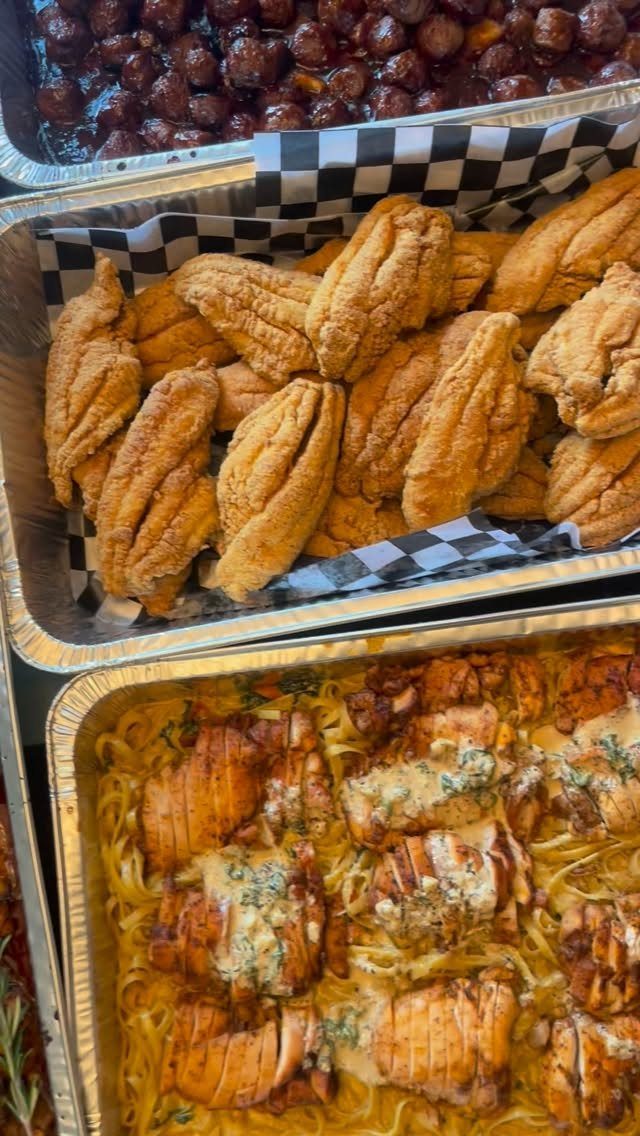
Drop-off caterers send trays of hot food in aluminum pans, so you pay for the food and delivery without paying for cooks or servers on site.
That is the saving. The trade is that someone must set out, refill and clear the trays, so assign a friend or hire a few hours of help.
Ask for a mix of dishes so guests with different diets find something, and rent chafing dishes if the trays need to stay warm.
3. Buffet-style Wedding Dinner
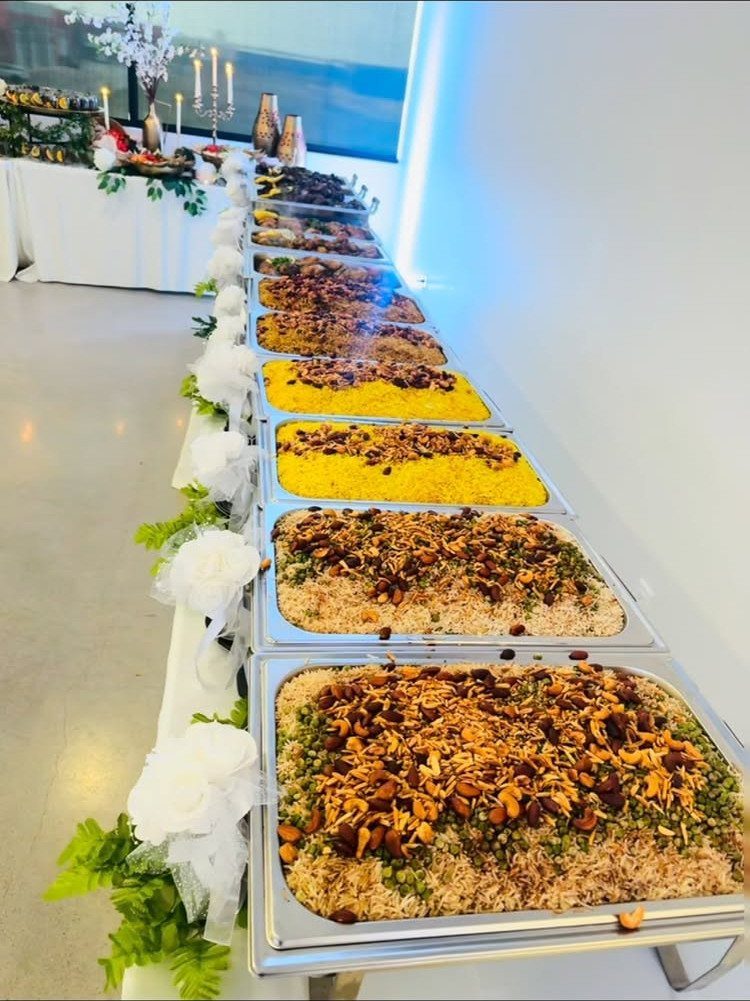
A buffet keeps staffing low, since guests serve themselves from a row of chafing dishes instead of waiters carrying plates. That is why I pick it over plated service for a tight budget.
Fill the pans with two or three sides, like the rice and nut dishes here, and one or two mains. Greenery and white flowers along the table dress it up for pennies compared with a fancy setup.
Split the line into 2 sides if your guest list is large, so nobody waits long.
4. Family-style Dining Platters
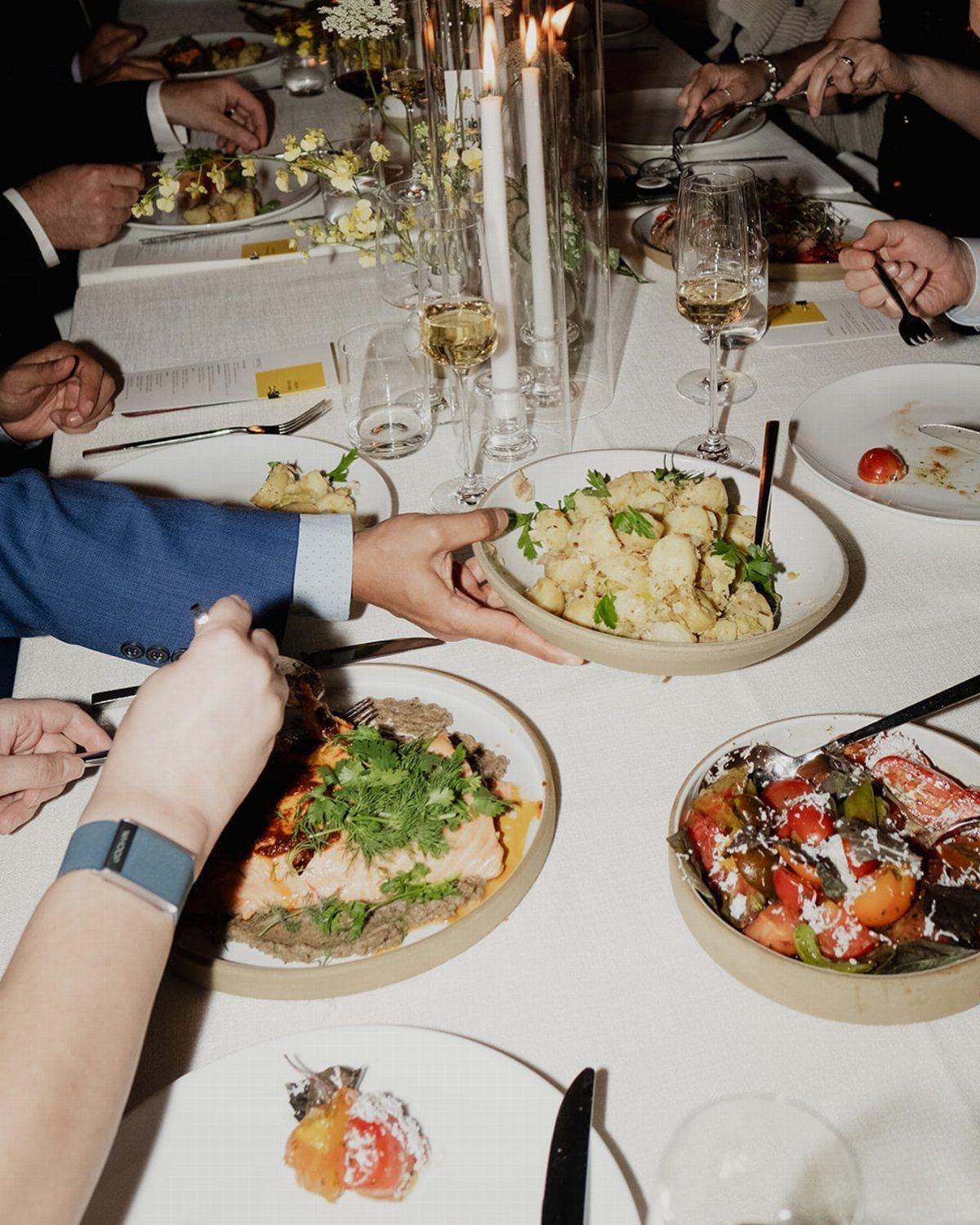
Shared platters of salmon and vegetables turn dinner into something guests pass around, and the table feels warm without a plated menu.
Order fewer, larger platters and let each table pass them. Roasted cauliflower and other vegetable sides keep vegetarians fed from the same dishes everyone else eats.
The cost is table space: platters need room next to candles and glasses, so go with narrower centerpieces. I like it for smaller guest counts, where a few tables can share.
5. BBQ or Taco Bar
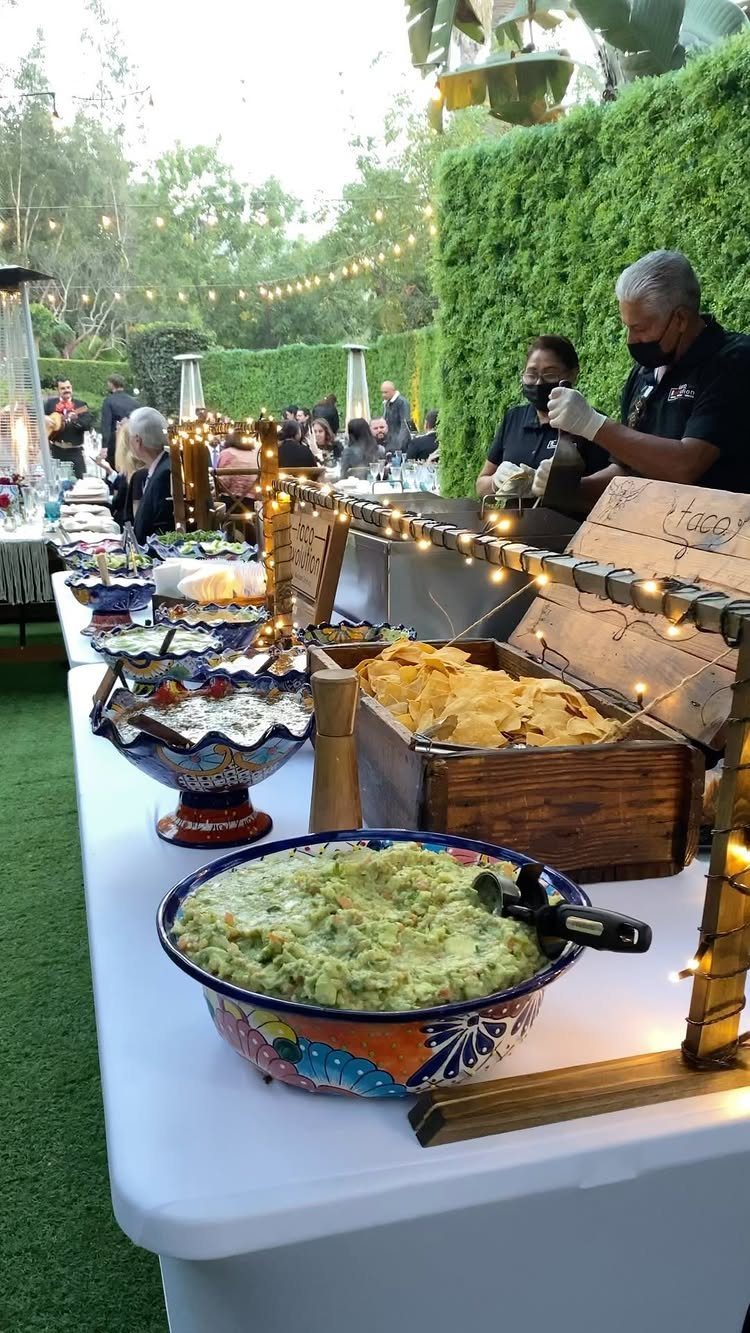
A taco bar lets each guest build a plate, which handles picky eaters and dietary needs better than any set menu.
Guacamole, salsa and chips fill the table cheaply, and toppings in separate bowls let vegetarians and meat eaters share one line.
Set it up outdoors with servers behind the table so portions stay even; that keeps food costs predictable. If you prefer BBQ, the same logic applies: one protein, a few sides, and guests choose.
I would take tacos over BBQ for flexibility.
6. Baked Potato Bar
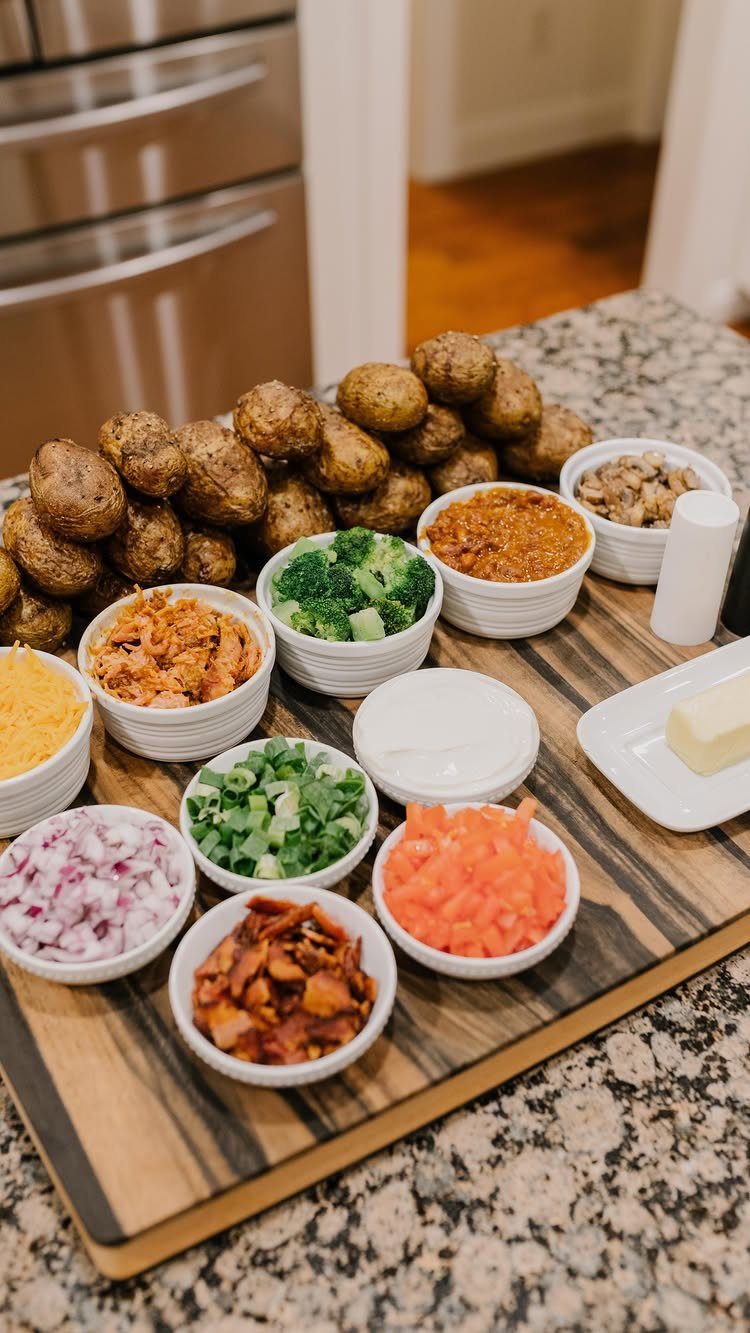
Baked potatoes are about the cheapest filling starch you can serve, and the toppings do the rest. Cheese, broccoli, bacon and onions in small bowls let guests build their own, and vegetarians can skip the bacon without fuss.
Bake the potatoes ahead and keep them warm, then set toppings on a wooden board or table with a spoon in each bowl.
I would add a vegan option, like beans or extra vegetables, so no one is left with just plain potato.
7. Grazing Table
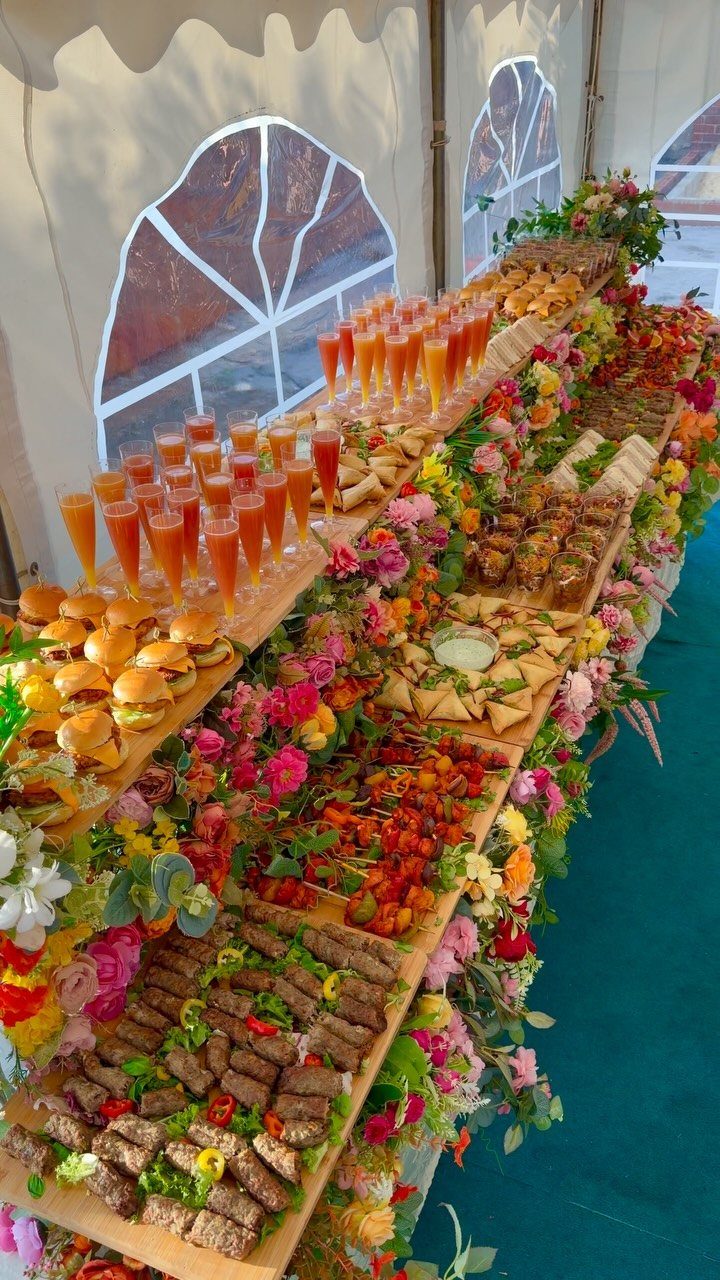
A tiered wooden table lets sliders, small bites and drinks sit at different heights, so guests graze through the evening and no one waits in a line. Height also makes a modest amount of food look generous.
Flowers tucked between the dishes fill the gaps for little money. A grazing table beats a plated dinner when money is short and your guests already know each other and will happily mingle.
Refill from the back so the table never looks picked over.
8. Charcuterie Cups
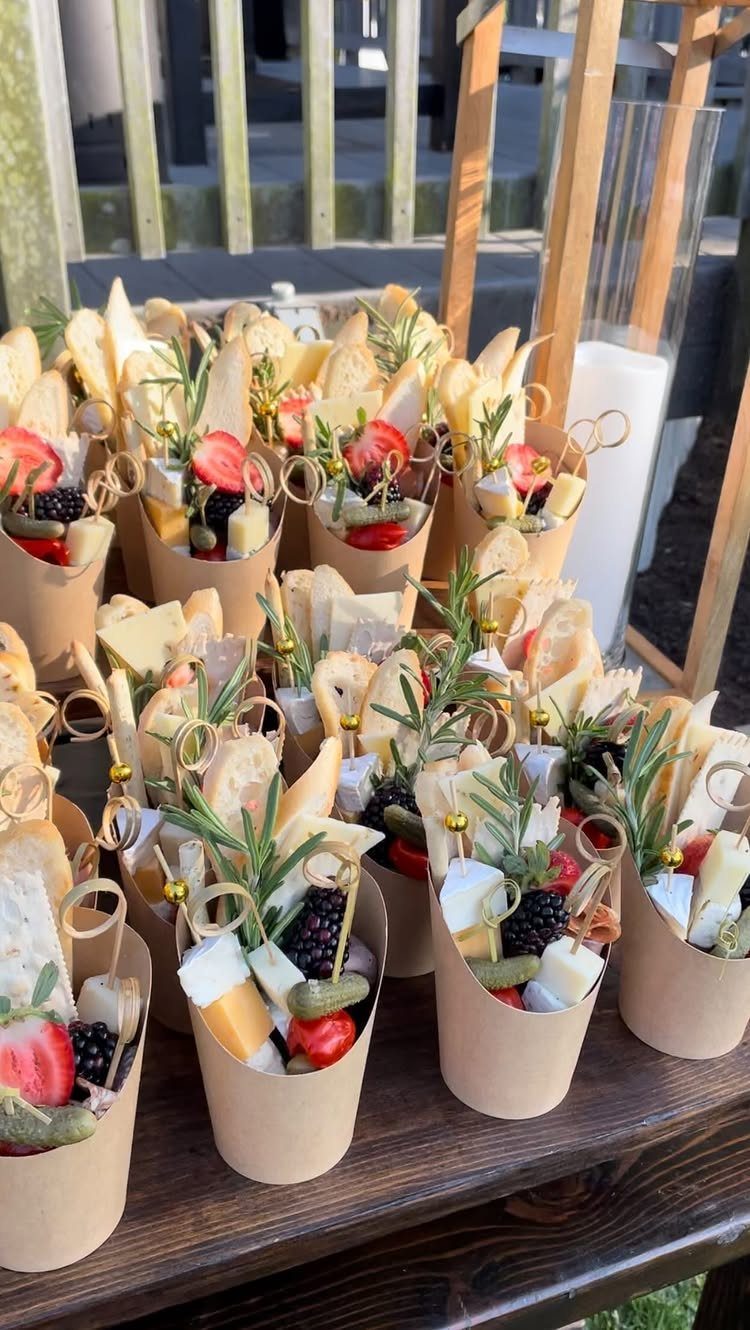
Paper cups filled with cheese, crackers, fruit and herbs turn a charcuterie board into single servings. Guests pick one up and walk away, so there are no shared tongs and no crowding around a platter.
Fill them ahead of time and line them up on a table. Put the same items in each cup, so portions stay even and your food cost is easy to predict.
9. Pulled Pork
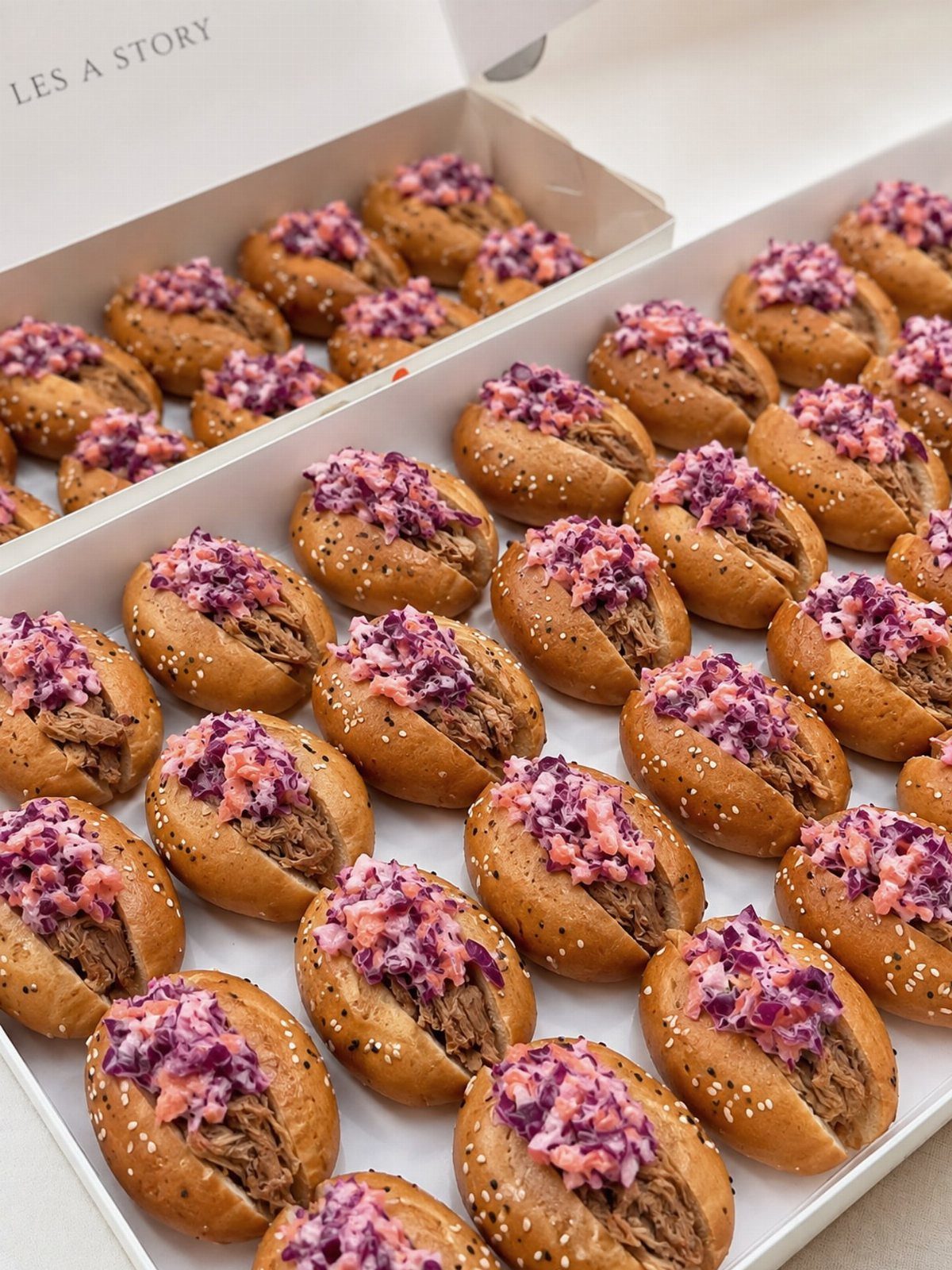
Pulled pork is a cost-effective main, and sliders make it easy to serve. Small buns hold a modest scoop of meat, so one pot feeds many guests.
Purple coleslaw on top adds crunch and color for almost nothing.
I would serve these with a simple side and call it dinner. Guests who skip pork will want another option nearby.
10. DIY Dessert Bar
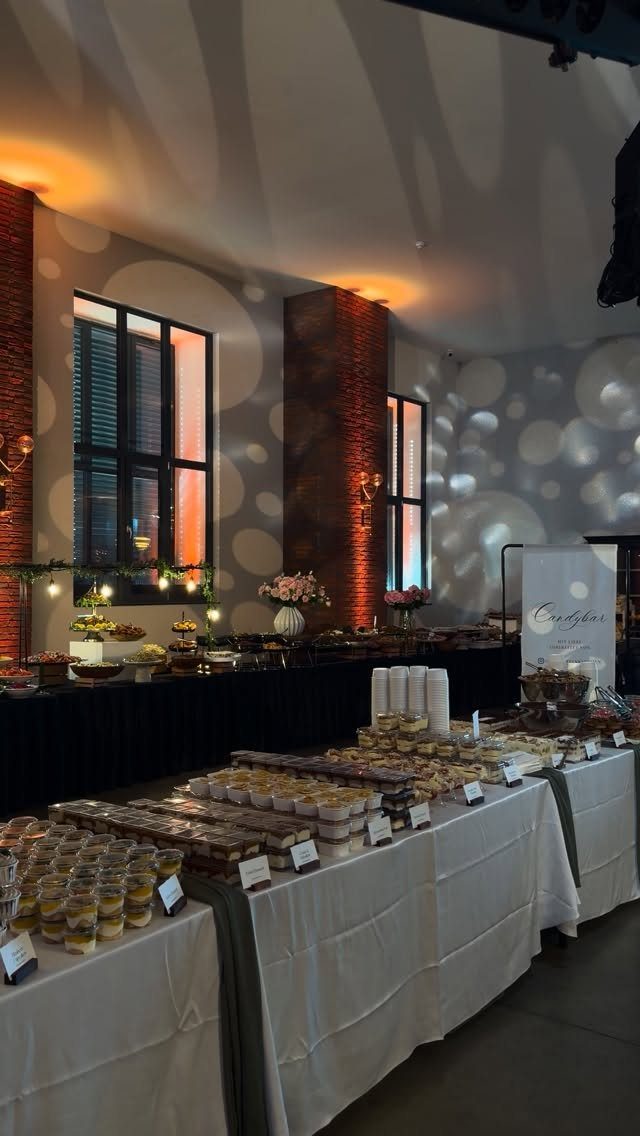
A candy bar table gives each guest a say in dessert: small cups, a scoop, and a sweet or two to choose. That personal touch costs far less than a tiered cake for everyone.
Set out small treat cups so guests can build their own, and add a clear sign so people know it is self-serve. Buy the sweets in bulk and use cups of one size, which keeps the count easy.
Soft lighting on the table helps the sweets stand out.
11. Comfort Food Theme
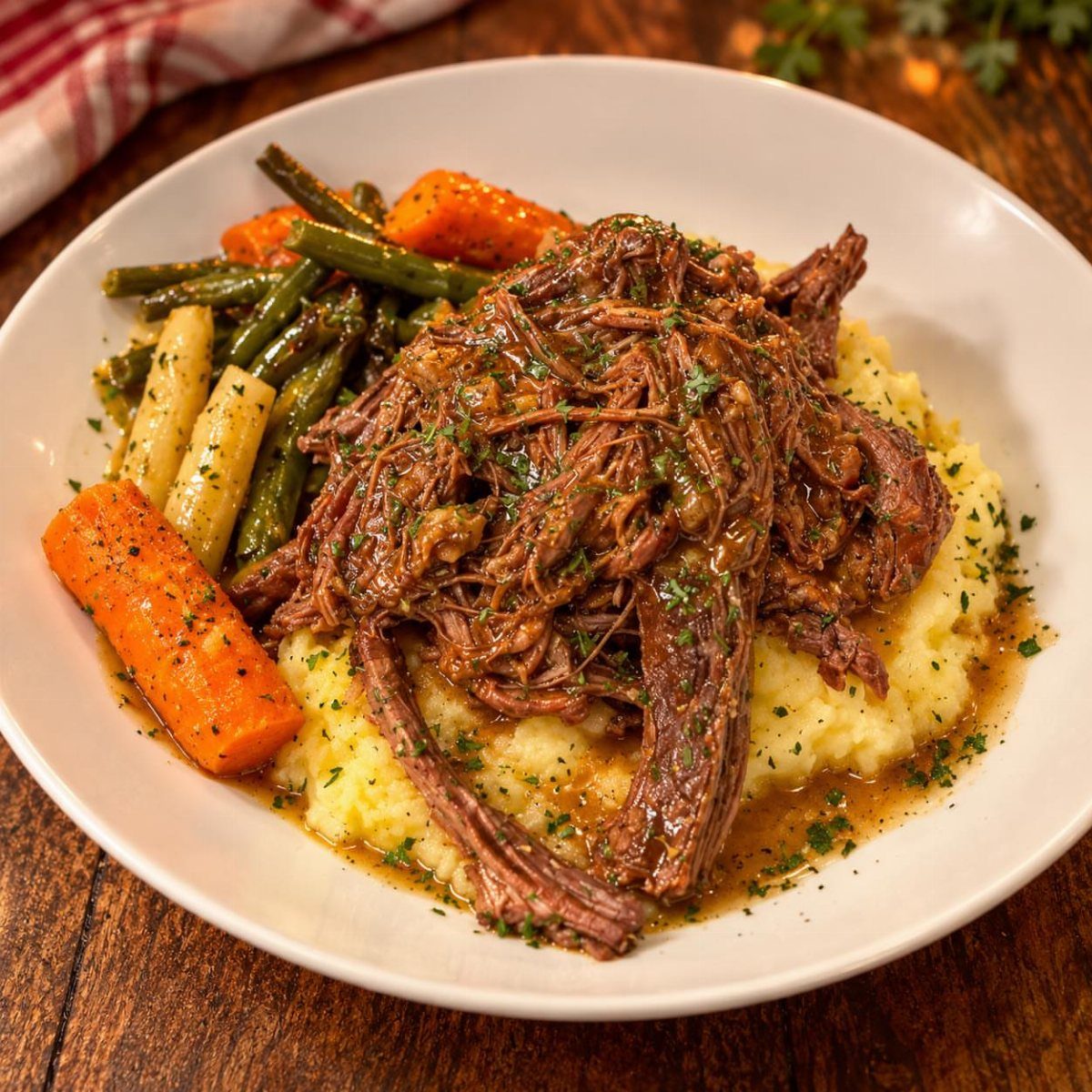
Pot roast over mashed potatoes with carrots and green beans is a dinner guests already love, so nobody needs a menu explained. Cheap cuts of beef cook slowly until they shred, which is where the savings are.
Serve it in bowls with a sprinkle of parsley and it feels warm and a little dressed up. I would choose this over fancy mains every time on a tight budget.
Leave the meat off one portion of the vegetables for guests who skip beef.
12. Brunch-inspired Wedding Dinner
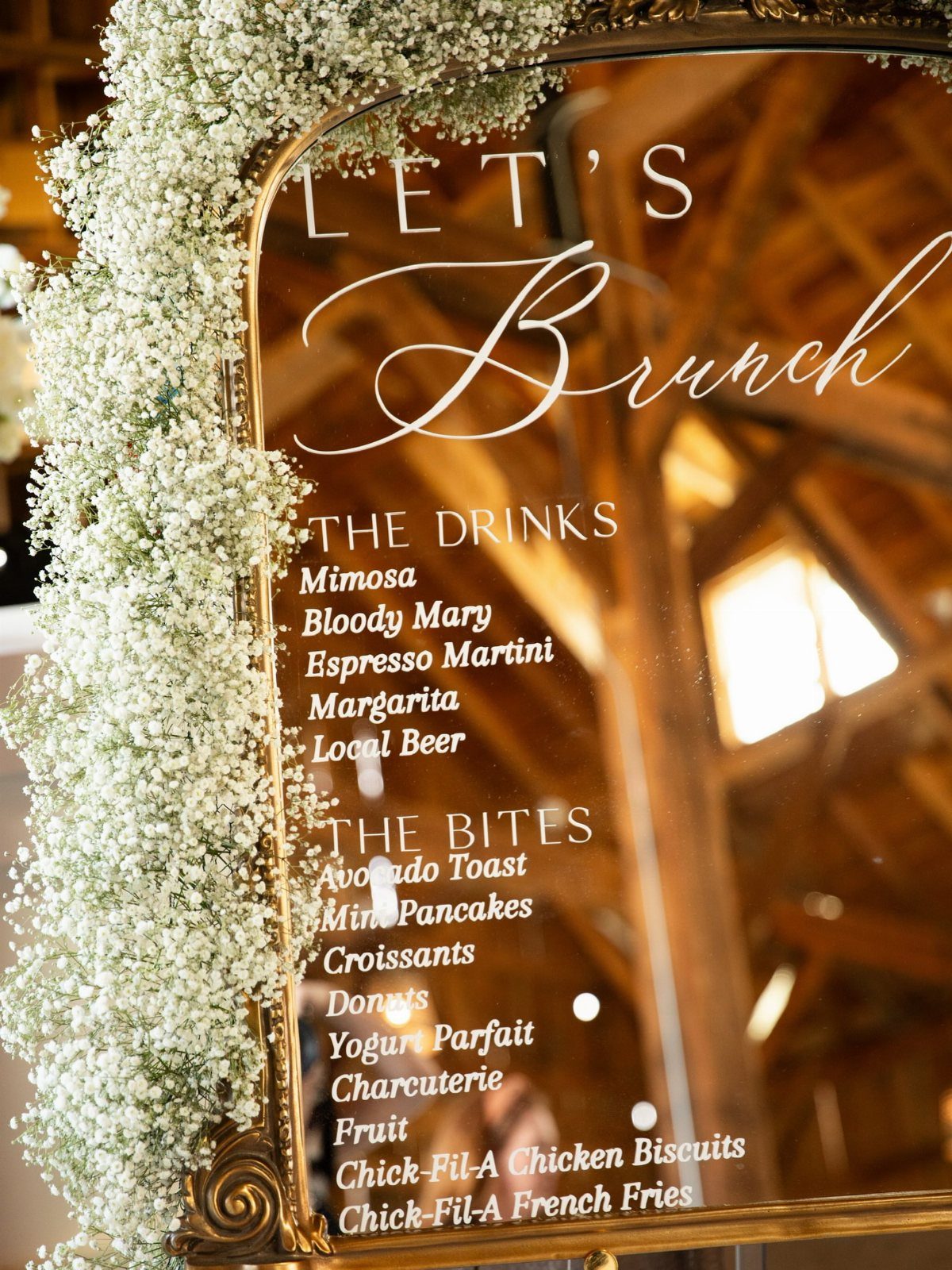
Brunch food at a dinner hour is a budget move that also feels playful. Drinks like mimosas and Bloody Marys, plus bites like avocado toast, cost less than a plated meal and suit a relaxed crowd.
A mirror menu with baby’s breath, lettered with "The Drinks" and "The Bites," tells guests what is on offer at no extra cost. Chick-Fil-A on a menu shows you can mix in easy, familiar items.
I would keep the bites list short so the kitchen stays simple.
13. Food Truck
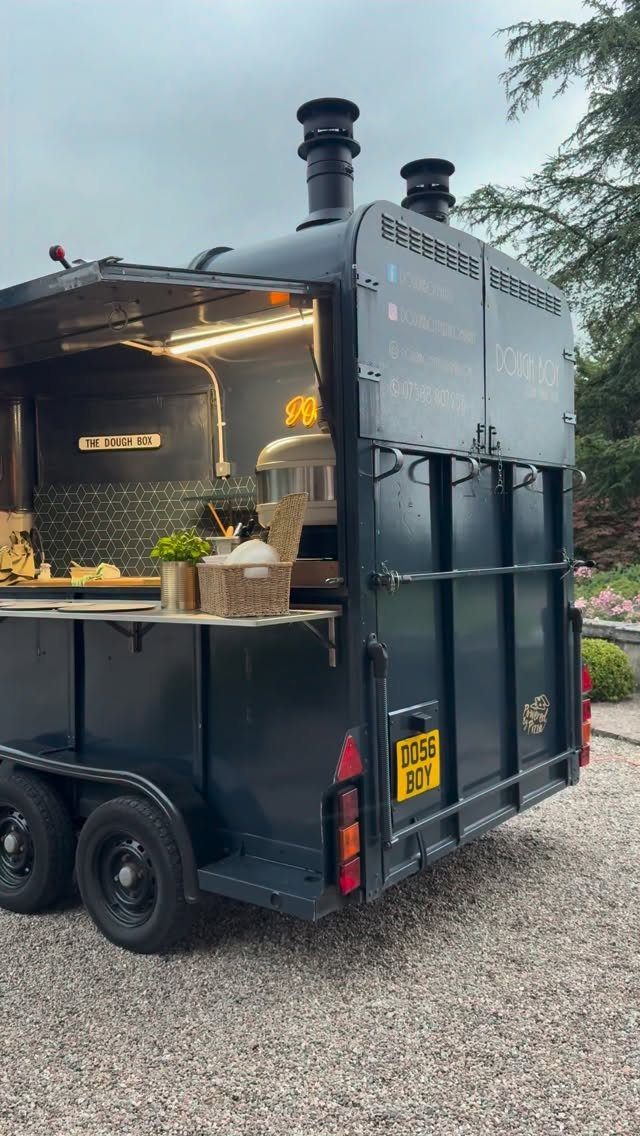
A food truck puts the kitchen on wheels, so the cooking happens in front of guests and you skip the cost of renting kitchen space.
A pizza oven like the one in this truck means dinner comes out hot, one pie at a time.
A food truck needs a flat, firm spot such as gravel or a driveway, and it needs space around the serving hatch so a line can form without blocking the guests or the path to the bar.
I would ask the owner for a menu with a meatless option, since a single specialty can leave some guests out.
14. Mini Desserts
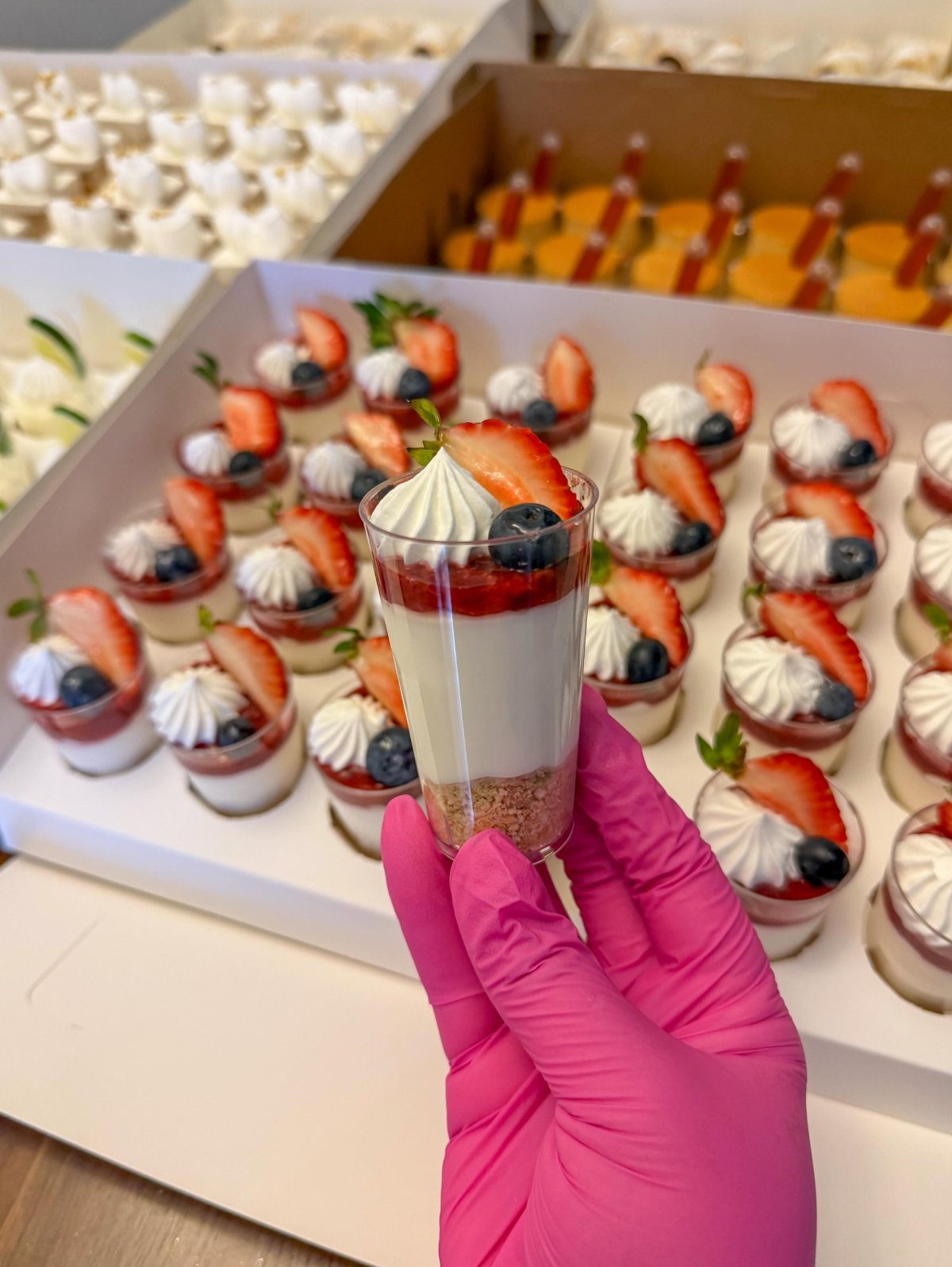
Cheesecake cups with strawberries and blueberries give each guest a full dessert in a single serving, so you skip cutting a cake and handing out plates. Layers in a clear cup look polished even when the recipe is simple.
Mix a few flavors for variety, and keep the cups the same size so the count stays easy. Pack them in boxes and chill them until serving.
I like this better than a big cake for a crowd with different tastes.
15. S’mores Station
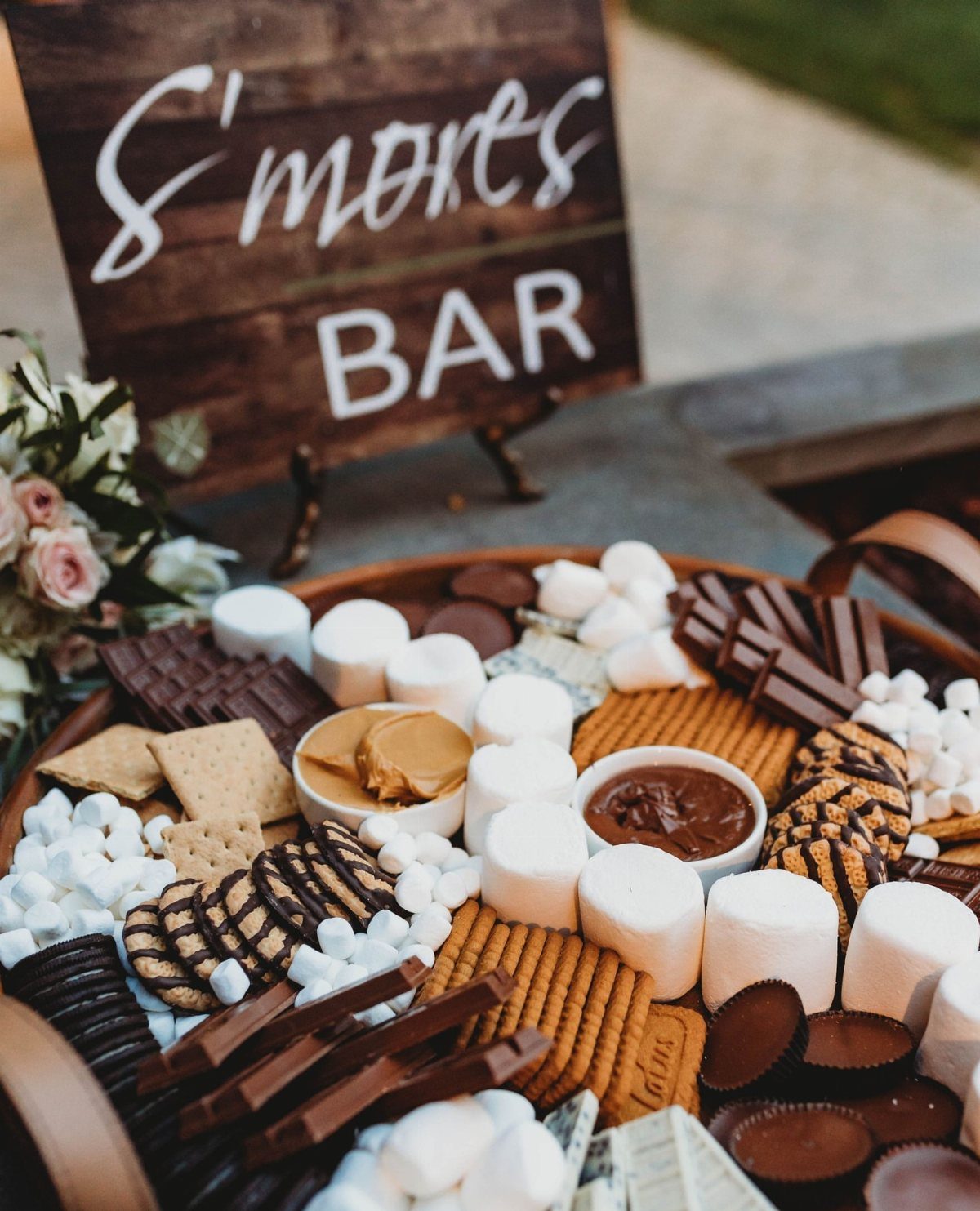
A s’mores station turns dessert into something guests do instead of just eat: set out marshmallows, graham crackers and chocolate, add long skewers, and plan on a fire pit or tabletop burners.
Each piece is cheap, and nothing needs a baker.
Add a hand-lettered sign so people know it is self-serve, and set the tray outdoors where guests can gather around it.
I would buy the 3 ingredients in bulk and refill the tray as it empties. Keep napkins close, because s’mores are sticky.
16. Cheese Wheel Wedding Cake
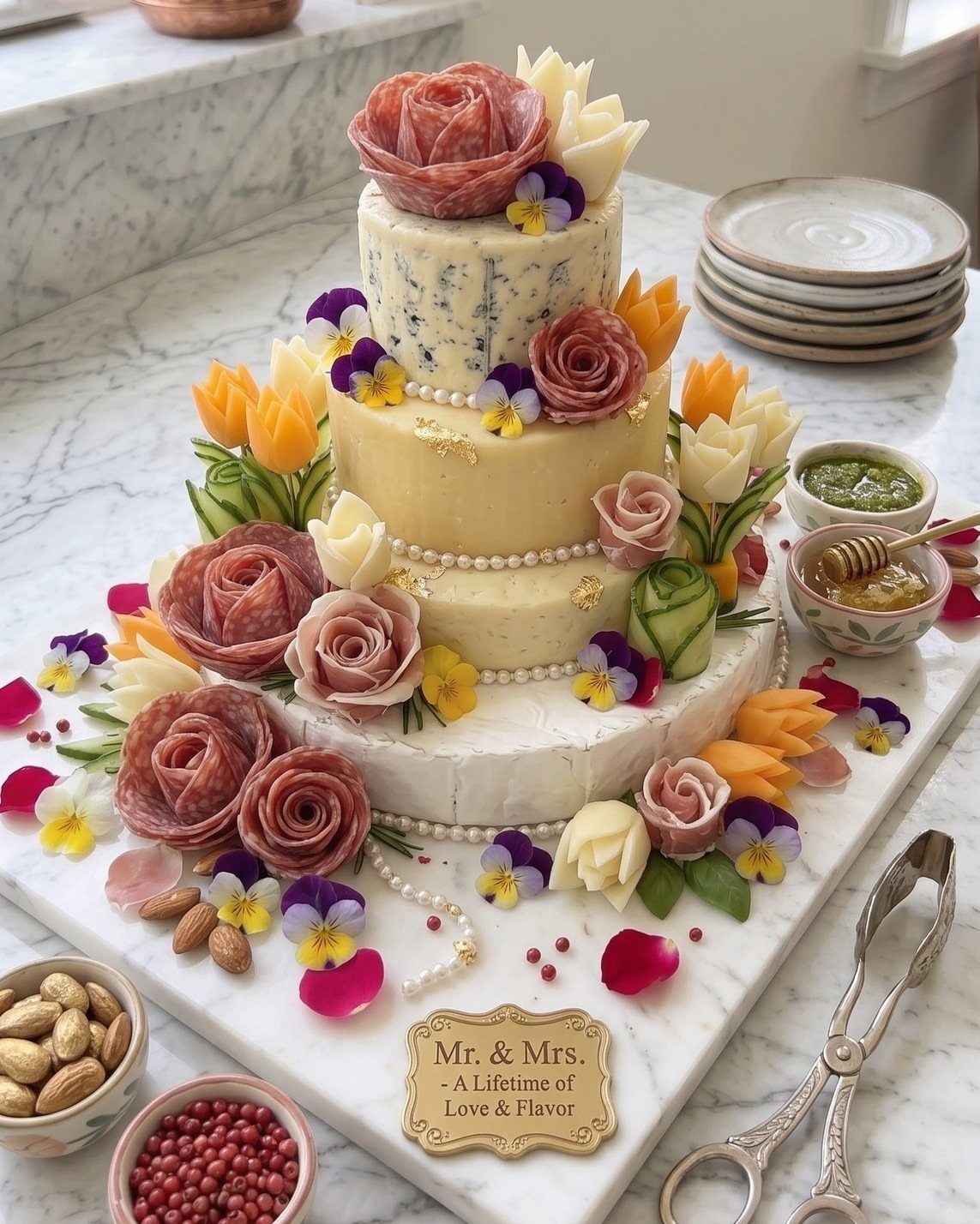
Stacked wheels of cheese make a cake that doubles as a savory course, so guests eat it as part of dinner. Salami roses, flowers and vegetables turn the tiers into a centerpiece.
Choose 3 wheels in graduated sizes, set them on a marble slab, and add a sign with your names for the cake-table feel.
I would pick this over a bakery cake if your crowd likes cheese more than frosting. The cost is cheese, so buy the wheels as the main spend and keep the garnishes simple.
17. Grilled Skewers
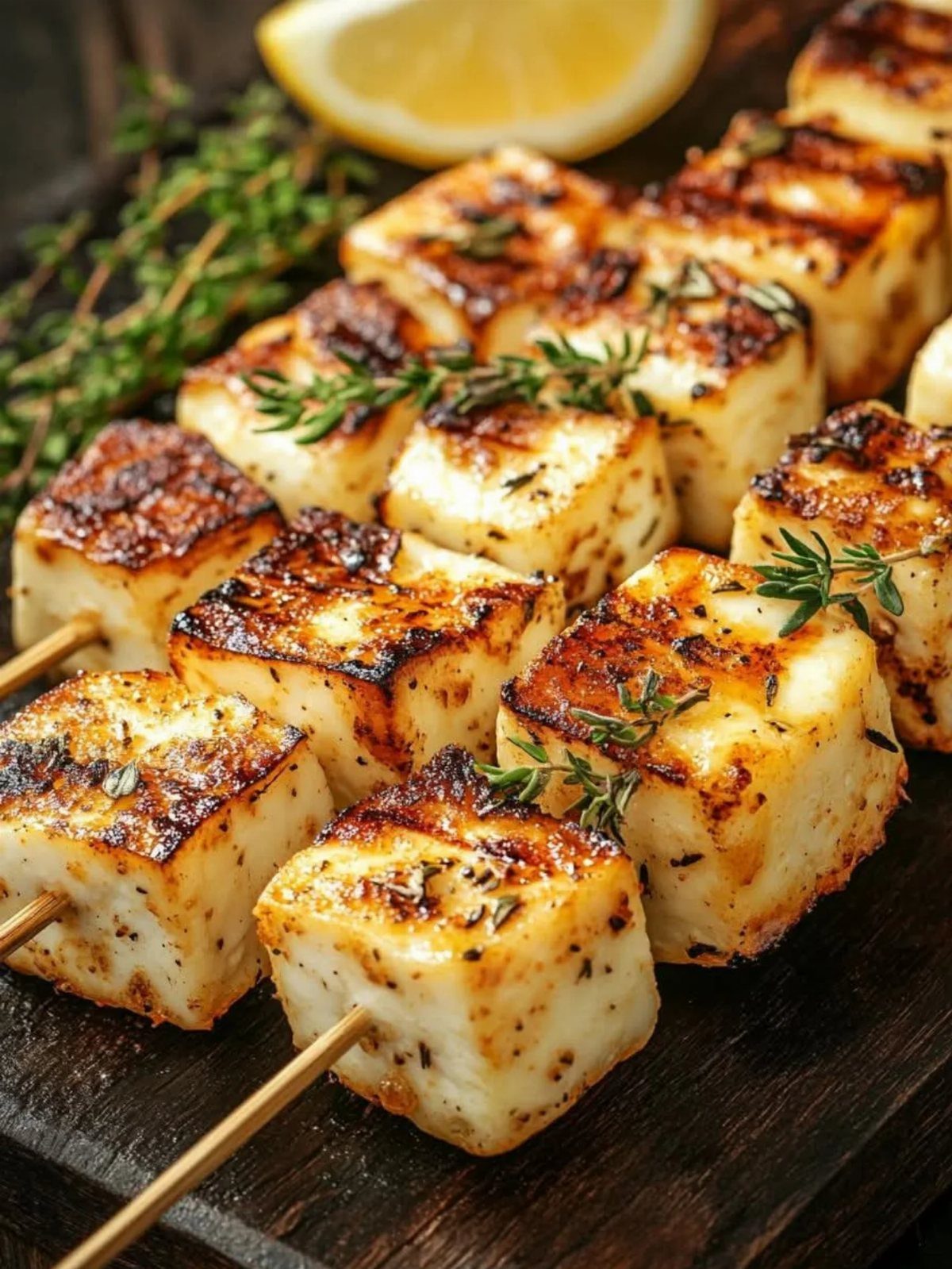
Halloumi holds its shape on a grill, which makes it a smart vegetarian skewer. Cubes threaded on wooden skewers, seasoned with fresh thyme and served with lemon wedges, feel fresh and light.
Cut the cubes evenly so they cook at the same pace. Serve them hot on a board, with the lemon alongside.
I would grill these next to a meat skewer so vegetarians get something just as substantial. Cheese costs more per pound than vegetables, so keep the portions modest.
18. Outdoor Live Grill Station
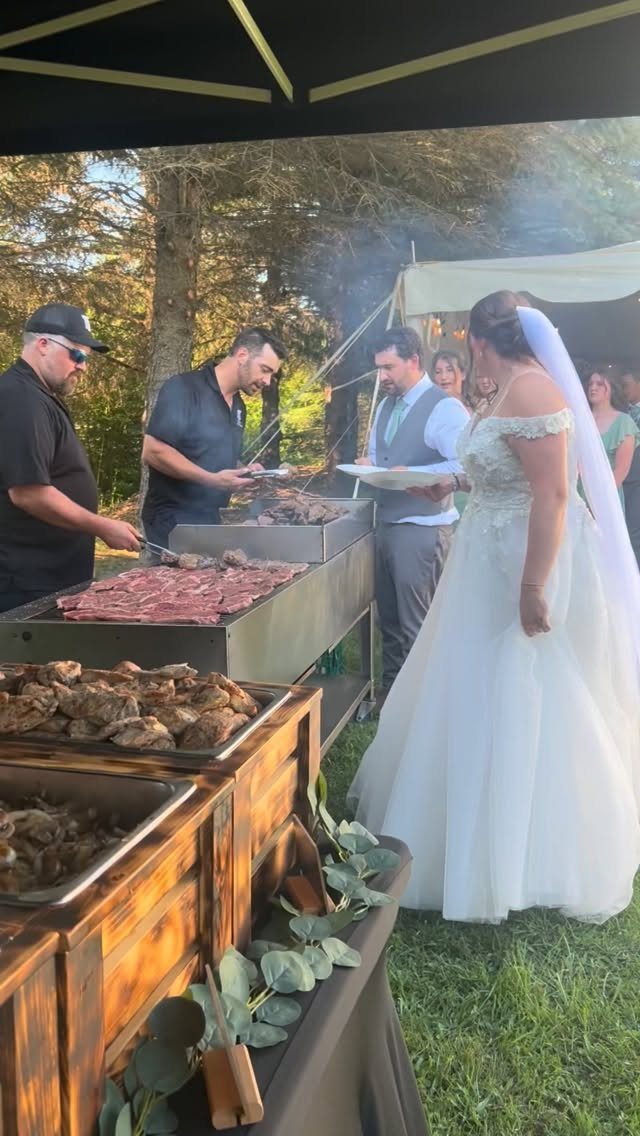
Chefs cooking meat on flat-top grills in front of guests make dinner part of the show, and the tent keeps the scene relaxed in a grassy outdoor spot. Food comes off the grill hot, so nothing sits in a pan.
Cooking on site needs staff, so I would limit the menu to one or two meats and keep the sides simple. Place the grills at the edge of the tent so smoke drifts away from the tables.
19. Hearty Soup and Crusty Bread
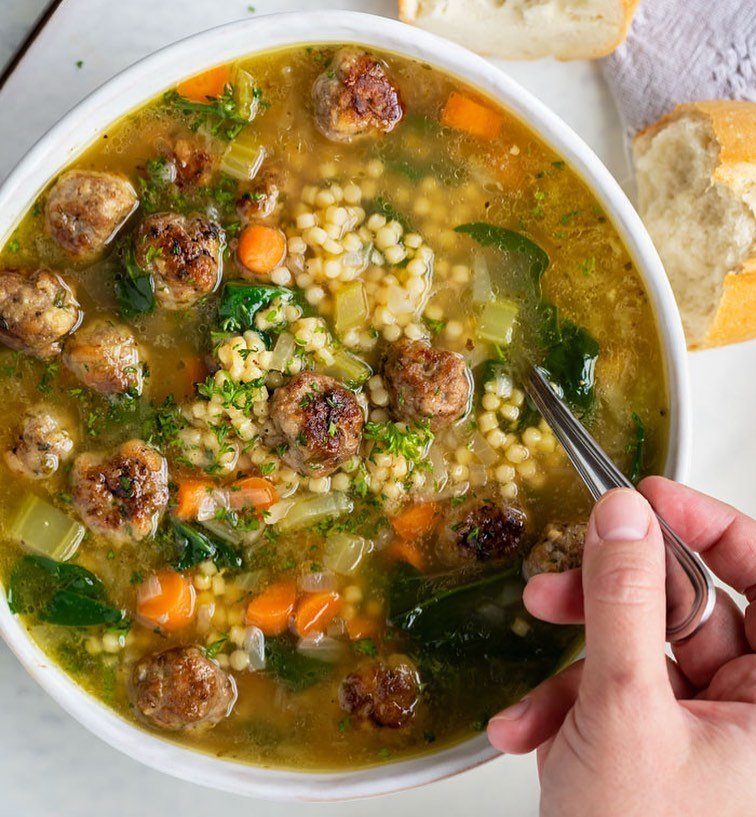
Meatball soup with pasta and vegetables is a full dinner in one white bowl, and a loaf of crusty artisan bread alongside makes it filling without a second main.
Soup stretches a small amount of meat across many bowls, which is why I like it for a tight budget.
Make it in big pots ahead of time and keep it hot in slow cookers or chafing dishes, so nobody waits on a kitchen.
Slice the bread just before serving and set it in baskets on each table or beside the pots.
Cook a vegetable-only pot too, so vegetarians get a real bowl.
I would serve this at a cooler-weather reception, when hot soup feels like part of the welcome.
Understanding Catering Costs
Most couples land between $1,800 and $7,000 on catering, and the average in the U.S. sits around $4,000. Guest count and service style move you around inside that range more than anything else.
Plated service usually lands around $40 per guest. Buffet service runs closer to $27 per person, which is why it wins when the number is tight.
Treat those as ballpark figures, not quotes. Menu, season, staffing, rentals and how much customization you want all change the final price.
Break down each proposal line by line so you know exactly what you’re paying for.
Staffing, rentals, beverages, setup, cleanup and cake cutting are in some proposals and missing from others, so 2 quotes that look different may be pricing different things.
Choosing the Right Caterer
Get quotes from at least three caterers, and ask each one to price the same menu and guest count. Otherwise you are comparing numbers that mean different things.
Book a tasting before you sign anything. Ask to sample the actual menu you’re considering, not just the dishes they want to show off.
Go through the contract word by word before you sign. It should say what is included, what costs extra, and what happens if your guest count changes.
Your budget shapes ingredients, courses, service style, staffing, rentals and menu complexity, so decide those limits first and hand them to every caterer.
If a venue offers an all-inclusive package, its caterers are often already vetted, but price it against an outside quote.
Managing Hidden Costs
Most caterers charge a separate fee for the crew, which covers everyone from the kitchen staff to the people working your tables.
Ask whether gratuity is already folded into that fee. It sometimes is, and you do not want to tip twice by accident.
Check what rentals come with the bid: tables, chairs, linens and dinnerware. If they are not included, rental costs can add a large line to your budget.
Alcohol is the other big swing. It can change your final bill more than almost any other choice, so get it priced separately.
Before you sign, ask the caterer to list every fee in writing.
The most important thing you can do to reduce the cost of your reception dinner doesn’t require much effort. Simply call the venues you’re considering and ask whether they allow outside food.
Frequently Asked Questions
What are some affordable food ideas for a wedding reception?
A buffet, a taco bar, drop-off catering, family-style platters and a food truck are the ones I would look at first.
A taco bar is my pick for a low-staff reception: guests build their own plates, so picky eaters and dietary needs sort themselves out, and with servers behind the table portions stay even while a few friends or family members handle the serving.
Is $5000 a good budget for a wedding?
It can work with careful planning and budget-friendly choices. Food is where you can save most: most couples spend between $1,800 and $7,000 on catering, so a buffet, a drop-off caterer or a self-serve bar helps keep that line small.
Price alcohol and rentals separately, because they can push the bill up fast.
What is a good menu for a wedding?
A good menu fits the mood of the wedding and keeps to a few dishes done well.
For a tight budget I like one protein with a few sides, such as tacos, pulled pork sliders or pot roast, because guests already know and enjoy them.
Go with chicken or pasta as your main dishes, since both run well below beef or seafood, and put a vegetarian entree on the same menu line so no one is left out.
How much should I budget for food at a wedding?
Catering for most couples lands somewhere from $1,800 to $7,000, with a national average near $4,000. Service style makes the gap plain: plated dinners run about $40 a head and buffets about $27, so when the budget is tight, I’d choose the buffet.
Treat every figure here as a rough guide, and have each caterer put all fees on paper before you sign.





