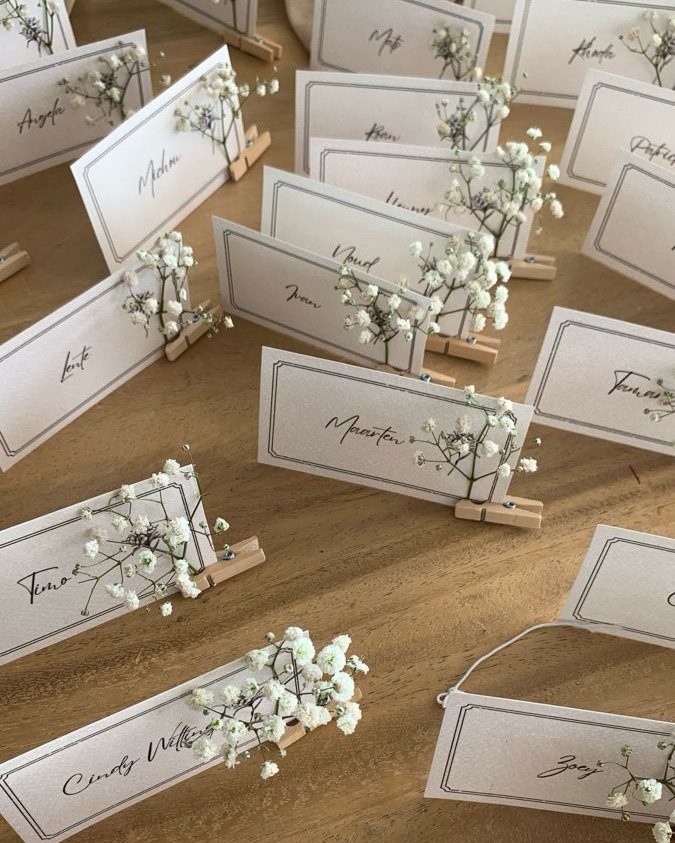
Wedding table cards range from DIY paper tags that cost almost nothing but your time to acrylic place cards and tasseled metallic name plates that run higher per piece, and the guest count decides which end you can afford.
A list of 40 can carry acrylic or metal; a list of 150 usually belongs to paper tags or wooden name tags, with the pricier material saved for the head table.
Even the mini bottle, tied with a name card, shows how one piece can serve as both place card and favor.
1. Mini Bottles
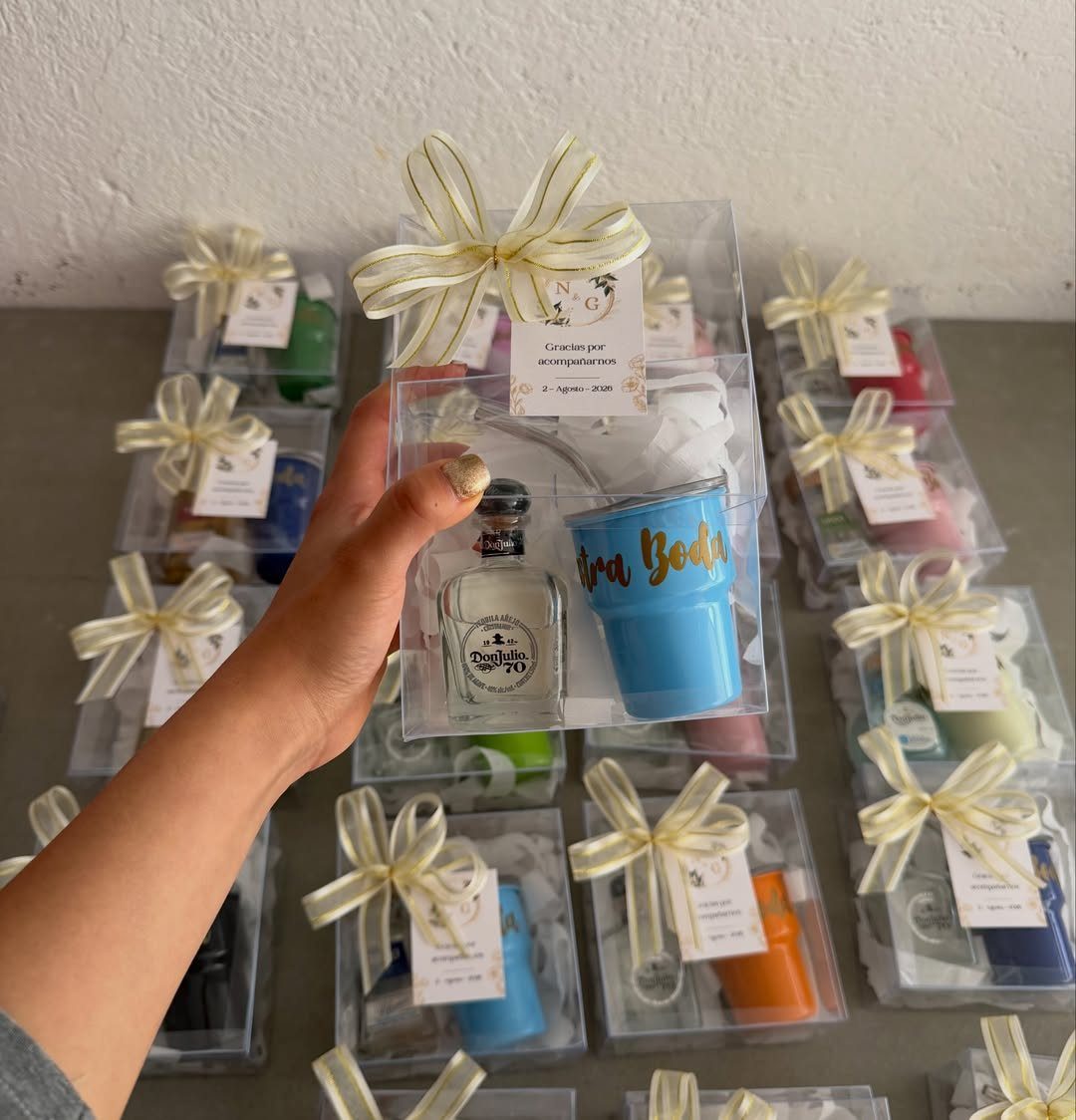
A mini bottle doubles as the place card and the favor, which is why I like it for a budget. Guests find their name on a card tied to the bottle and leave with something they will actually use.
Add a shot glass if you want the favor to work straight away, and write your own phrase on the card instead of a generic thank-you.
Pick a spirit that fits your crowd, and skip the glass if you need to trim the per-guest cost.
2. Wooden Name Tags
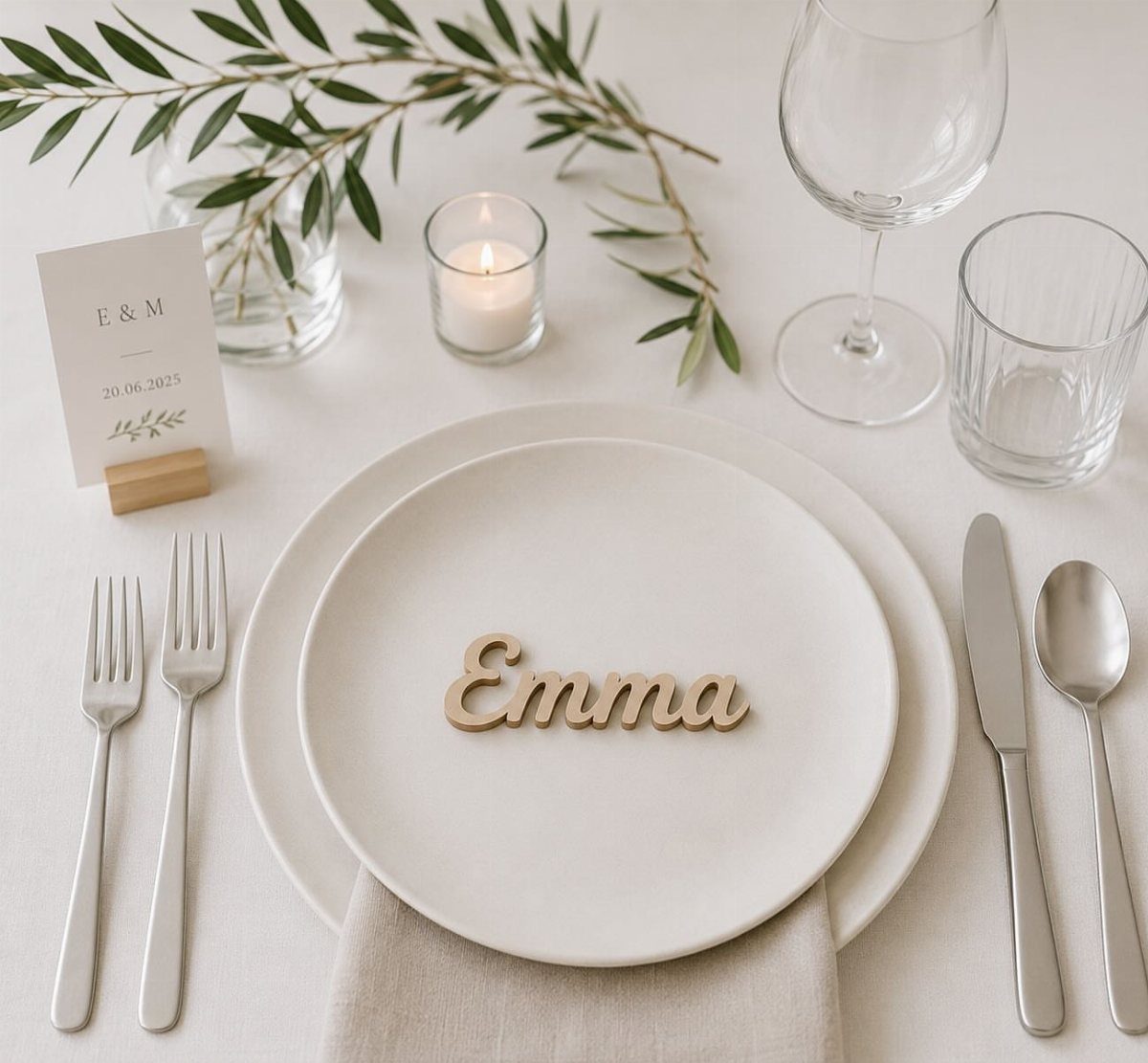
Wooden cutouts like the "Emma" tag work best when the name is the only decoration. Set one on the plate and the table needs very little else.
Skip the engraving if you want to save money; a plain wooden shape with the name written on it is cheaper, though less polished.
Engraved tags can also be kept afterward, which counts for something when you are weighing the price.
3. Succulent Pots
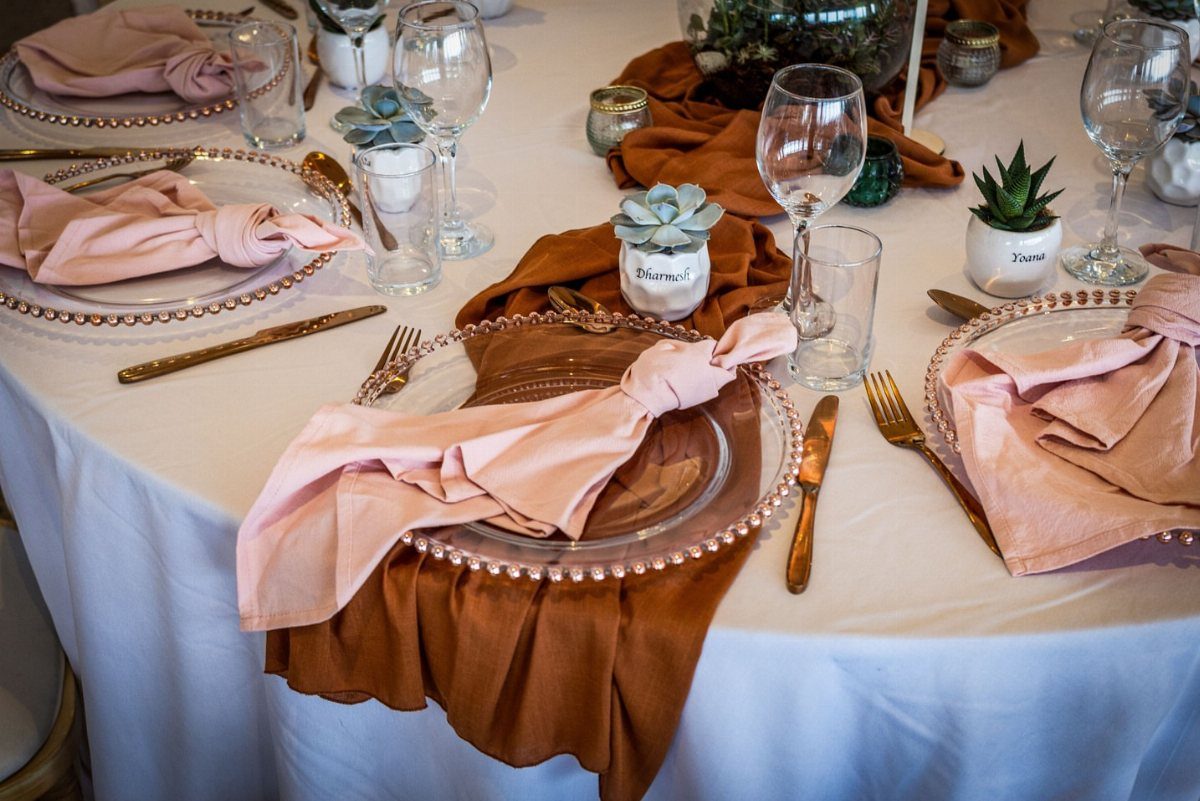
Small succulents in white pots give each guest a place card they can carry home. Write the name straight onto the pot so no extra card is needed.
Use a marker that is safe on the pot’s finish, and test it on a spare first so a smudge does not ruin a guest’s name.
4. DIY Paper Tags
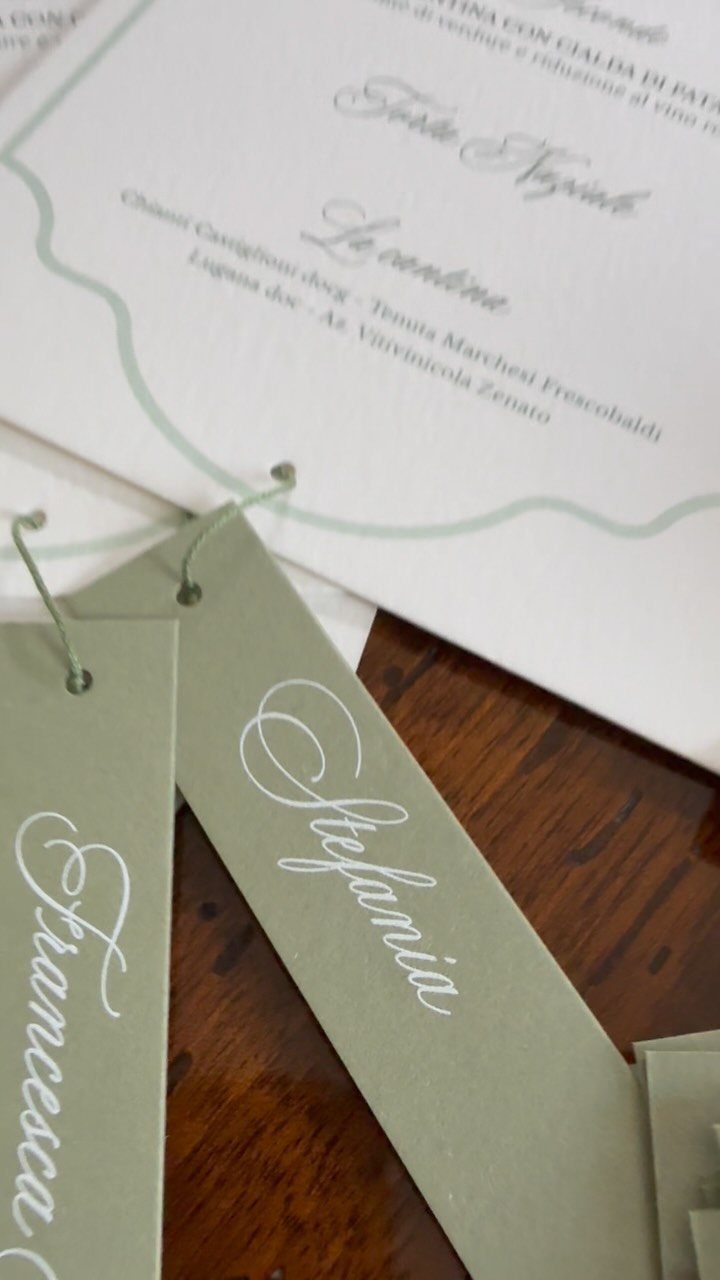
Sage green paper with white script looks far more expensive than it is. Paper tags cost almost nothing; the real cost is your time.
Test one tag first so you know how much time the full batch will take.
White ink on colored stock needs steady lettering, so if your handwriting is shaky, print the names instead. Cut all the tags from one sheet size so they match.
5. Fruit Escort Cards
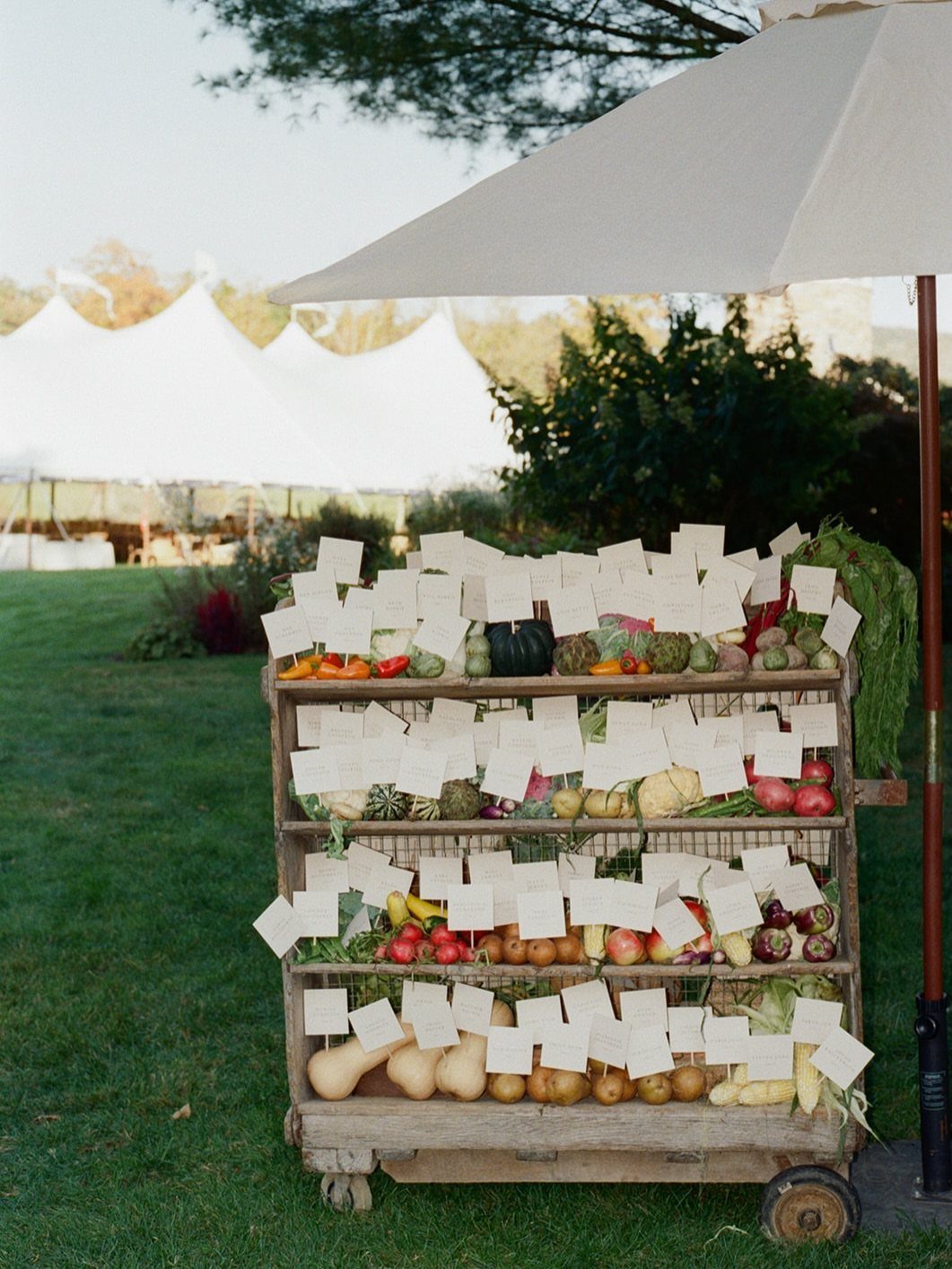
Seasonal produce makes the seating chart double as decor. Attach a small white tag to each piece of fruit or vegetable, then gather them in a wooden cart or basket.
I would choose it for an outdoor reception, where the cart reads as part of the setting. Buy a few extra pieces in case some bruise before the day.
6. Lollipop Table Number Wall Display
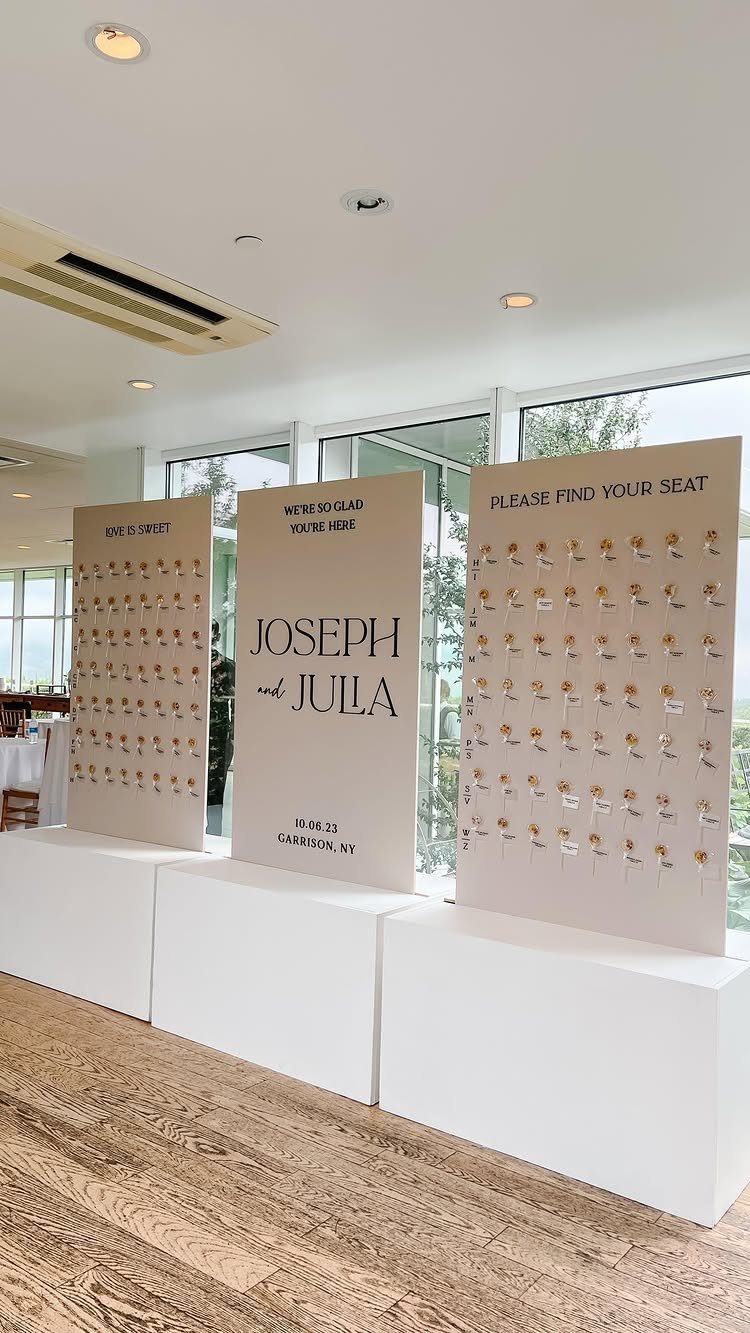
Lollipops turn a seating chart into a wall guests want to photograph. Attach a tag to the stick with the guest’s name and table number, then arrange the pops on a board.
Mounting them on panels keeps the colors of the candy in front and makes the whole display easier to move.
Add a welcome line and your date on the boards so the display also works as a sign. Order a few extra lollipops for late changes.
7. Champagne Flutes
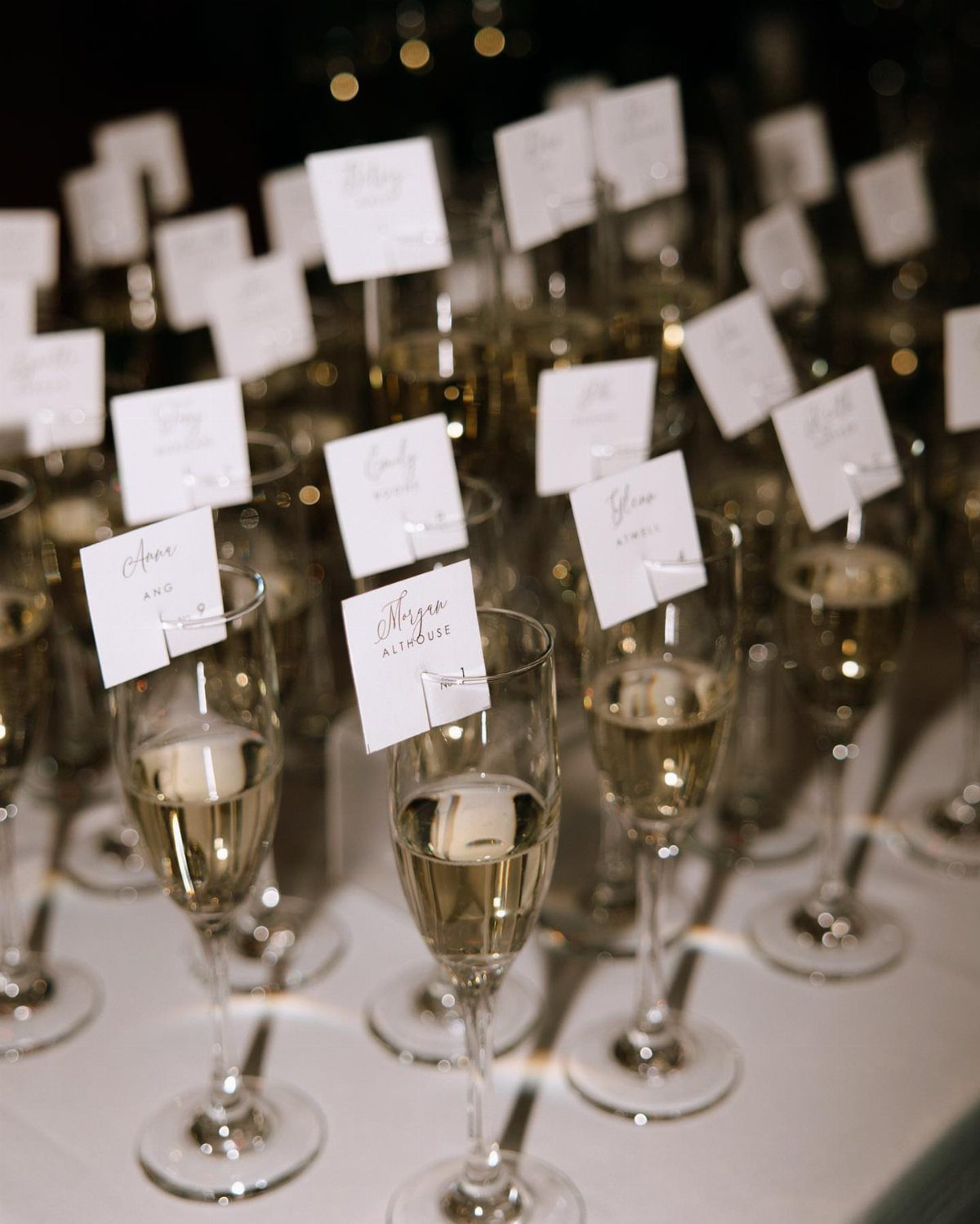
Pre-poured flutes with a name card clipped to each rim put the seating chart in guests’ hands the moment cocktail hour starts. Nobody waits at the bar, and every guest knows where to head next.
Pour just before guests arrive so the sparkling wine stays lively. Set the flutes on a white cloth so the cards are easy to read, and pour a few extra glasses for guests who turn up unannounced.
8. Acrylic Place Cards
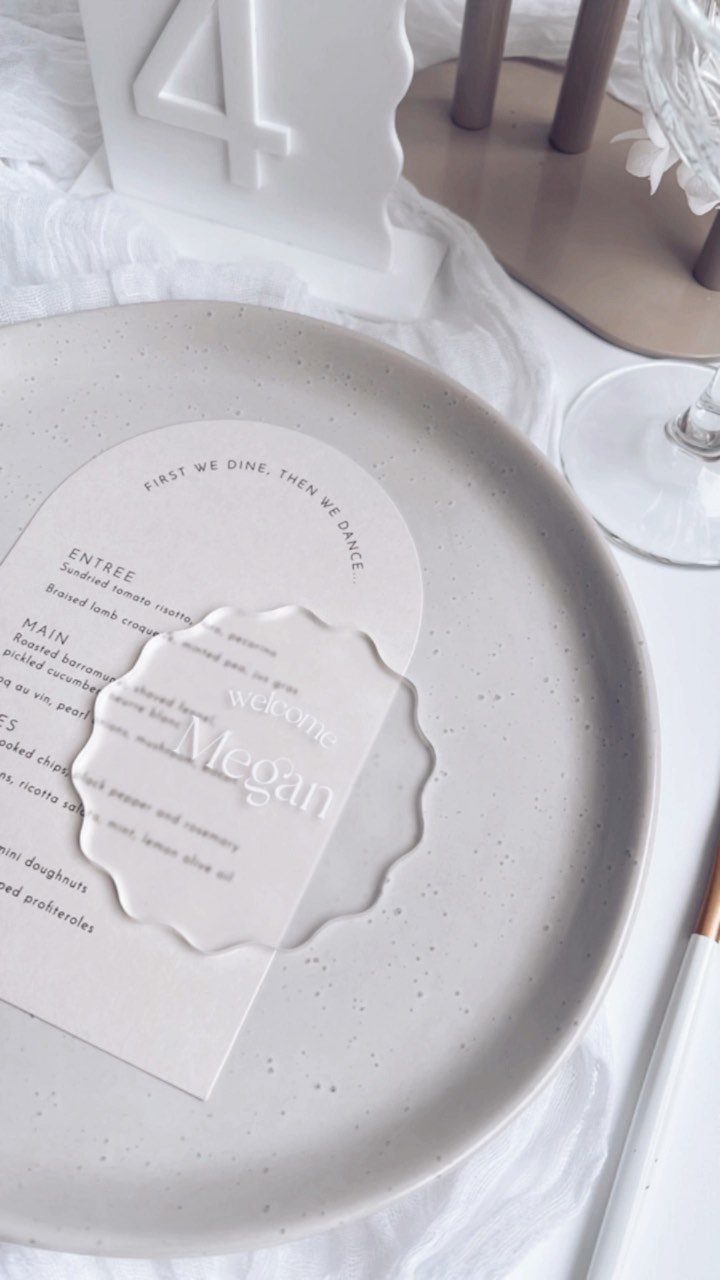
A clear acrylic tile keeps the name front and center without adding color to the table. I like the scalloped edge, since it softens an otherwise very modern material.
Rest it on the plate, or lean it against a glass if the plate holds a menu.
Acrylic costs more per piece than paper, so I would reserve it for a smaller guest list, or use it only at the head table and go with paper elsewhere.
9. Vintage Keys
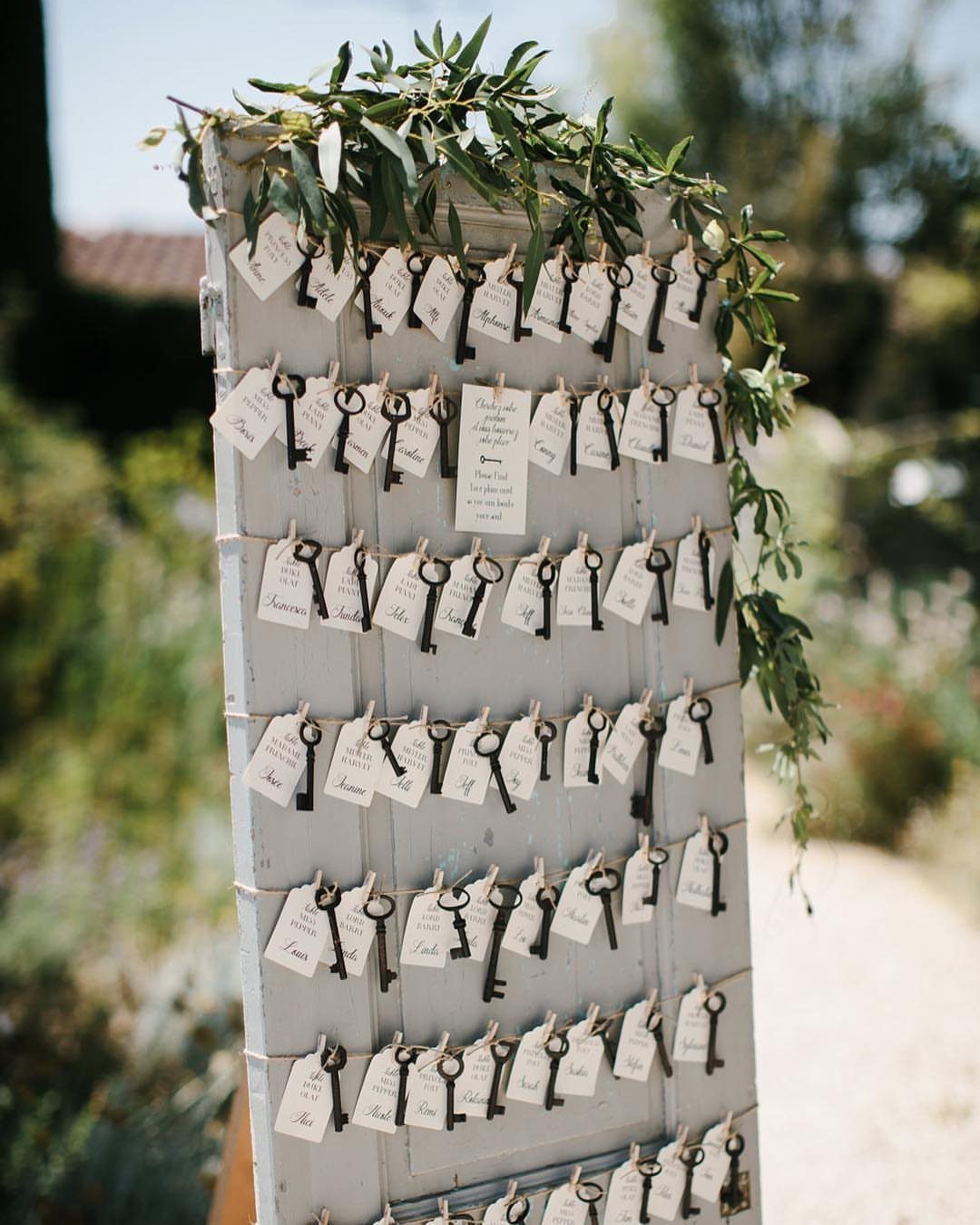
Vintage keys can turn a plain seating chart into a small garden display.
Pick up a few extra keys, since some will be too worn to hang straight. Keep the tags small and white so the keys stay the focus, and write the table number on each tag.
10. Tasseled Metallic Name Plate
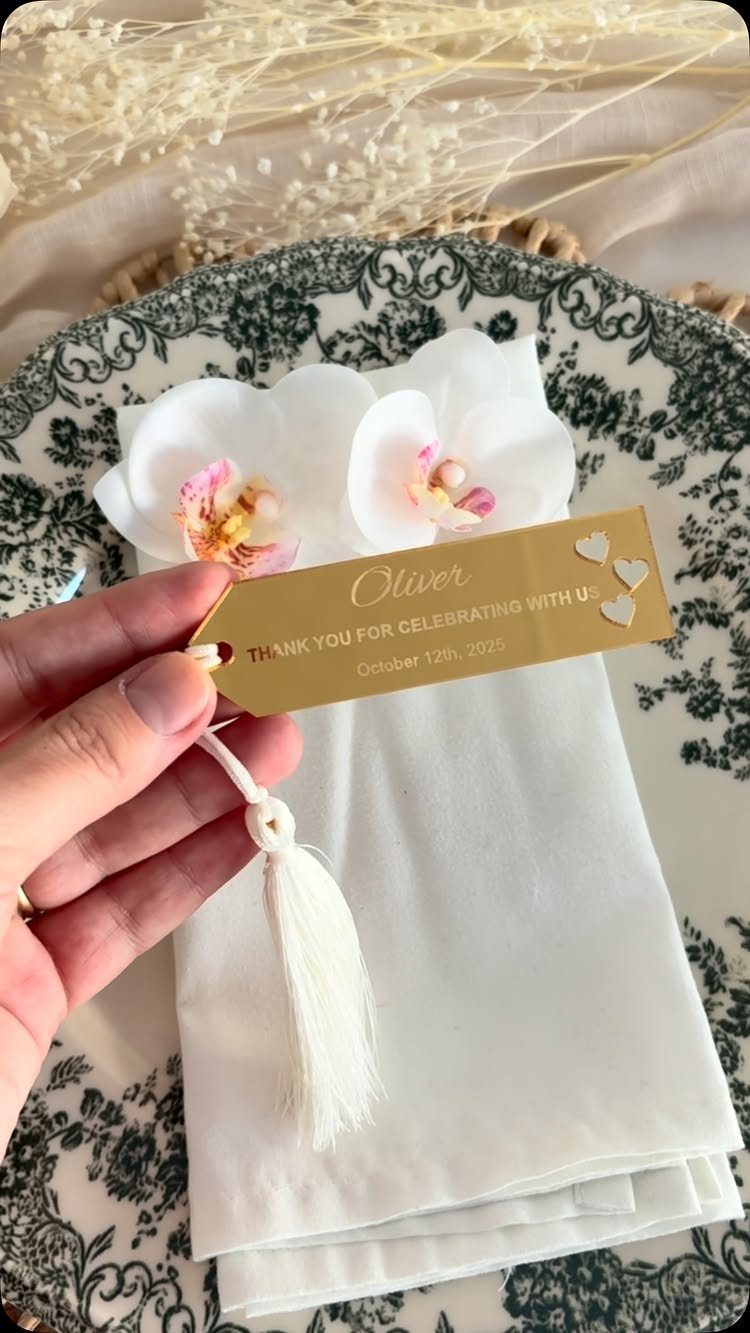
A gold metal name plate with a white tassel makes the napkin look like part of the gift. The tassel adds movement, and the metal catches candlelight in a way paper cannot.
A thank-you line and your date printed on the plate turn it into a keepsake guests can take home. Metal costs more than card stock, so I would price a sample before ordering for the whole guest list.
11. Botanical Foliage Place Card
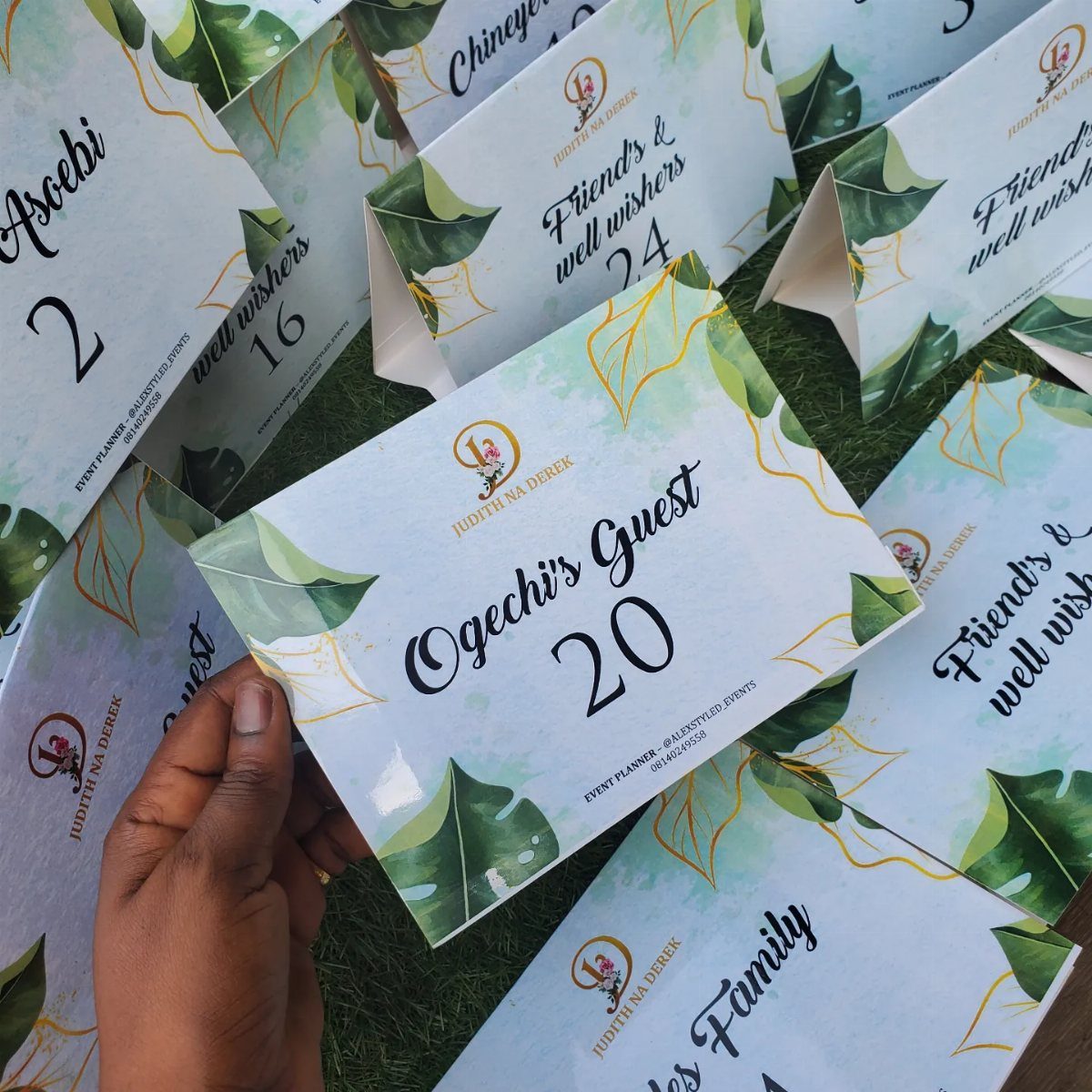
Leaf illustrations in green on white card give a seating chart the feel of a garden, without needing a single real stem. Print the guest’s name and table number on a tented card so it stands on its own.
Use one leaf style across every card so the set looks matched. Print a few spares, since a late RSVP will always show up.
12. Minimalist Classic Place Card
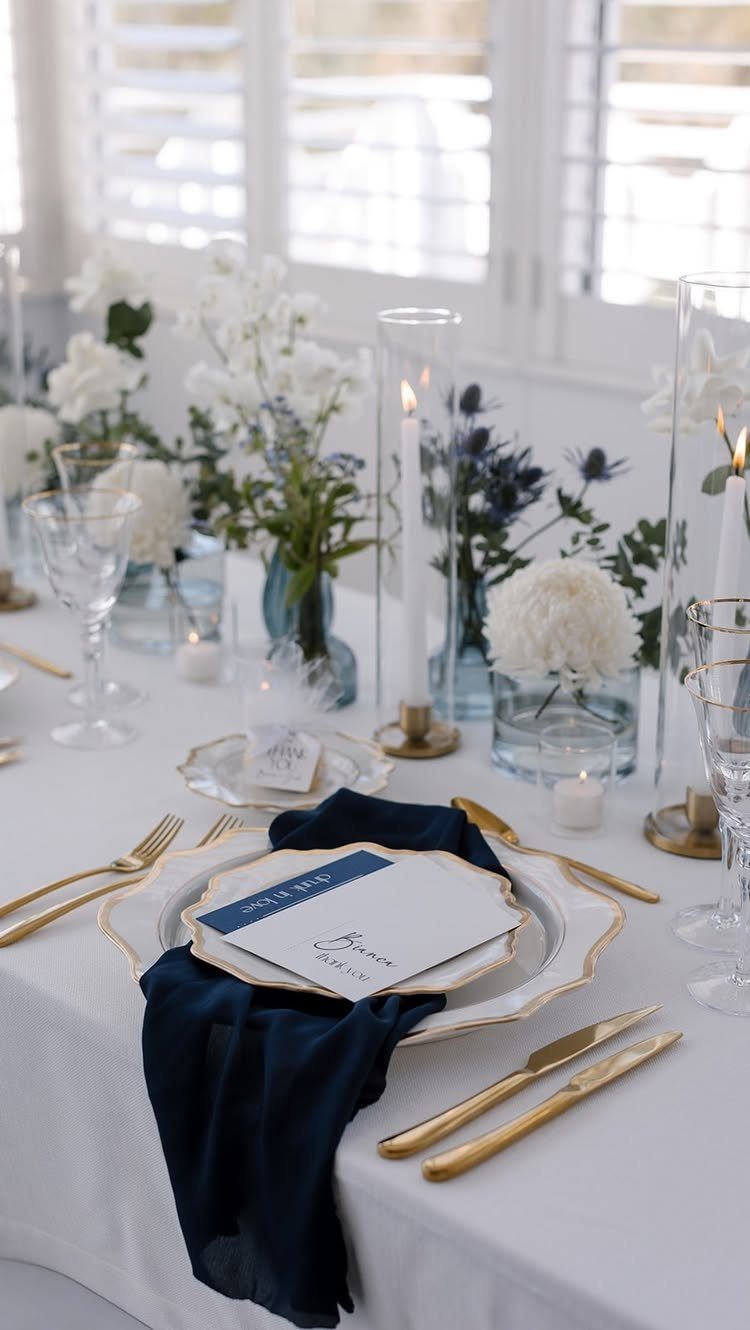
One white rectangular card, blue calligraphy with a name and a short thank-you, centered on the plate.
Hire a calligrapher if your budget allows. If not, print the names in a script font and keep the card size identical for every guest.
Difference Between Escort and Place Cards
An escort card sends a guest to a table.
A place card sends them to a chair. Most weddings only need the first, because guests who know their table can pick any open seat, and you still get the grouping you planned.
Escort cards usually go near the reception entrance, where guests can find their names and the table number on arrival. A place card marks the exact seat, resting beside the plate or tucked into the folded napkin.
Choose place cards for a formal reception, a plated dinner, or any night where you want specific people side by side.
They also help with a large guest list or a multi-course meal, since the catering staff can serve the right dish to the right seat.
Using both is allowed. The escort card gets guests to the table, and the place card finishes the job.
A seating chart is a different thing: one large display everyone looks at, rather than a card each guest carries.
DIY Vs. Professional Help
DIY gives you control over the look, and it is where personalization comes cheapest. It also asks more than most couples expect: you design it, build it, and get it to the venue.
That transport step is where stress piles up, in the weeks before and on the wedding day itself. A large sign that has to survive a car ride is a different job from a handful of cards in a box.
I would hire a professional for the big pieces, especially signage, where experience shows. Keep the small, forgiving items for yourself, like cards you can reprint if one goes wrong.
Price both routes before you decide. A professional’s fee buys back your time and your calm, and that can be worth it on a deadline.
Digital Options
A digital seating chart makes sense if space is tight, if guests are traveling, or if you want an easy option on their phones.
A QR code on a sign or card sends each guest to a page that shows their seat.
The real advantage is flexibility. Seating still shifting the week of the wedding is where the digital route wins, because I can fix any name from my phone and never pay for a reprint.
Wedibox is one service that works this way. Check how it handles guests who do not carry a phone or struggle with scanning.
I would keep a small printed backup near the entrance, so no one is stuck waiting while they sort out a signal.
Frequently Asked Questions
What is a table card called?
Most people call it an escort card or a place card, and the two do different jobs. Escort cards point each guest to a table, and they usually sit on a display near the reception entrance.
What are some creative ideas for a wedding seating chart?
Mini bottles, vintage keys and acrylic tiles are three that stand out. A mini bottle with a name card tied on doubles as the favor, while vintage keys with small white tags turn the chart into a little garden display.
Clear acrylic tiles with scalloped edges make names easy to read, but each one costs more than a paper card.
What is a cheap wedding place card idea?
Paper tags run pennies apiece; what they really cost is the hours you spend on them. Make one test tag first to see how long the full batch will take, and print the names if your handwriting is shaky.





