These printables cover the whole planning stretch, from a budget planner to a seating chart to an emergency kit for the day itself, with budgeting advice, time management and RSVP handling in between.
Which one you need first depends on where your planning stalls: if money is the worry, start with the budget planner and the budgeting advice; if guests are, the RSVP handling comes before the seating chart.
Pick the sheet that matches your next deadline, since a checklist you open every week beats a stack you never use.
1. Wedding Budget Planner
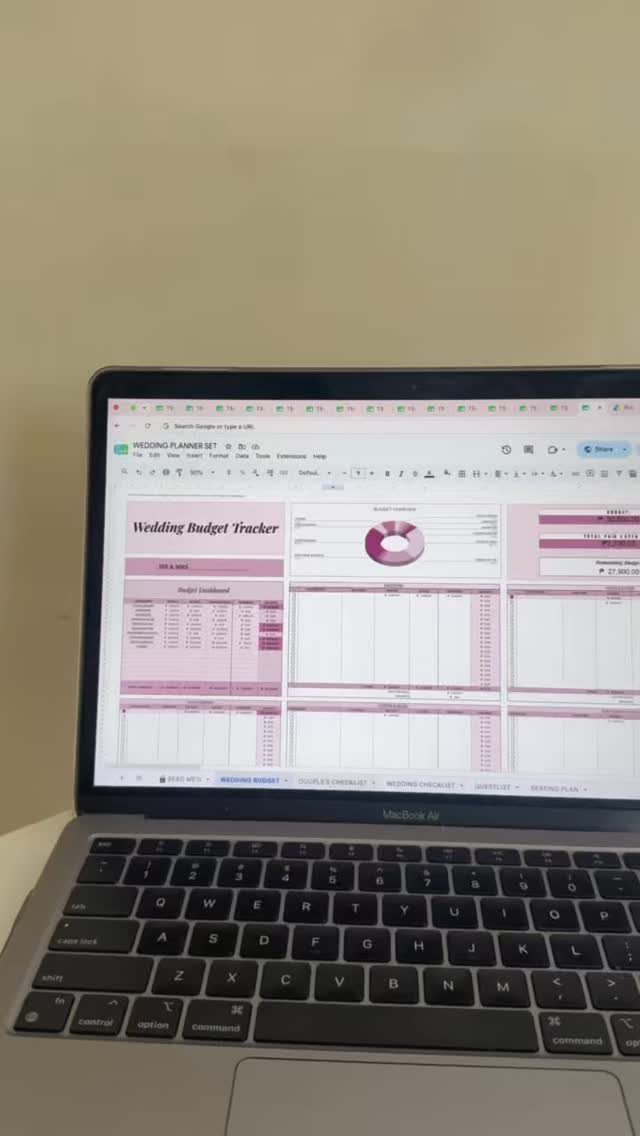
A budget tracker earns its place by keeping every cost in one spot, with a total that updates as you type. Mine would start with a category list: venue, food, attire, photography, flowers, stationery, postage.
Give each line 3 columns: estimated, actual, and paid. The gap between the first 2 is what tells you when to cut something else.
A donut chart is a nice extra, but the numbers do the work. Add a small "forgot" line, because something always turns up.
2. Wedding Day Emergency Kit
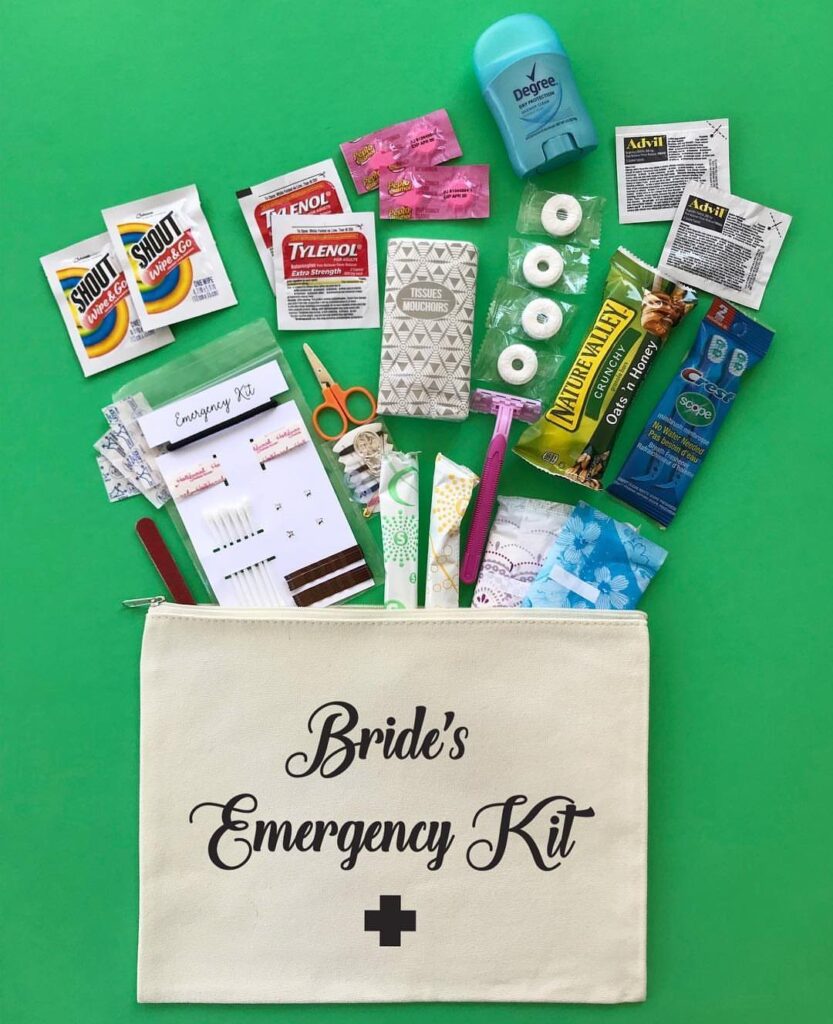
Shout wipes, Tylenol, Advil, tissues and a razor are a sensible start, and a pouch small enough to hand to a bridesmaid beats a tote nobody can find.
Pack it a few days early, not the morning of, so a missing item can still be bought. I would add safety pins, a sewing kit and snacks, since a stain or a skipped lunch is likelier than a disaster.
Tape a short list inside the pouch so whoever holds it knows what’s in there.
3. Seating Chart
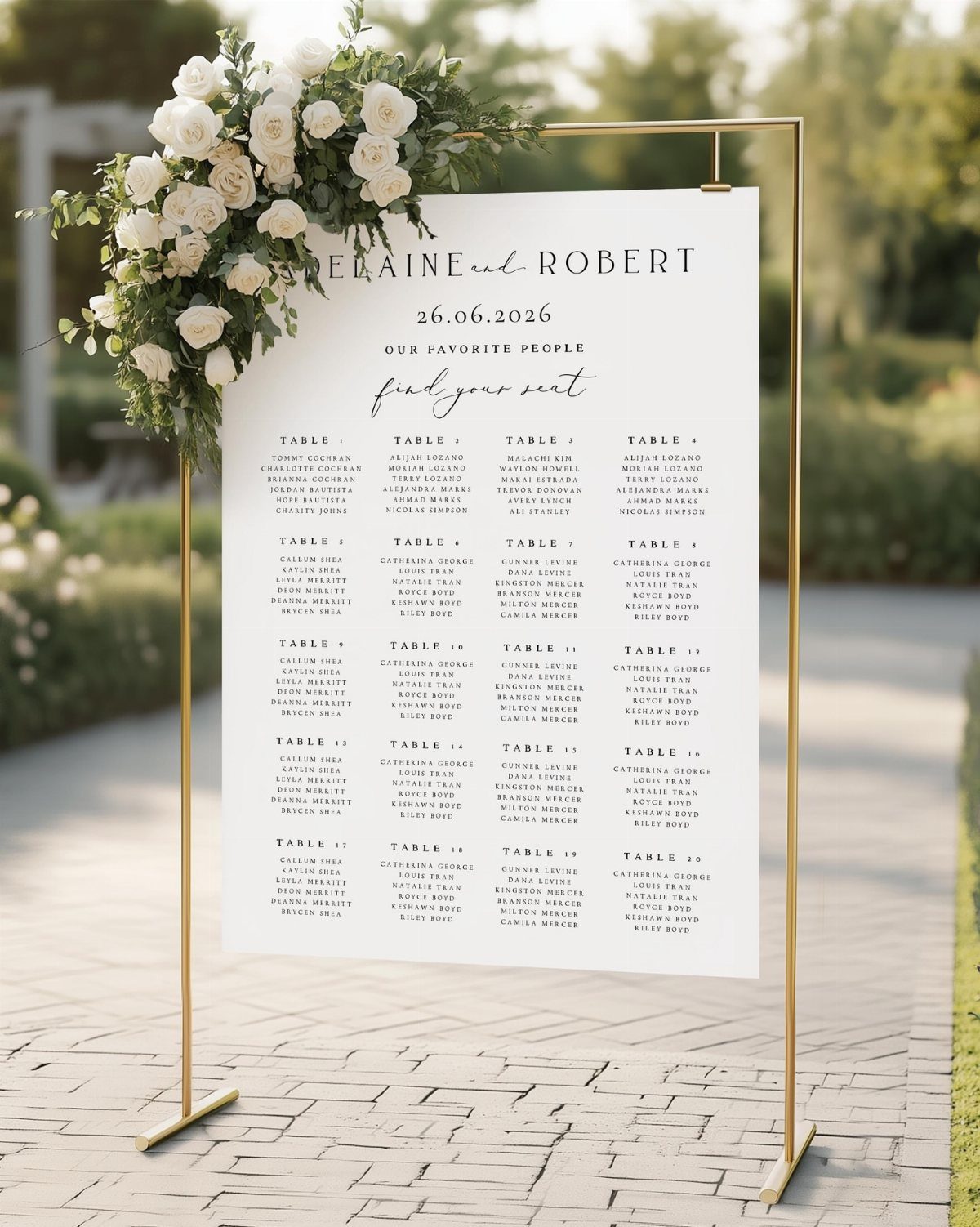
Tables 1–20 on one board only work when the plan behind them is settled first. Build a spreadsheet of guests and table numbers before anything gets printed or lettered.
Seat people by group, then check each table for at least a couple of people who know each other. Wait until your RSVP deadline has passed, since every change after printing costs money.
Alphabetical names make the board quicker to read at the door, and I would pick that over a crowded list sorted by table.
Advice for Budgeting
Before you price anything, pick the 3 things you most want guests to remember, and give those lines the first and biggest share of the money. Whatever is left covers everything else.
Be honest about the list. If photography, food and music make the cut, then flowers, favors and a fancy invitation suite have to take the cuts, and that is fine.
Define the total early, too. A number you set before the first vendor call is much easier to hold than one you negotiate with yourself after falling for a venue.
When the top 3 are covered, move on to the next 3 and repeat. That order keeps a small splurge from eating the money meant for something you care about.
Managing Time Effectively
Pick one fixed time each week for your checklist, the same day and hour, and treat it like an appointment. Sunday evening works for many couples, because the coming week’s calls and errands are fresh in your mind.
During that session, check off what is done, move anything that slipped, and pick the next 3 tasks. Keeping it to 3 stops the list from feeling like a wall.
Put every deadline on a calendar with a reminder a week ahead. Vendors rarely chase you, and a missed payment date or fitting is easier to fix when you catch it early.
If you are planning with a partner, split the tasks and review together.
Handling Guest RSVPs
Choose one place where every reply lands, and send all replies there. A single spreadsheet works: one row per guest, with columns for yes, no, meal choice, plus-one name and dietary needs.
Give guests one clear way to respond, such as a website or a reply card, not both. 2 channels means duplicates and gaps.
Set the RSVP deadline early enough that your caterer gets a final count with time to spare, and track every reply in one place so the number you hand over is the real one.
Then contact anyone who has not replied by phone or text; a personal nudge usually works.
Log each reply the day it arrives. Keep a running total of confirmed guests at the top of the sheet so you can see the headcount at a glance.
Frequently Asked Questions
How long does it take to plan a wedding?
A year is the usual rule of thumb for a traditional ceremony and reception at a local venue. If you want a one-of-a-kind venue or a particular photographer in peak season, I would book 18 months to 2 years out.
Guest count, priorities and your vision all move the timeline, so treat the usual rule of thumb as a starting point and not a deadline.
What if I’m planning a wedding in less than a year?
Rank the biggest items first and stay flexible on the date. Choosing a weekday or a Sunday can put venues and vendors within reach that a Saturday date simply won’t.
Keep the task order the same but squeeze the months together: on an 8-month timeline, for example, fit the work from months 8–12 into month 8, then follow the regular schedule from there.
Do I need a wedding planning checklist if I have a planner?
Yes, because a checklist gives you the overview of what happens and when, even if your planner has their own materials.
It also works as a place to jot down ideas before you hire anyone. Handing those notes to a planner helps them grasp your vision faster, and sorting out your thoughts first makes the joint planning smoother.





