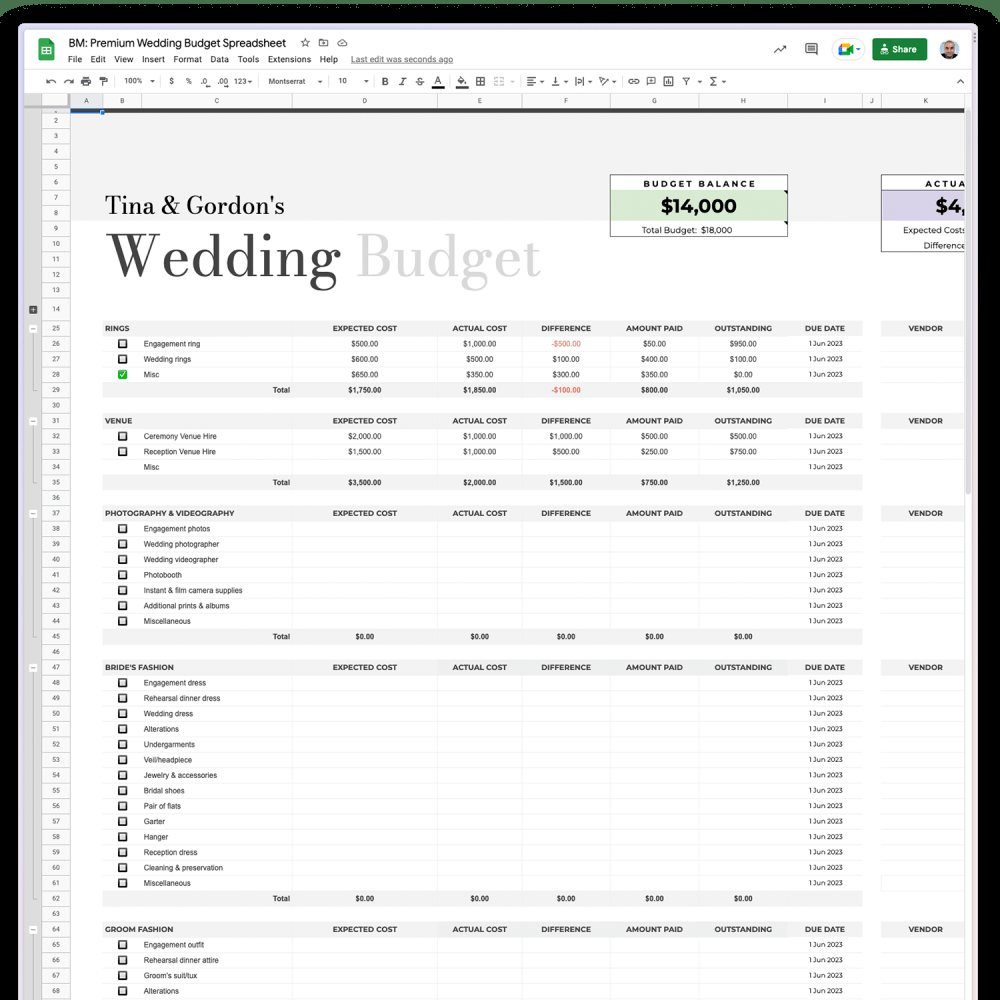
These templates range from a basic budget tracker to a guest list manager to a cost estimator that flags what you might forget, and the one that fits depends on how you plan and who else needs to see the numbers.
If you are the only one tracking, a plain expected-versus-actual sheet does the job.
Wedding costs swing from under $1,500 to $200,000, and a good spreadsheet does more than add up the total: it tracks what you’ve paid against what you expected and flags the hidden costs that appear once you start booking.
1. Wedding Budget Spreadsheet
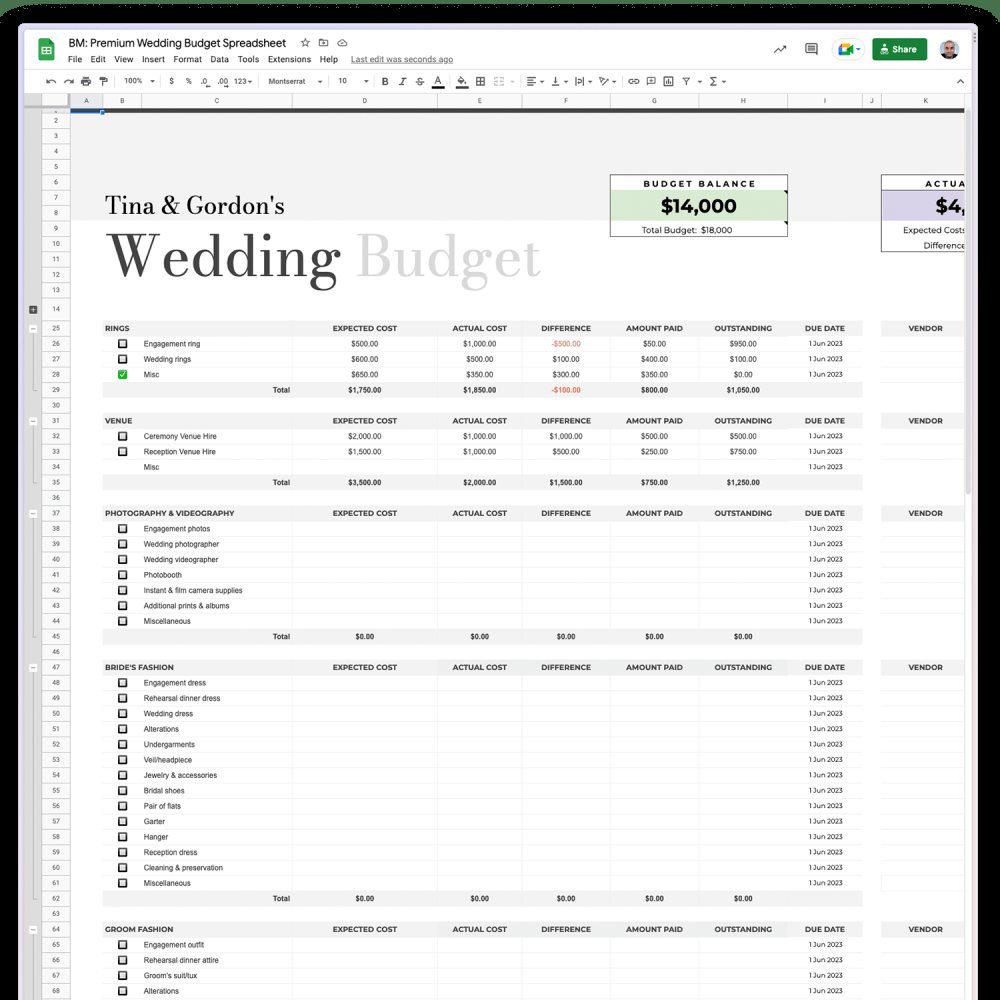
Fill in the expected column first, with a rough number for every line (rings, venue, photography), then log the actual figure the day a contract is signed or a deposit is paid.
I check mine every week, since catching an overage early gives you time to adjust another category before the damage compounds.
2. Wedding Budget Estimator Spreadsheet
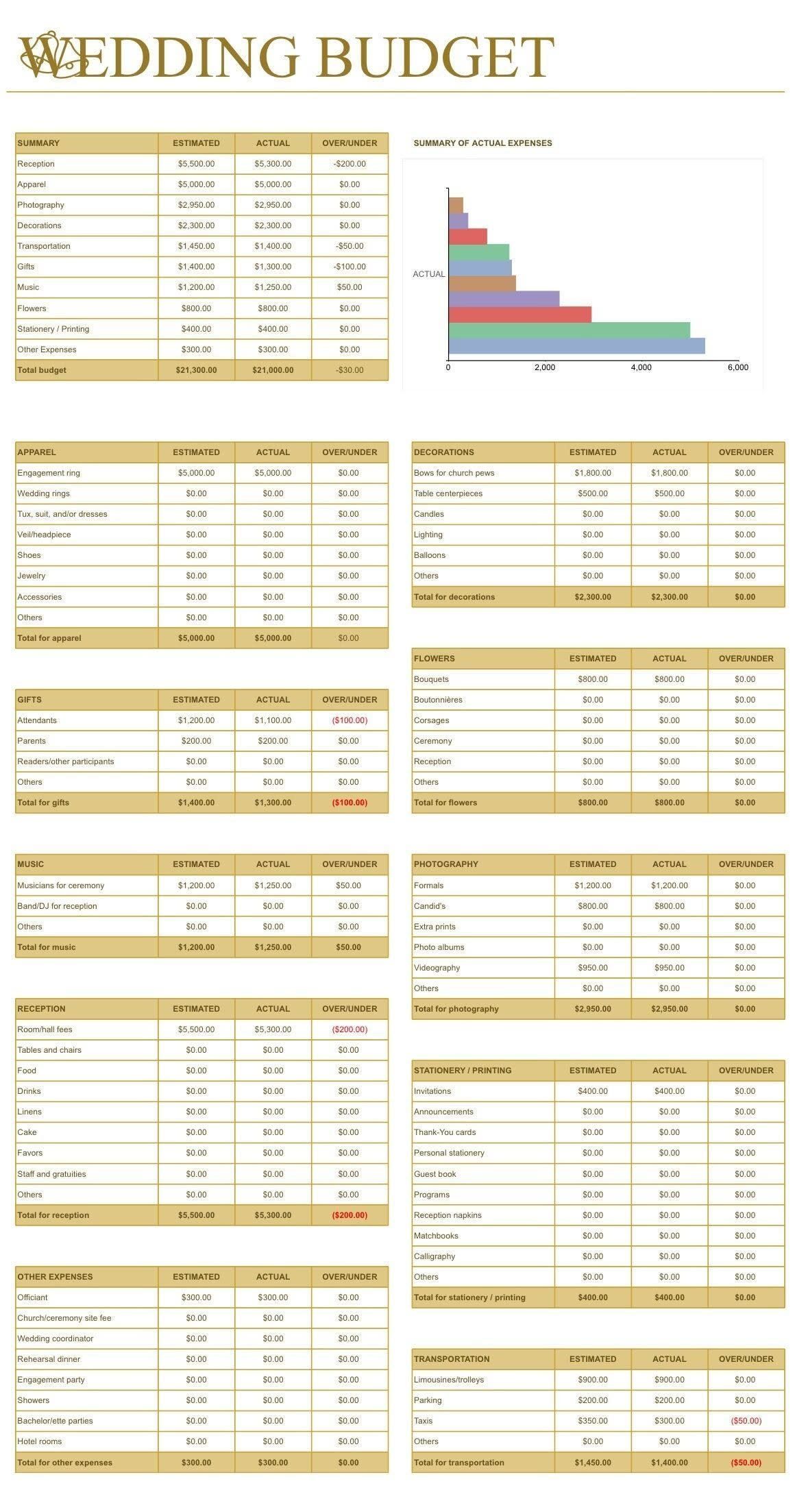
A summary table with a bar chart on top suits couples who want one glance to show where the money is going. Apparel, gifts, music and reception each get their own breakdown below it.
I like this layout for the conversation with parents or a partner, because a tall bar settles the argument faster than a column of numbers.
Enter actual costs as they come in and the chart updates itself. Charts stop working the moment your entries fall behind, so I block off time after each payment to log it.
3. Guest List
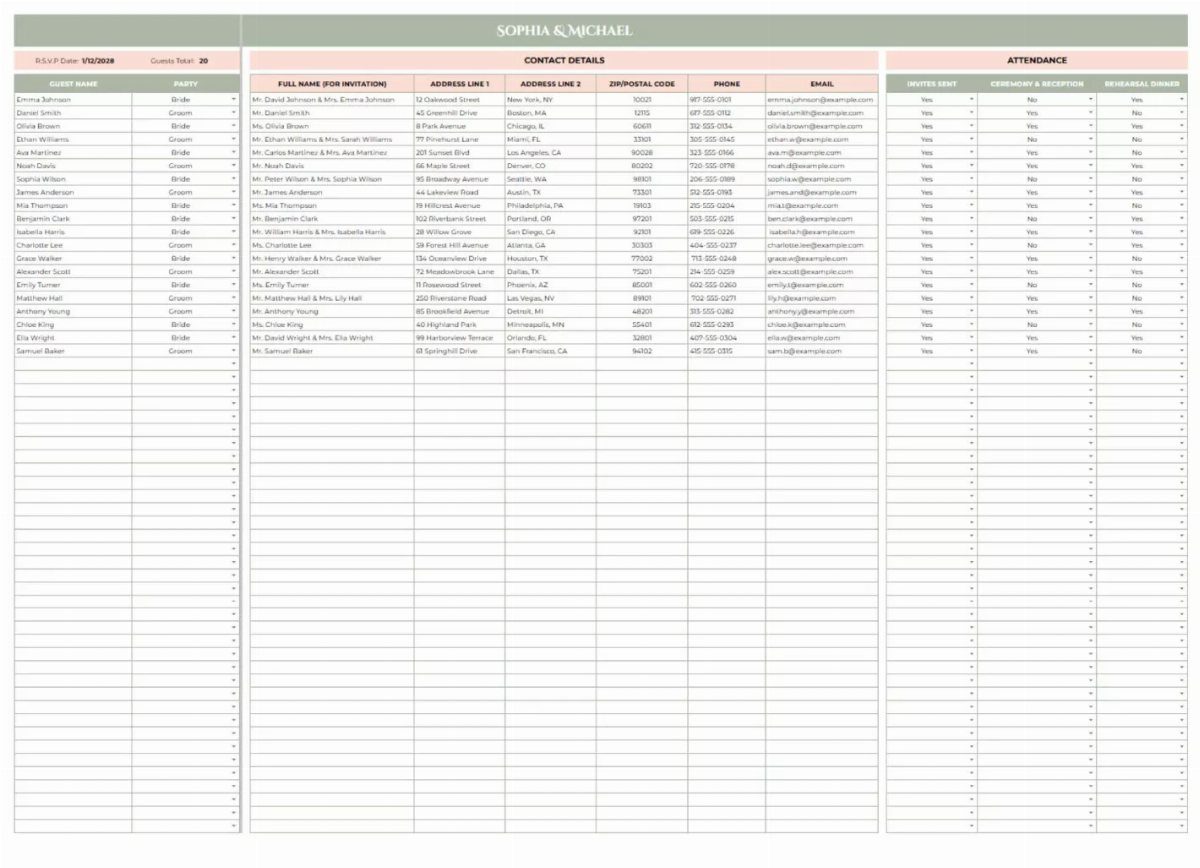
Guest count drives nearly every other cost, so the list belongs in its own sheet. Columns for names, addresses and contact info cover invitations and save the dates in one pass.
The attendance column is the one I would protect.
Mark each household as invited, replied, yes or no, and your headcount is always current when the caterer asks. I would add one more column for a plus-one, since that is where totals quietly drift.
Importance of Budgeting
Figure out the total you can spend before you assign amounts to anything. Add up what you have saved, what you are earning between now and the wedding, and any contributions family has promised.
Wedding costs swing wildly. You can elope for under $1,500 or spend $200,000 on a destination event in France, so the national average means nothing for your actual budget.
Everyone will have an opinion on where the money should go. I would pick the two or three things that matter most to you and your partner, fund those first, and let the rest shrink to fit.
Using Google Sheets
After the import, check the totals, date cells, status dropdowns and payment formulas, because those are the pieces most likely to break.
Work from a single master file instead of passing around different versions. I give editing access only to whoever is making purchases or handling deposits.
Anyone else who needs to see it gets view-only permission. Parents who want to see the numbers don’t need a way to change them.
Tracking Hidden Costs
Hidden costs rarely show up as one big surprise. They arrive as small items nobody listed, which is why a missing line is worse than a wrong estimate.
If you log spending as it happens, you also stop digging through a pile of receipts or trying to work out which credit card charges were wedding-related.
Updating also shows you the average cost per vendor, and which categories you keep underestimating.
When the total runs over, you have options.
Cutting the venue cost or trimming the guest count makes the biggest difference. Wedding insurance is worth pricing too, since it covers damage and liability problems that could otherwise hit your budget late.
Frequently Asked Questions
Should I use Excel or Google Sheets for a wedding budget?
Google Sheets is my pick for most couples, because one master file keeps everyone on the same numbers.
Excel works well offline, but sharing it tends to create competing copies. Whoever holds the credit card should get editing access, and anyone else gets view-only.
What categories should I include in a wedding budget?
Start with venue and catering, attire, photography and video, music and entertainment, flowers and décor, stationery and invitations, transportation, and officiant and ceremony costs.
Add a miscellaneous line for last-minute items. A missing line does more damage than a wrong estimate, so list everything, even small things.
How do I set a total wedding budget?
Add up what you have saved, what you will earn between now and the wedding, and any contributions family has promised.
Set that total before assigning amounts to any category. Skip the national average, since weddings range from an elopement under $1,500 to a $200,000 destination event in France.





