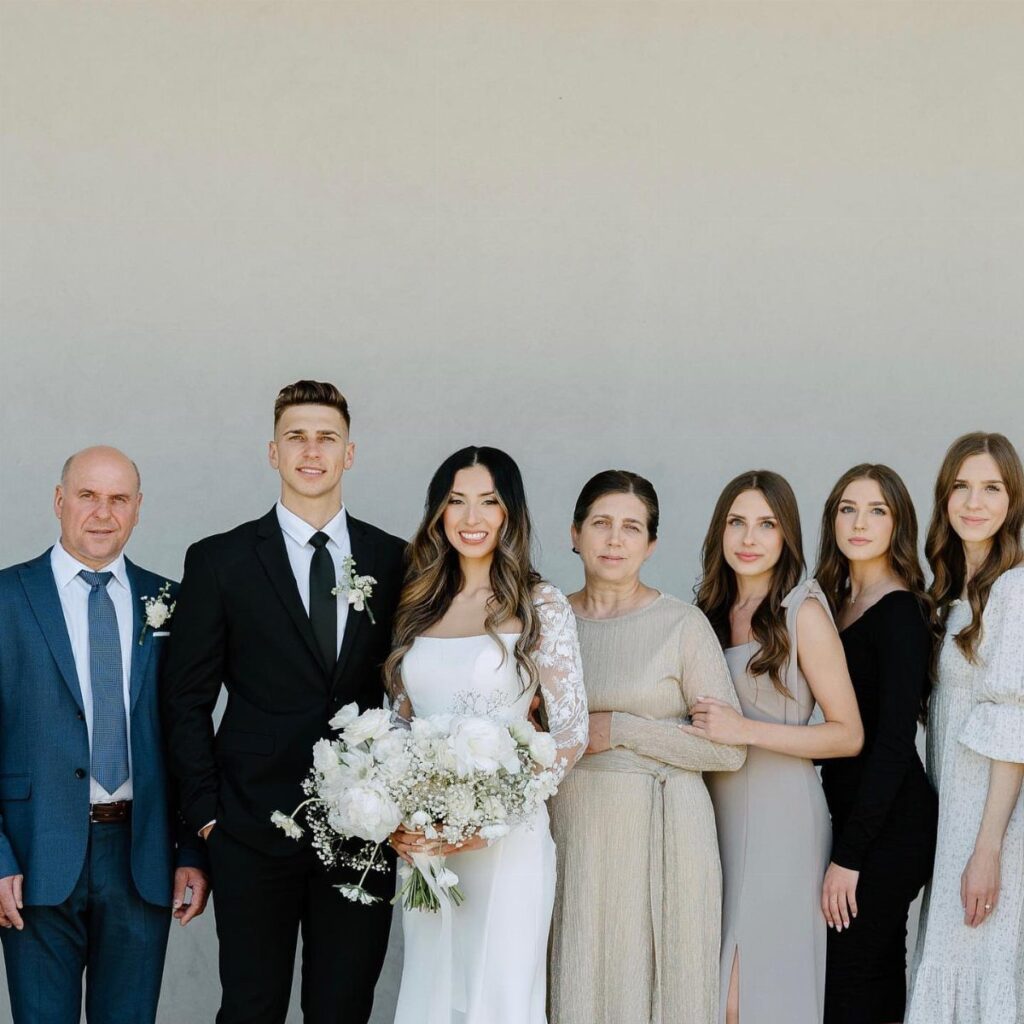
Wedding day schedules range from a single plain-wall family portrait block to a first look, a cocktail hour of roughly 90 minutes, and a bubble send-off that costs only a few dollars a guest.
Whether you do a first look decides the shape of the rest: it moves couple portraits ahead of the ceremony, so you aren’t pulled away from your own reception.
Anchor everything to the ceremony time, which is the one thing that can’t move, then work backward and forward from it and pad the gaps.
1. Family Portraits
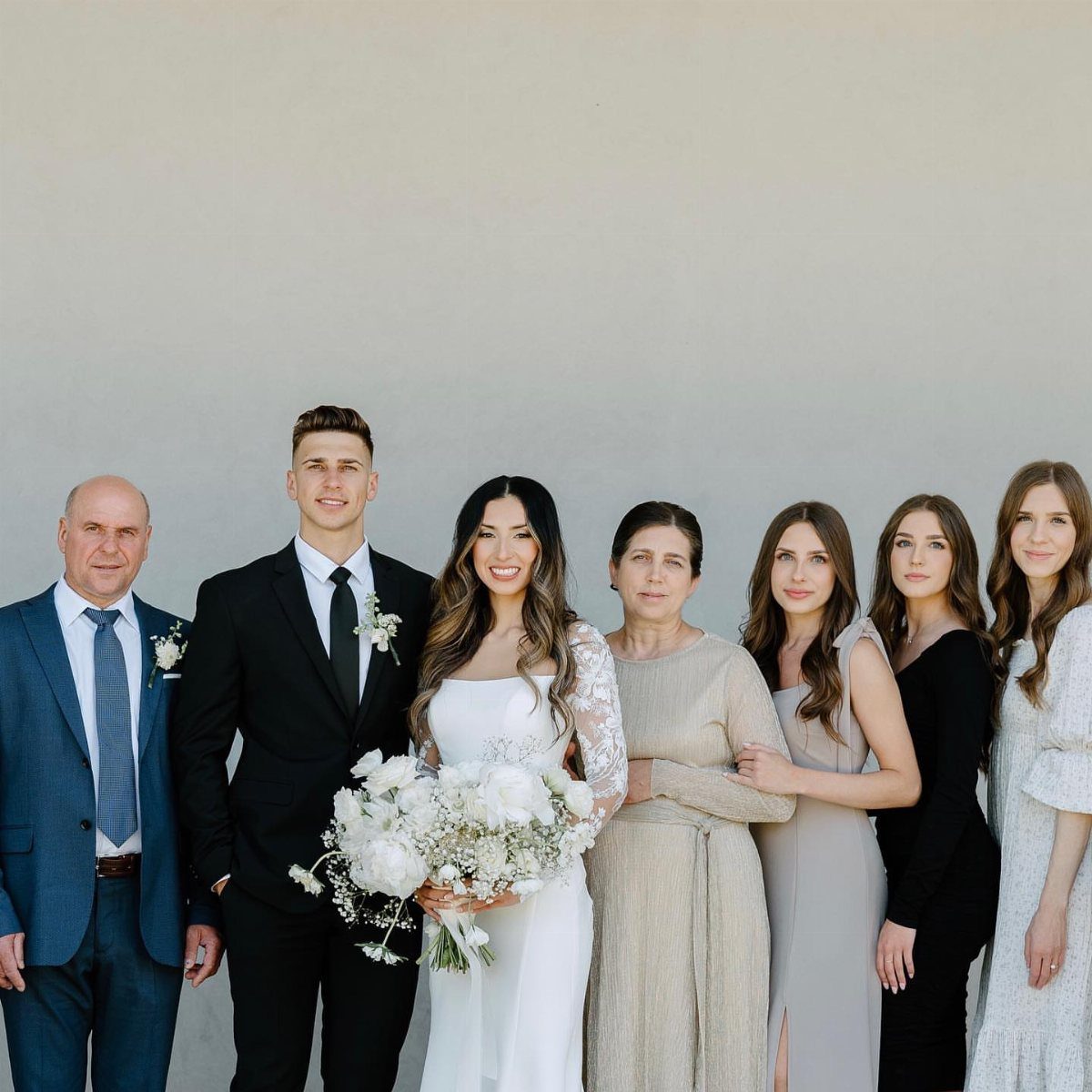
Family portraits go best in a block of time right after the ceremony, while everyone is still dressed up and standing in the same place.
Write the shots into your schedule as their own line item, with a start time and a firm end time, so the cocktail hour doesn’t swallow it.
A plain wall keeps family portraits simple: no travel, no scouting, and no time lost hunting for a spot while relatives wander off.
I’d make a short list of groupings, such as couple with each side of the family, and hand it to one relative who knows everyone by name. That person can round up the next group while the photographer shoots.
2. First Look Photos
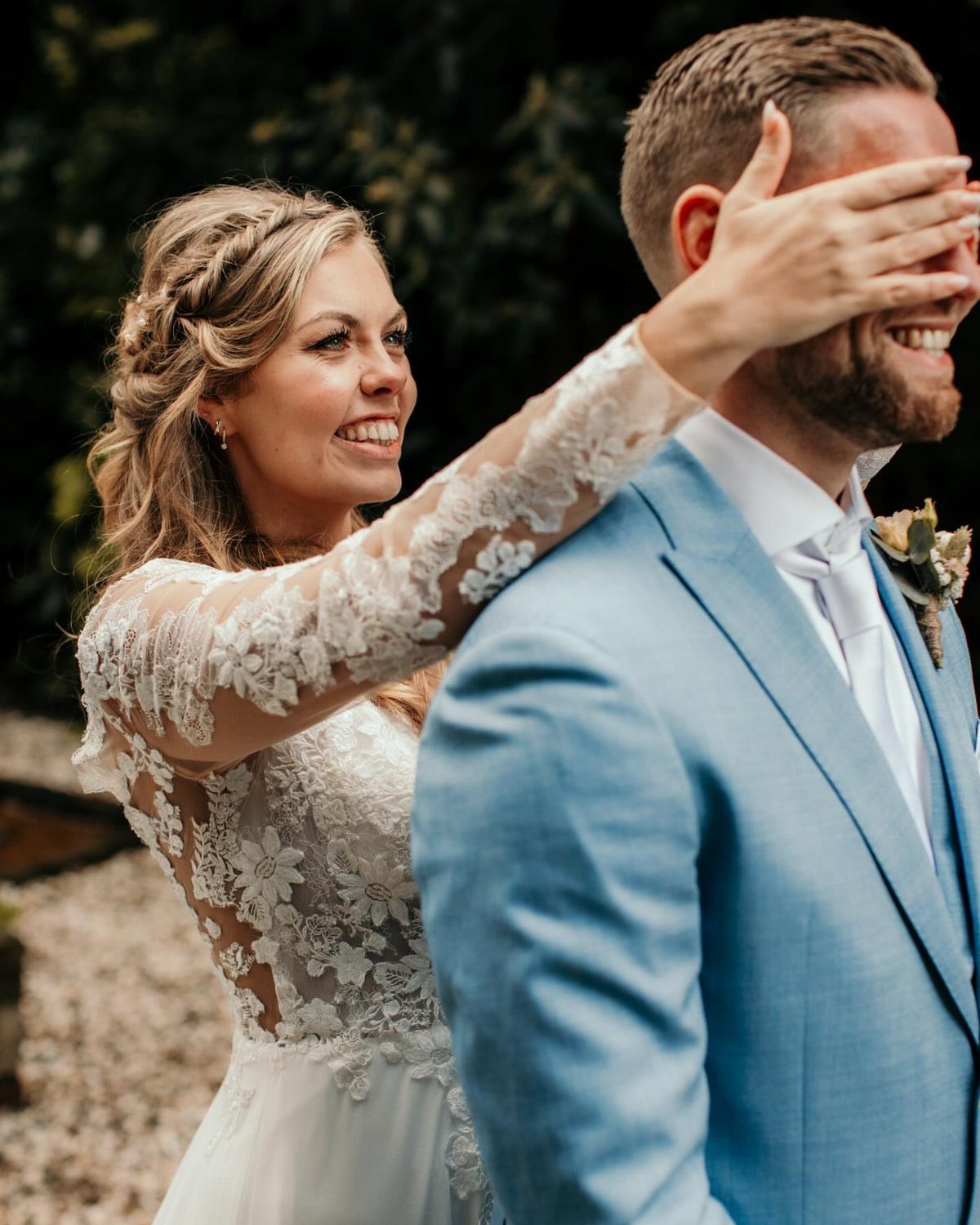
A first look puts a private moment between the two of you before the ceremony, with no audience and nobody watching your face.
On the schedule, I’d give it its own block ahead of the ceremony, and keep it away from the hours when guests are arriving.
For a budget couple, a first look moves the couple portraits to before the ceremony, so you aren’t pulled away from your own reception.
Pick a spot outdoors with some privacy, and decide beforehand who tells the photographer when you’re ready.
3. Grand Exit
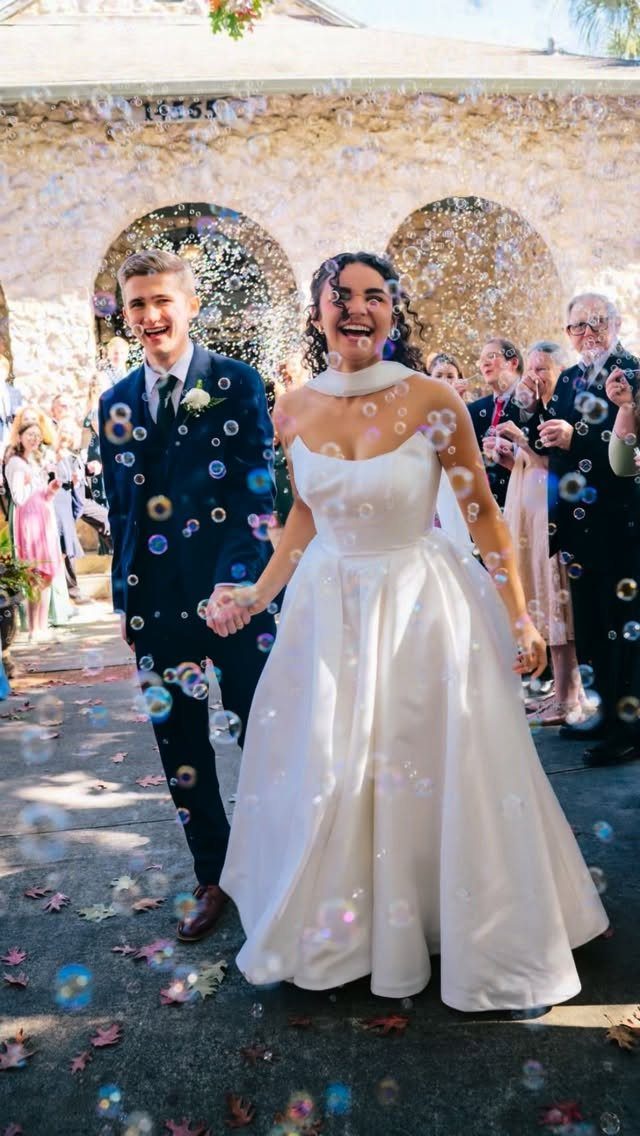
A grand exit gives the night a clear ending, and it only works if it has a line on the schedule.
Pick the time, tell the DJ or a friend to gather guests, and mark where the couple will walk so the path is clear.
Bubbles are my pick over anything messier for a grand exit, since they ask for little cleanup and cost only a few dollars a guest.
Hand them out to guests before the send-off, and have a ride waiting so you don’t stand around afterward.
Importance of a Wedding Timeline
A wedding day without a written schedule tends to slip in the same places: the ceremony starts late, family photos get skipped, and half the guests never get a hello.
A timeline also lets everyone in the wedding party, from the maid of honor to the best man to your parents, know where to be and when.
It protects the part you care about most, too. When the photographer, DJ, and caterer are all working from one plan, you can actually relax and enjoy the day instead of fielding questions.
How to Customize Your Timeline
Your ceremony time is the one thing that can’t move, so anchor the schedule there and work backward to the morning and forward to the send-off.
Work backward for hair, makeup, and photos, then forward for cocktail hour, dinner, and dancing.
Then add padding. I’d pad the gaps between major blocks, because traffic, a touch-up emergency, or a moment when you simply need to breathe will eat time somewhere.
Then add the small extras that slip through the cracks: favors, a photo booth, a family tradition, or a performance during the reception. If it needs time and a person in charge, it gets a line.
A first look versus no first look changes the shape of the whole day, so decide that early. Skipping it pushes photos into a cocktail hour of roughly 90 minutes.
Sharing the Timeline
Send the identical, current version to your planner, photographer, DJ, caterer, and venue so nobody works from an old draft. One source avoids the classic problem of a vendor working from an old draft.
Share it as a PDF or a live link, which means one edit reaches every vendor at the same moment.
Put your point person’s phone number at the very top, so anyone running late or lost knows exactly who to call.
Key family members should get a copy too, especially anyone with a job on the day.
Frequently Asked Questions
What should I include in my wedding timeline?
Cover getting ready, any first look or pre-ceremony photos, the ceremony, cocktail hour, and the reception events like dinner, toasts, and dancing. Anything that takes real time and someone to run it earns its own line on the timeline.
When should I finalize my wedding timeline?
Aim to lock it about a month before the wedding.
Then send the final version to vendors and key people a week out, especially anyone handling setup or takedown. That gives everyone time to ask questions before the day.





