The list runs from a one-evening project, like making DIY favors, to a habit like a monthly savings transfer that moves money out of checking on payday.
Which of these fit you depends on where your money is already committed: the venue and caterer usually take 45–50% of spending, so trimming catering saves the most, while smaller lines like favors and centerpieces only help if you have picked the one or two things you refuse to shrink.
Pick your protected priorities first, then trim everything else.
1. DIY Wedding Favors
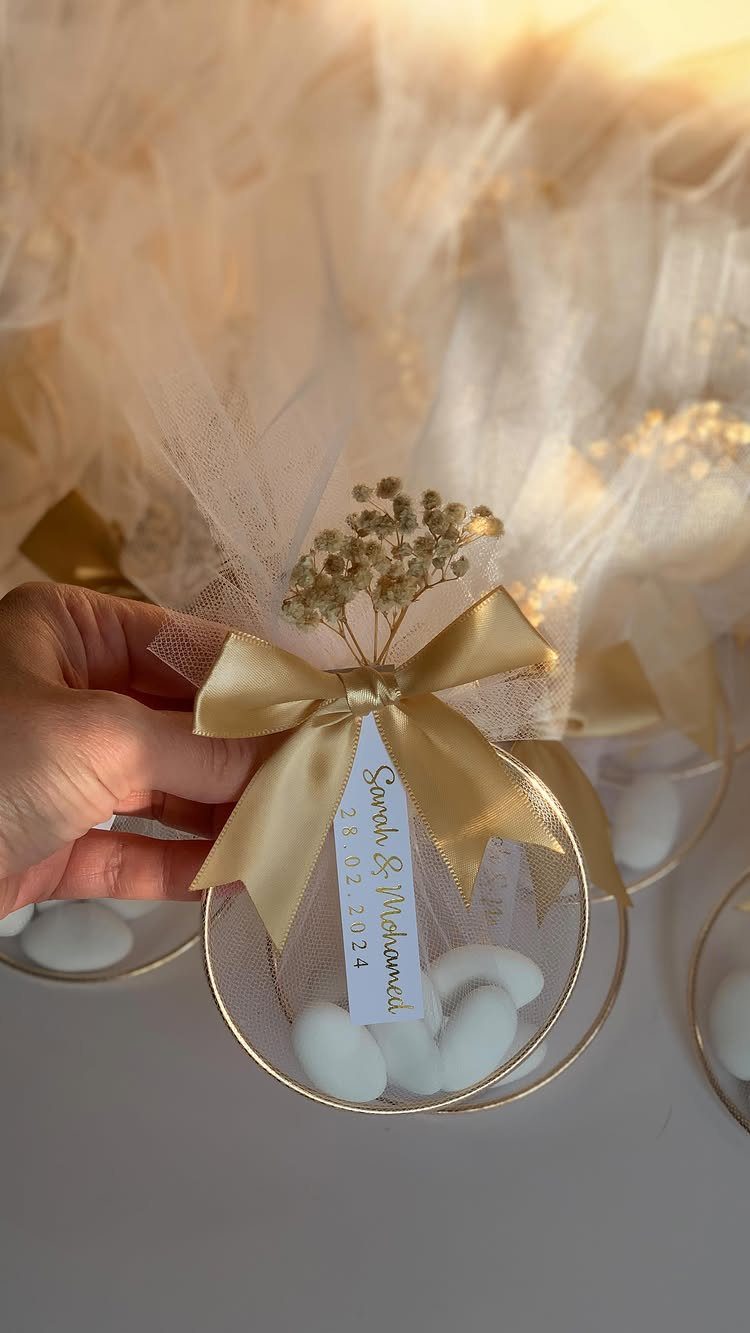
Favors are the line item that quietly multiplies: a small cost per guest becomes a real number once the list passes 100.
Pick one filling and make it yourself. Candied almonds in a mesh bag, closed with a ribbon and a tag, keep the work to buying, filling and tying.
Order the bags and almonds in bulk, and set aside one evening to assemble them while you watch something. Printing the tag at home saves more than ordering custom ones.
Cutting favors altogether is also fine. Guests rarely miss them.
2. Simplify Catering
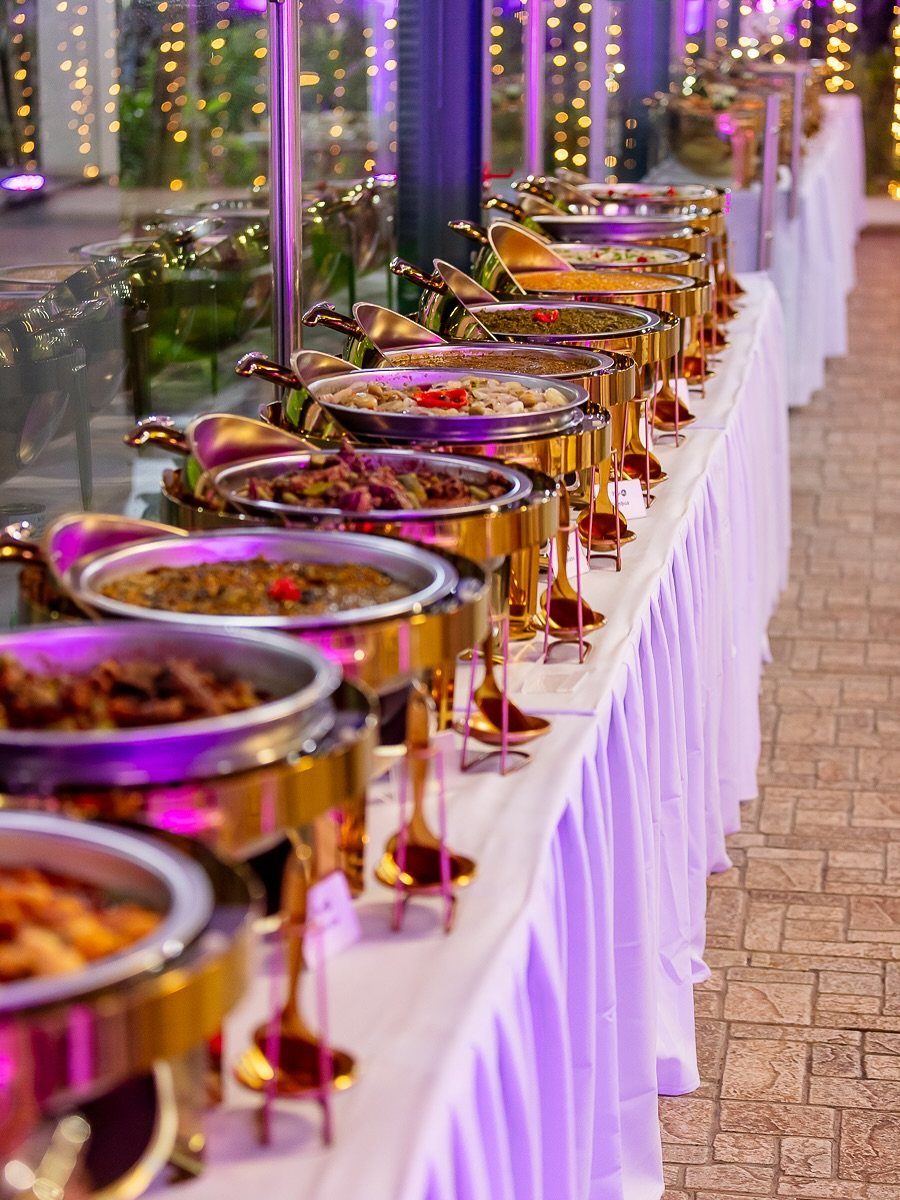
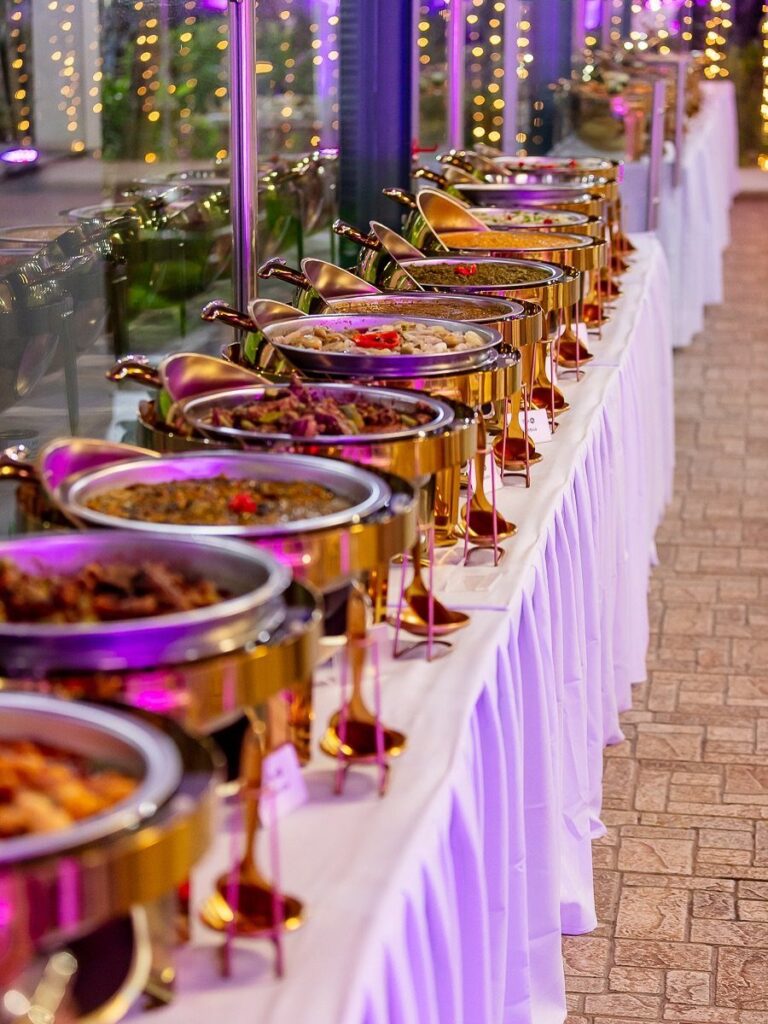
Plated dinners cost more because of the extra servers and the timing they demand, so a buffet is where I would cut first.
A line of chafing dishes lets guests take what they want and lets the caterer run a leaner crew.
Family-style, with platters passed at each table, is my pick if you want the dinner to feel more personal. It usually needs more serving staff than a buffet, so ask your caterer to price both.
Whichever you pick, cap the menu at 2 or 3 mains, since every extra entree adds prep cost and the savings stay in your budget.
3. DIY Centerpieces
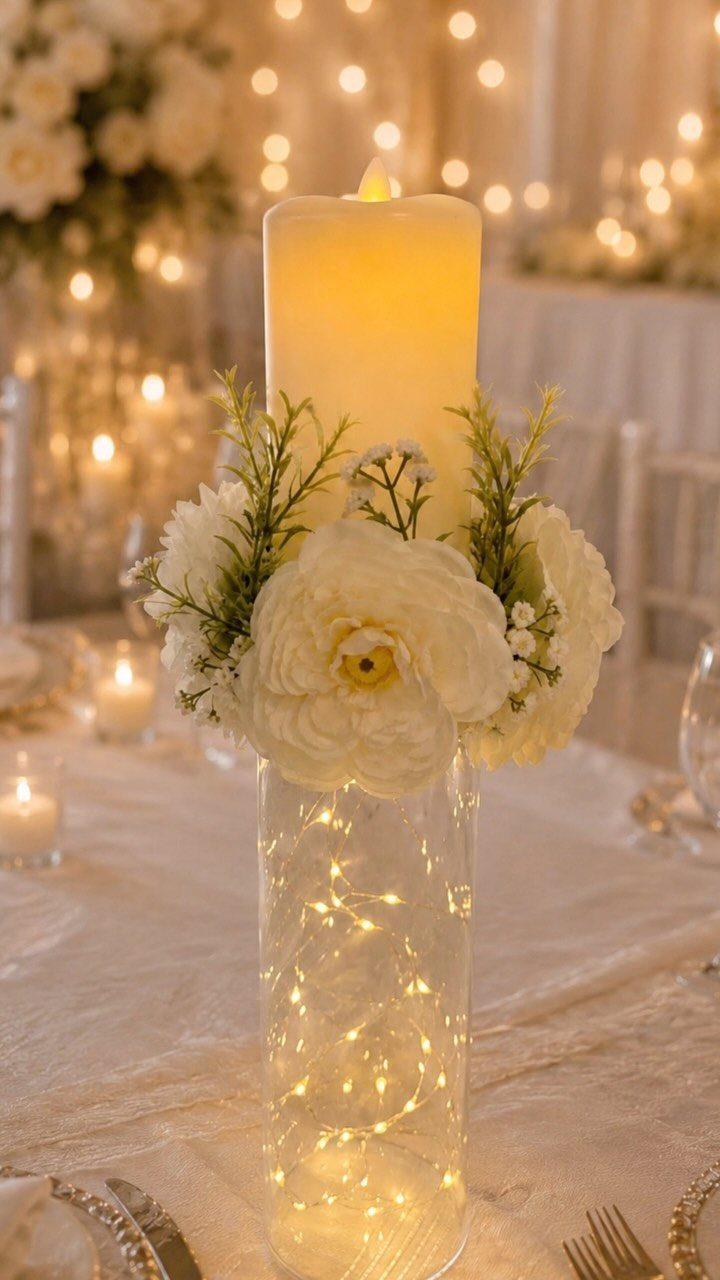
Buy the cylinders once and repeat them on every table; repetition looks deliberate, and it keeps your shopping list short.
Build one as a test run before buying for every table.
I would keep the flowers simple and the candles large. Centerpieces give you the biggest look for the smallest spend.
Understanding Wedding Costs
Between them, the venue and the caterer usually swallow 45–50% of what couples spend, which makes that pair the biggest line in the budget and the one where haggling can save the most.
Photography and video usually run 10–12%, and attire and beauty, flowers and décor, and entertainment each land around 8–10%.
Stationery and extras sit near 5%, with another 5–8% worth holding back for miscellaneous costs and a contingency.
The commonly cited average for a US wedding is around $30,000, but location, season and formality move that number a lot.
Then decide with your partner which one or two lines you refuse to shrink. Spend there, and trim the rest without guilt.
The average U.S. wedding costs upward of $34,000, and for most people, that’s a significant amount of money.
Monthly Savings Strategies
Set up the wedding fund as a fixed monthly transfer, the same way you would a rent or car payment, so it leaves your checking account before you can spend it.
Take your total goal, subtract what you already have, divide by the months until the date, and that is your monthly number.
Open a separate account for it, and schedule the transfer for payday so the money moves before you can spend it.
A money market account pays a higher rate than a basic savings account and still lets you withdraw, and some offer check-writing, which helps with a venue deposit.
A certificate of deposit usually earns a higher rate than a regular savings account, but cashing it out before the term ends generally triggers a penalty. I would use one only for cash you won’t need until the term ends.
To find the monthly amount, go through your statements and cut what you won’t miss, like subscriptions or frequent takeout. Send those savings straight to the fund.
Monitoring and Adjusting Budget
Check your numbers once a month, right after the transfer lands. Compare what you have saved with what the timeline says you should have.
If you fall behind, adjust something small first: raise the monthly amount a bit, or trim a line from the lower-priority categories. Keep your top priorities untouched as long as you can.
Staying flexible on details is what keeps the date intact.
Frequently Asked Questions
What is the 50/30/20 rule for weddings?
It divides spending into 50% for the venue, food and photographer, 30% for flowers and décor, and 20% held back as a cushion.
That last slice covers taxes, fees, tips and surprises. Treat it as a starting guide and shift the percentages to fit your own finances.
How much money do I need to save up for a wedding?
It depends on your guest count, location, season and how formal you want things.





