
Items on this list run from a hem check at the final dress fitting to a reed diffuser labeled with your names and the wedding date, and what decides which ones you tackle first is how many people are involved: the more helpers, vendors and out-of-town guests, the more each task needs a single owner and a due date.
A bare to-do list still leaves people guessing. Even something as small as tracking RSVPs or confirming vendor arrival times goes faster once one person from each side holds that job.
1. Final Dress Fitting

Book the final fitting for a few weeks before the wedding, and bring the exact shoes and jewelry you will wear. A lehenga hangs differently at heel height, and the hem is the first thing to check.
Put the checks in writing so nothing gets lost while the tailor pins: hem length, blouse fit, waist closure, and whether you can sit and raise your arms.
Take a friend or relative to hold the list and photograph each change.
2. Indian Invitations
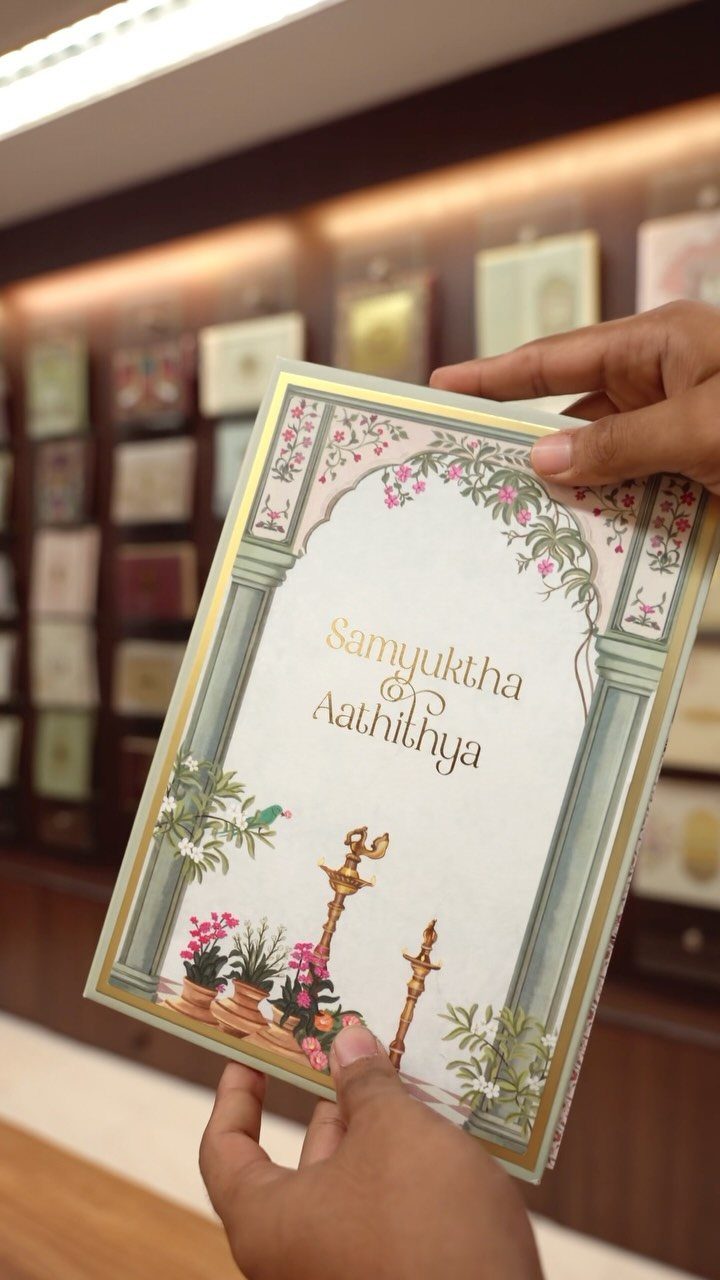
Start browsing Indian invitation websites early, since this is one choice you can’t rush and still love. Save your favorites and compare them on the same terms: paper, design, and how your names look in the layout.
Order a sample first, since paper weight and ink color rarely look the same on a screen as they do in your hand. Holding the card tells you more than a screen does.
Then check each name and spelling twice, because a typo on a printed invitation can’t be fixed.
3. Decor Themes and Arrangements

Confirm your decor theme and every arrangement in writing with your decorator before the final week.
I like a short list of must-haves, so when the budget tightens you cut extras and keep the pieces guests actually see first. Ask for a layout sketch or photos, and walk the venue once more with the decorator.
4. Wedding Favors

Pick your favors early and keep them small, useful, and easy to pack. A scented gift like a reed diffuser feels personal, especially when the label carries your names and the wedding date.
Settle on a count that includes a few spares, order with time for the printing, and assemble the gifts before the events begin. Then hand someone the job of placing them at seats or handing them out.
5. Welcome Bags for Out-of-Town Guests

Welcome bags are for guests who traveled, so build the list from your RSVPs and count one per room or household.
A simple tote filled with snacks works well, and I would rather pack things people will eat on arrival than souvenirs.
Add a printed schedule of events, so everyone knows where to be. Pack the bags ahead and ask the hotel front desk to hold them for check-in.
Importance of a Checklist
A checklist earns its keep because small details get missed when they live in someone’s head. Put every task in one shared document, and families and planners work from the same page instead of from memory and group chats.
Give each task an owner and a due date. A bare list of chores still leaves people guessing, but a list that says who and by when lets the family see what’s done and what’s stuck.
Check it on a set day each week, and keep it short enough that you’ll actually open it. Planning feels overwhelming mostly when the tasks are scattered, and one organized list calms that down.
Managing Family Dynamics
Give each helper a task with clear edges and a single name attached, so nobody has to guess who owns it.
A vague assignment like "keep an eye on things" leaves everyone assuming someone else has it covered. "Gather the bride’s side for photos after the ceremony" is.
For group photos, I’d pick one relative from each side of the family.
They can spot Aunty in a crowd of 300 faster than you can, and the call goes quicker than reading names off a list. Put someone in charge of the card box, too.
Write the roles down and share them ahead of time, so nobody improvises on camera.
On the day, name one on-day coordinator, either a relative or a professional, and send vendor questions to that person, not to you.
I’d store the day’s schedule as a phone file and a printed page, since one of them will fail at some point.
Leave a gap between functions, so one running late doesn’t crash into the next. Slip away for 5 minutes with your partner, just the two of you, before the day takes over.
Vendor Management Tips
Keep one running list of vendors with each name, phone number, and arrival time.
Pass the vendor sheet to a couple of people you trust; if only the bride holds the florist’s number, that is a single point of failure, not a system.
Vendors do run late and deliveries do land at the wrong entrance, and when that happens a second person holding the list can sort it out before it ever reaches you.
Write down what each vendor agreed to, including arrival times, and keep the contracts where that second person can find them. A written record settles any disagreement about what was promised.
Frequently Asked Questions
What are the steps of a Hindu wedding?
Before the wedding day itself, a Hindu celebration usually runs through the roka, the tilak (also called sagan), the engagement, haldi, mehendi and sangeet.
Each one has its own outfit and its own logistics, so a written schedule with one named coordinator on the day keeps the functions from running into each other.
Build buffer time between events, because one late start can push every ceremony after it behind schedule.
Who pays for what at an Indian wedding?
The sources I’m working from don’t give a firm rule on who pays, so I won’t invent one.
What they do say is to set the budget with both families early, since the date, budget, and venue are the first 3 decisions and everything else depends on them.
The largest spending is usually the ceremony outfits and jewelry, so settle who covers those in writing before you order.
What are the must-have items for an Indian wedding?
Attire, decor, catering, and the essential rituals come first. For the bride that often means a lehenga or Kanjivaram saree, dupattas, and a full jewelry set; the groom may wear a sherwani or achkan with a turban.
A short list of decor must-haves helps too: when money gets tight, you trim the extras and protect whatever guests see the moment they walk in.
How long do you need to plan an Indian wedding?
Plan on 10–12 months for a full Indian wedding. Venue, photographer, caterer, and pandit go first, because popular dates fill up fast.





