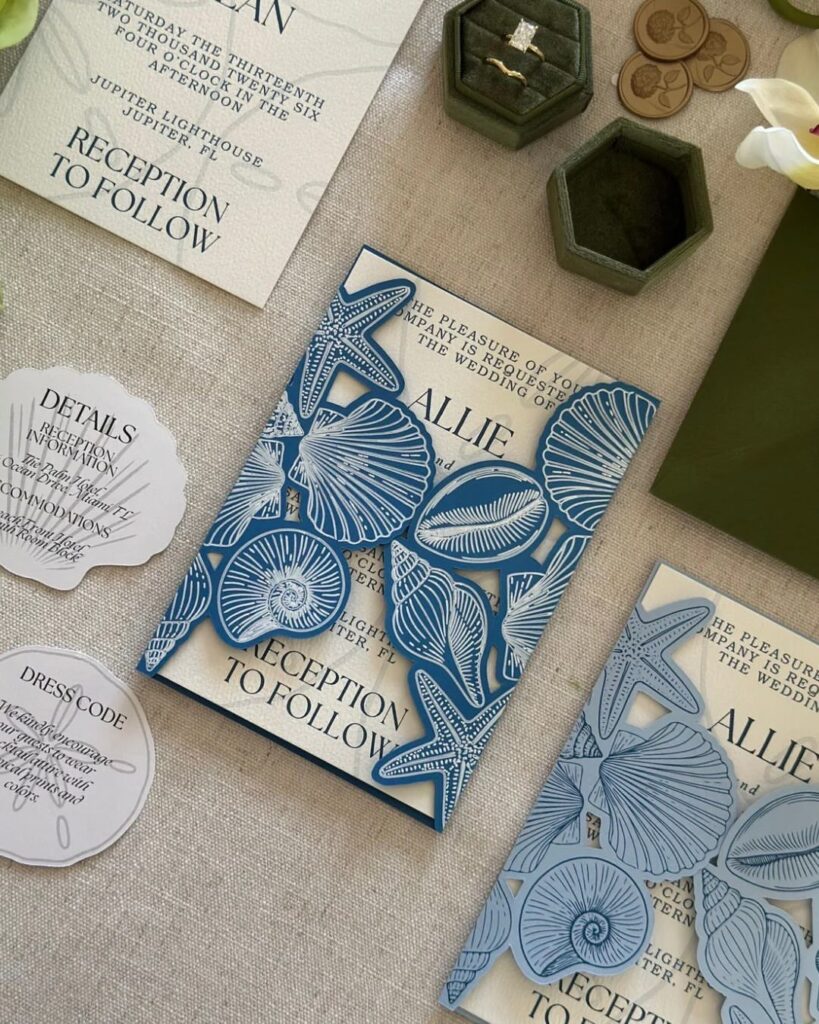
Laser cut invitations range from minimalist designs and wooden cards to lace sleeves with ribbons, gold pocket folders, intricate envelopes, rustic and geometric sleeves, and clear acrylic, and the cost climbs with every added layer of cutting and assembly.
Your deadline decides which one is yours: the post puts lead time at 3 to 4 months out from the date, and that window has to cover a sample, production, shipping, then your own addressing and mailing.
Short on time or money, choose the minimalist cut and skip the ribbons and other layered extras.
1. Minimalist Laser Cut Wedding Invitations
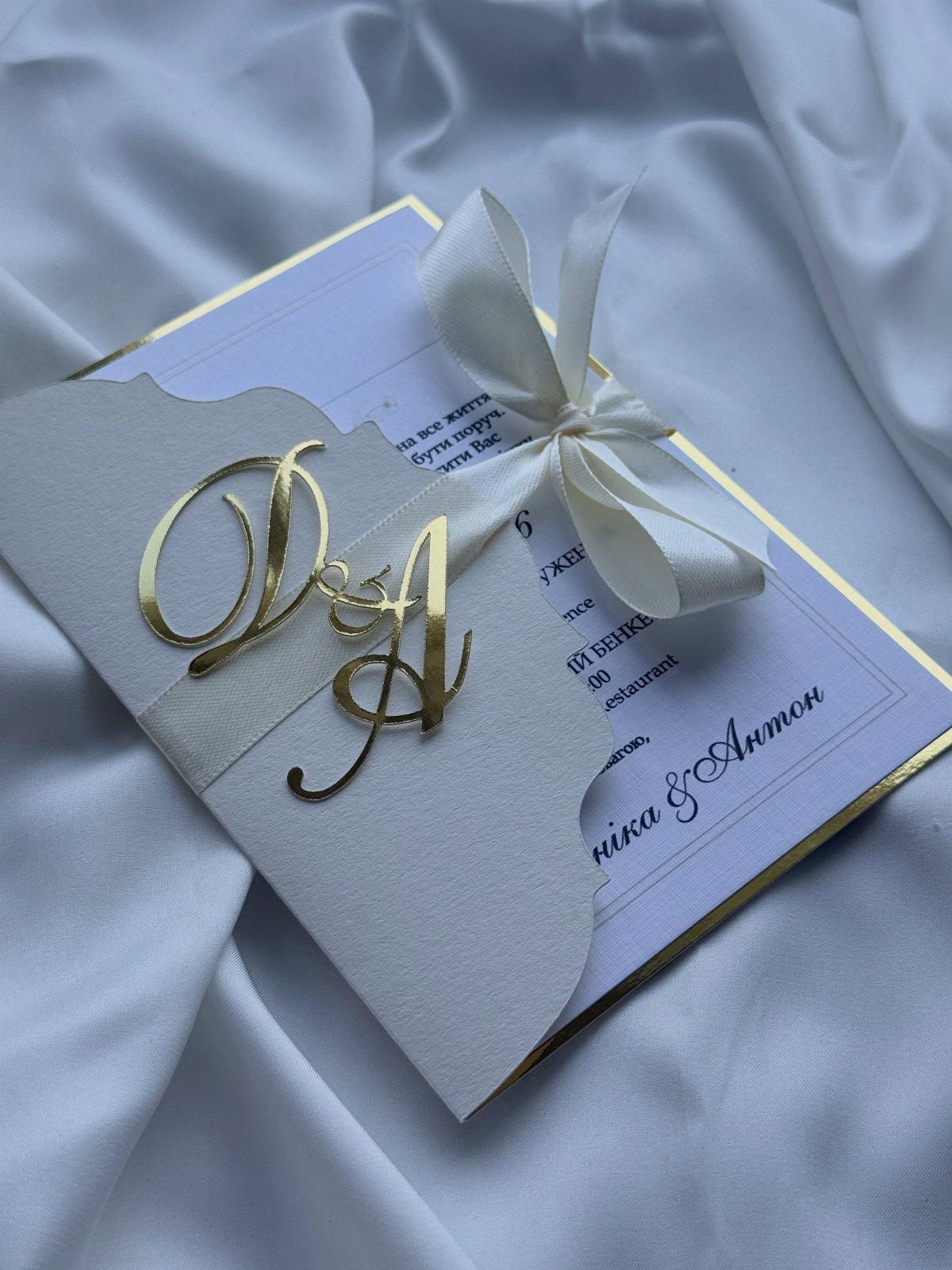
A single monogram does the work of an entire design. Gold laser cutting against white stock keeps the card quiet, and the white ribbon and gold trim add just enough finish without crowding it.
I would choose this for a couple on a tight budget, since one cut element is easier to price than a full lattice of detail. Let the initials carry the card, and leave everything else on it plain.
2. Top Laser Cut Invitation Options
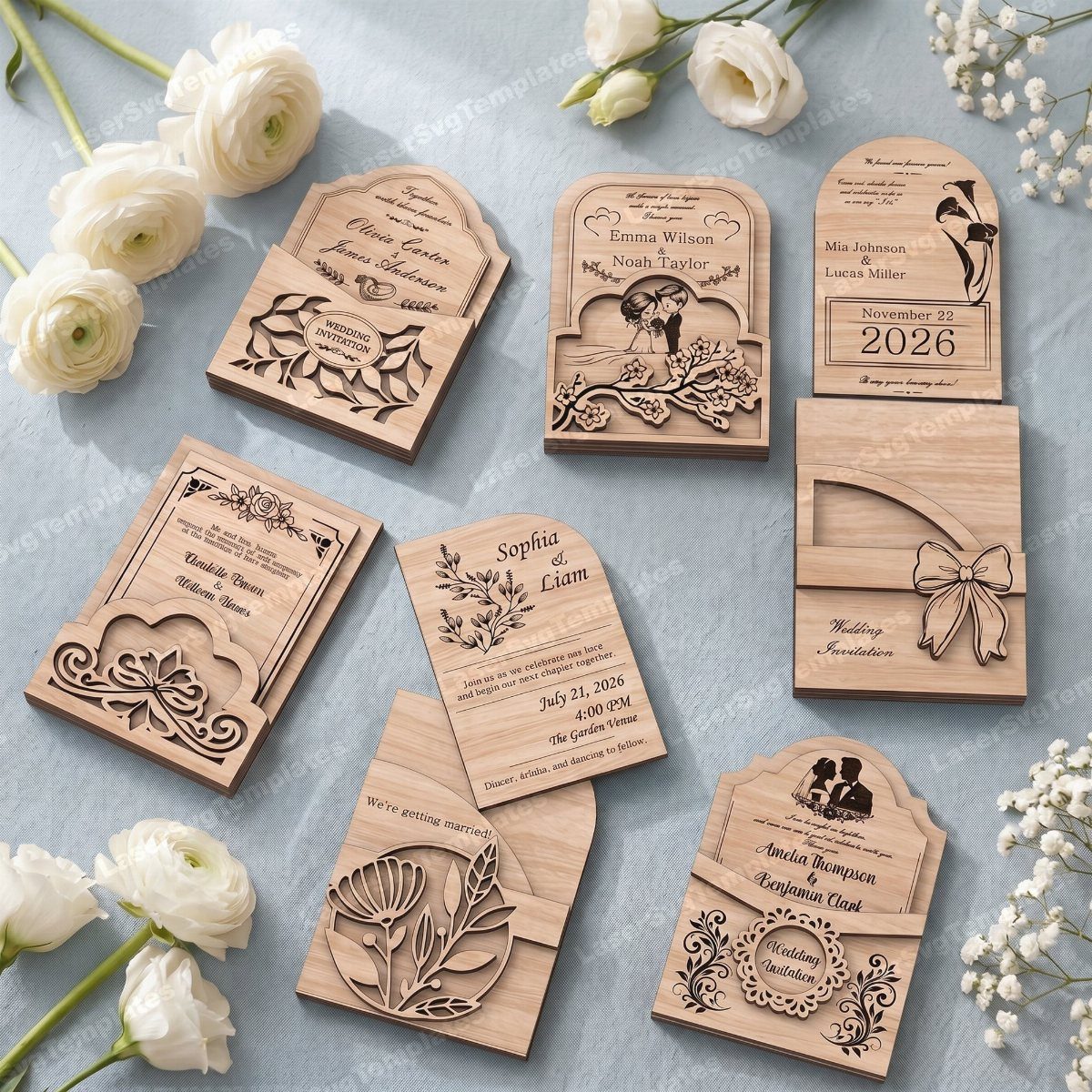
Laser cut invitations come from a range of companies, and comparing them is the real work here. Compare quotes from several shops side by side, and do it before you pay a deposit.
Ask each one for the same quote: your quantity, your material, and whether names and dates are engraved or printed.
Wood is one material to price, but ask about paper options too, since paper usually costs less per piece. I would order a sample from your top two before placing the full run, especially on a deadline.
3. Laser Cut Wooden Invitations
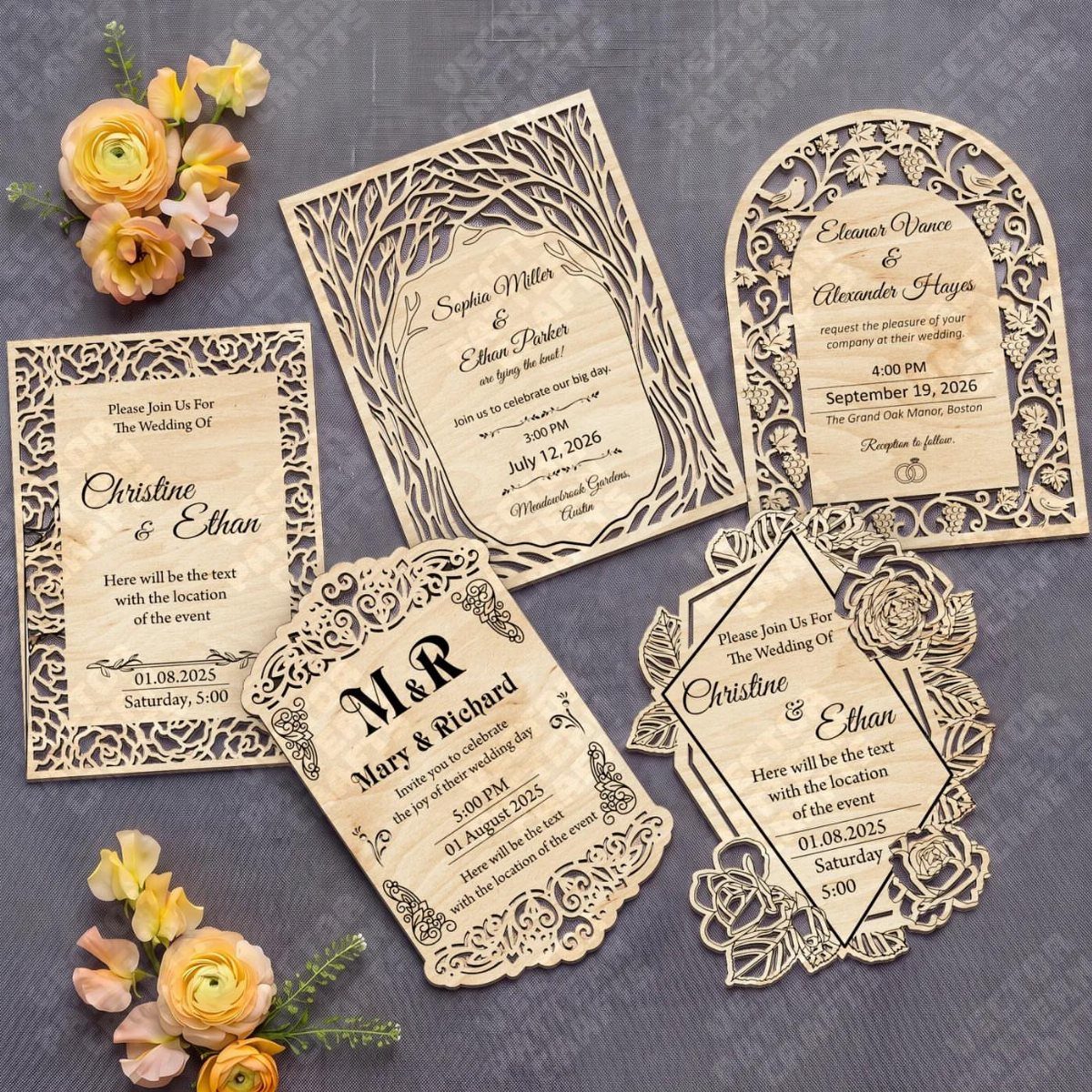
Wood changes how an invitation feels in the hand. Floral and geometric cutouts read clearly on a thin wooden panel, and printed names and dates stay legible when the cut work is kept away from the text.
Leave generous solid space around the wording. Busy cutouts crowding the lettering are the most common way a design like this goes wrong, and I would rather lose a petal than a date.
On a tight budget, cut a pattern only along the border and leave the center plain.
4. Laser Cut Lace Sleeves with Ribbons
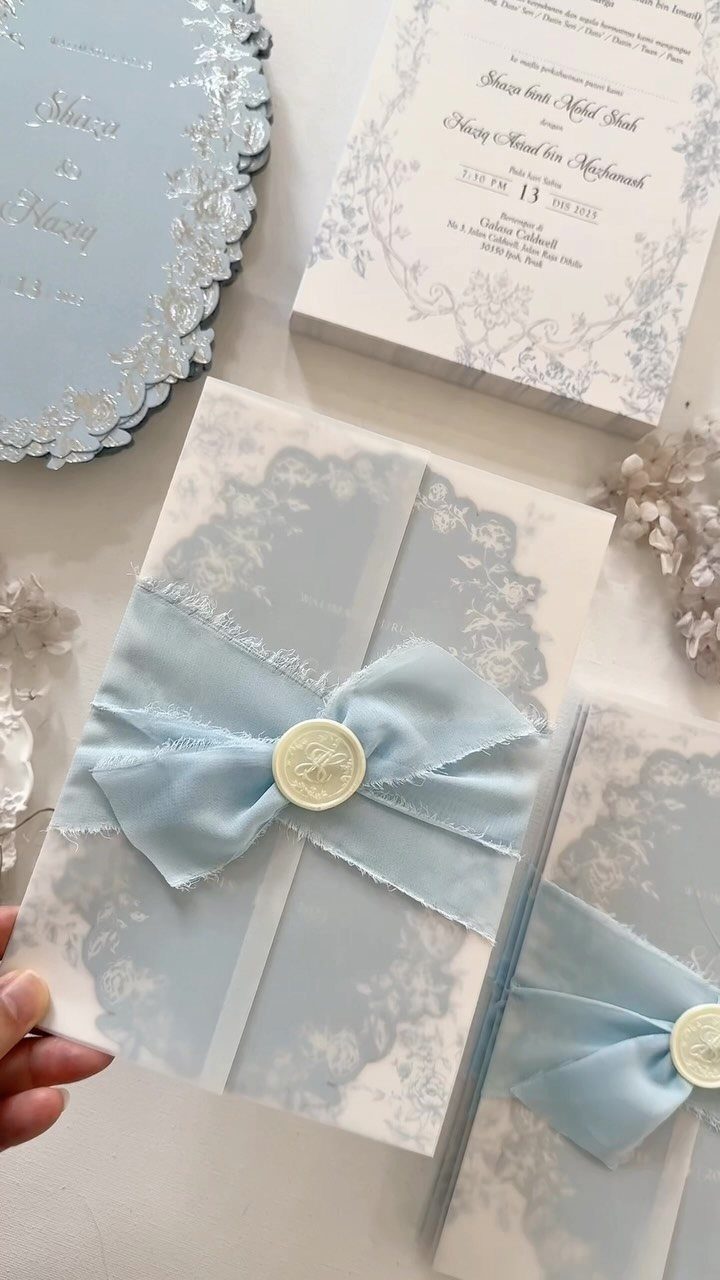
A lace sleeve gives a flat card a layer to slide out of, and pastel tones like light blue keep it soft rather than fussy. The ribbon and wax seal hold everything shut.
I like fabric ribbon here over paper ties, because it gives the sleeve some drape.
Order one extra sleeve to practice the knot and seal before you assemble the whole batch. Assembly is the hidden time cost, so budget evenings for it, or ask the maker to pre-tie.
5. Gold Laser Cut Pocket Folders
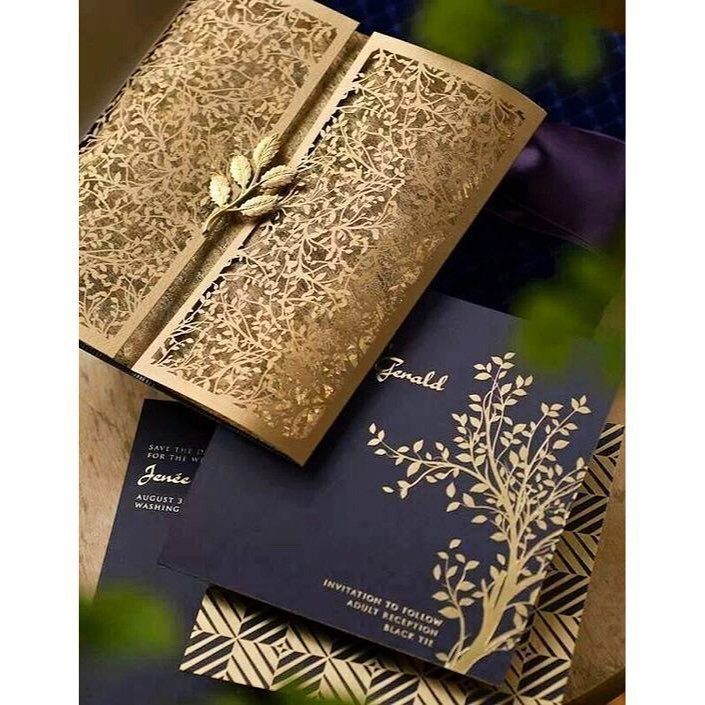
Gold against navy is a strong pairing, and a pocket folder lets you use it twice: the cut floral work outside, foil lettering on the card inside. That contrast is why I would pick this over a plain gold card.
The folder also gives you a pocket for extras. Slip in a details card or an RSVP, so one piece holds the whole suite.
Expect it to cost more than a flat card, since you are paying for the folder and the foil.
6. Intricate Laser Cut Envelopes
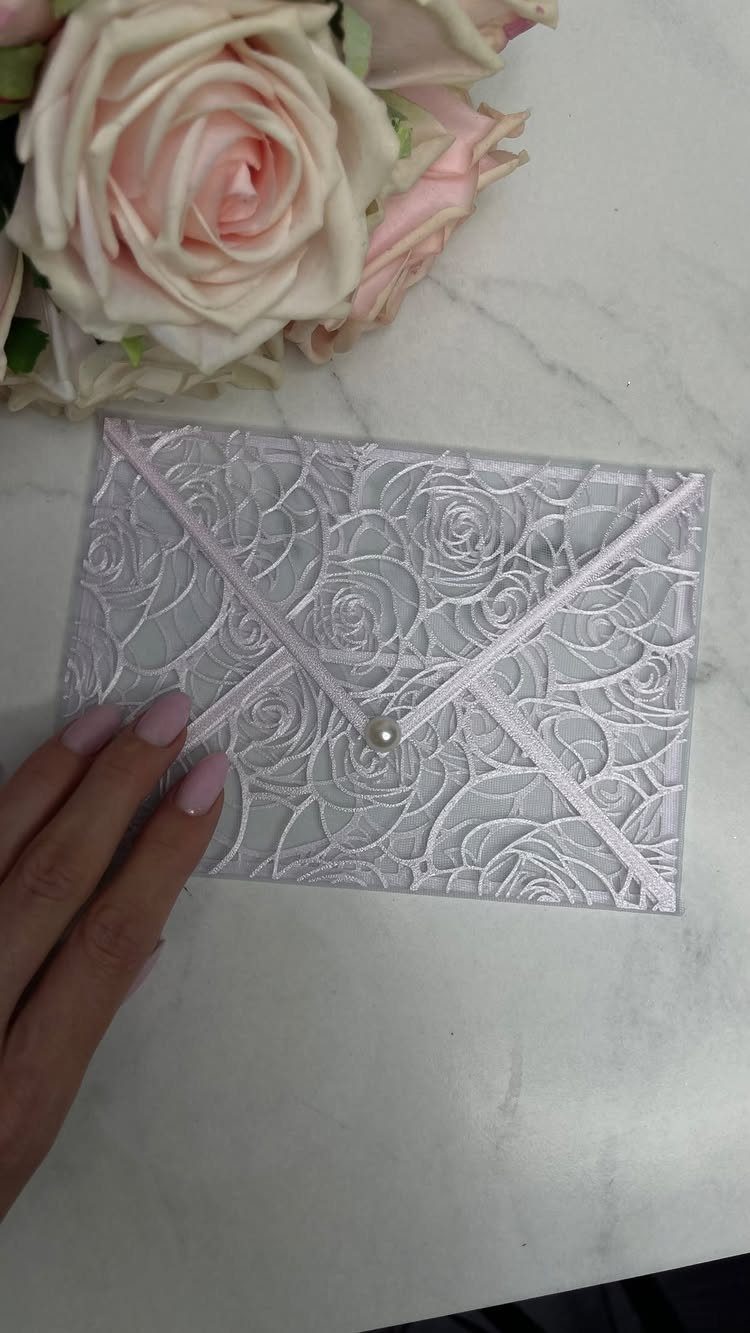
Rose cutouts on an envelope mean the first thing guests touch is already part of the design. A pearl closure instead of a flap sticker is a small change that makes it feel finished.
Keep the card inside simple so the envelope stays the star. Check with the post office before mailing, because the pearl and the cutwork may need extra postage; I would test one sealed sample first.
7. Rustic Motif Laser Cut Sleeves
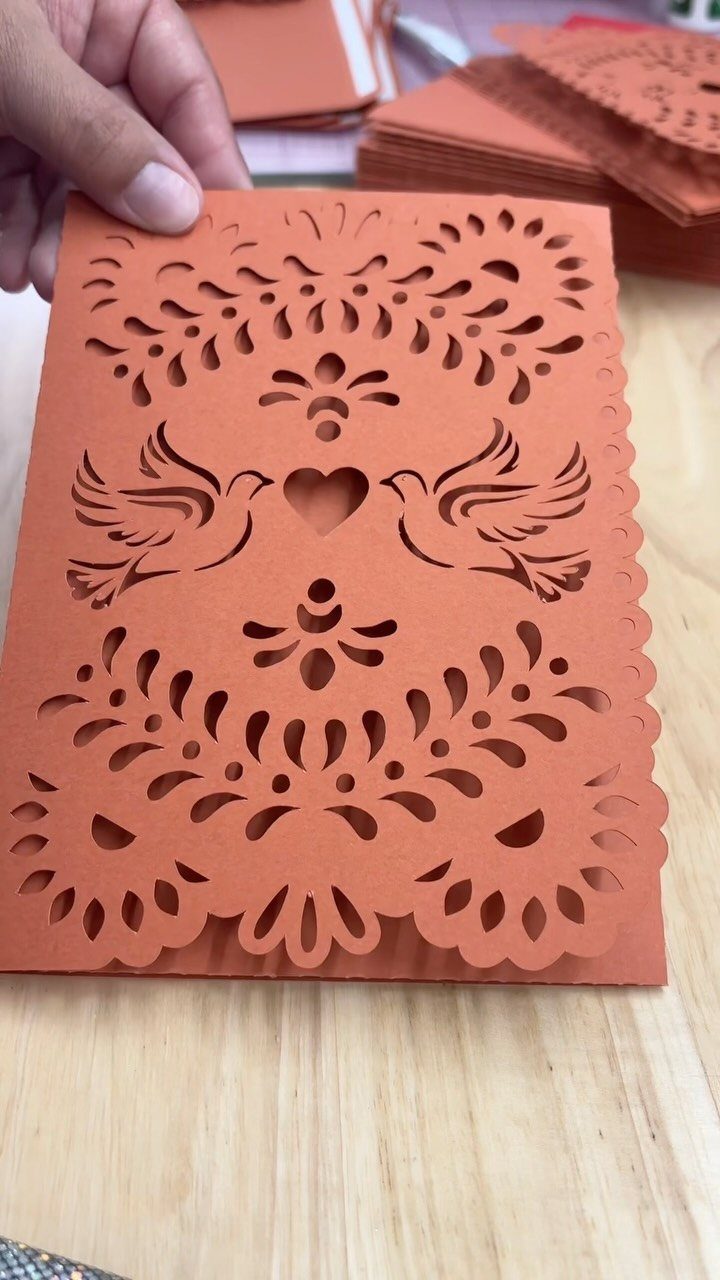
Terracotta gives a laser cut sleeve a warm, earthy base, and cutout lovebirds with a heart say "rustic" without a single piece of faux wood grain.
I would pick this over a floral sleeve for a couple who wants something personal but not fussy.
Choose a card color that contrasts with the terracotta, so the cutouts show a lighter layer behind them.
Stick to one focal point per sleeve, and have the maker send a sample first so you can judge the cut before paying for the full run.
8. Geometric Pattern Laser Cut Sleeves
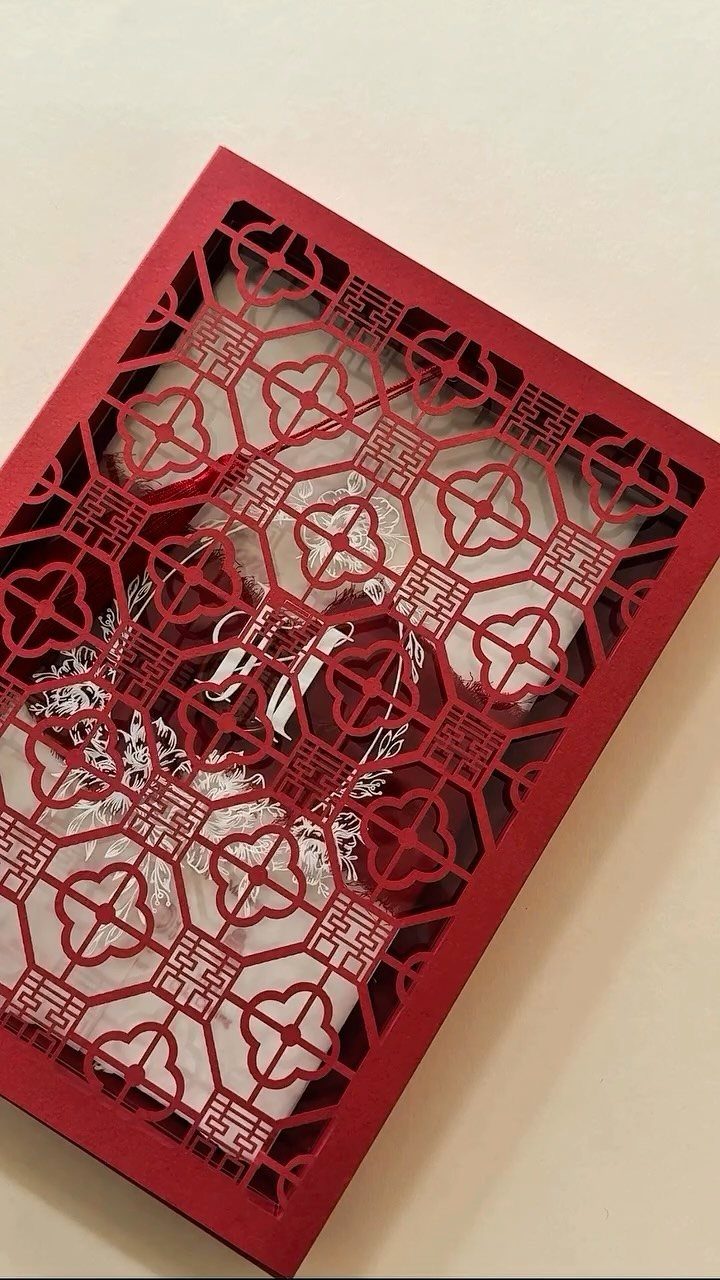
A red sleeve with a fine geometric grid reads as pattern first and as paper second. Against a plain white card, the contrast is sharp, and the printed red lettering on the card picks up the sleeve’s color.
I like this pairing because the sleeve does the decorating and the card stays simple. Match the card’s ink to the sleeve, as here, so the two feel like one suite.
Finer grids mean more cutting, so ask how the density affects price before you pick a pattern.
9. Laser Cut Acrylic Invitations
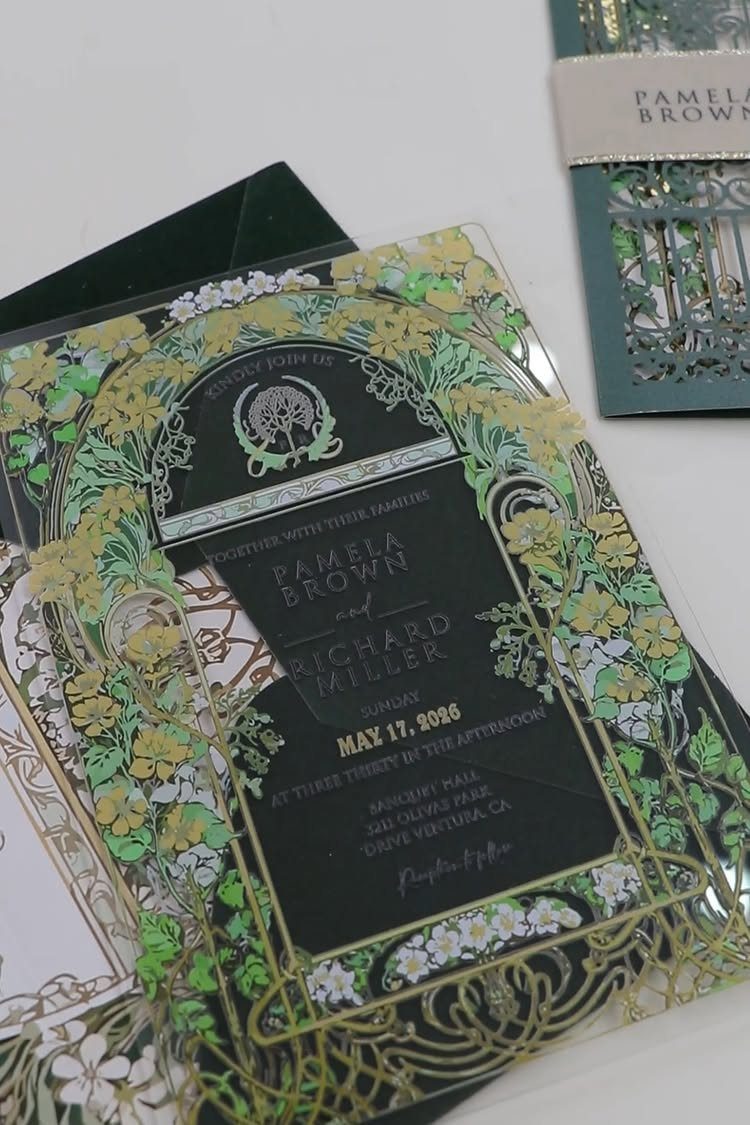
Clear acrylic makes the gold floral border seem to float, and a dark green envelope behind it gives that gold something to stand against.
Black text stays easy to read on the clear surface, which matters when the card carries names and a date like May 17, 2026.
I would choose a dark envelope every time with acrylic, since a light one lets the card disappear. Keep the wording short and leave clear space inside the border.
Test one mailed sample first, because acrylic is stiffer than paper and may need extra postage.
Customizable Options
Custom here can mean 2 things, and the cost and effort differ a lot.
You can hand a shop your colors, wording and theme and let them cut it, or you can design the cut file yourself from a downloadable template.
Templates suit a couple who likes working on a screen and has the evenings to spare. Shops suit everyone else, and I would go that route if the wedding is on a deadline.
Whichever you pick, decide your colors and wording before you ask for anything. Changes after a cut file exists are where time and money slip away.
If you do the work yourself, the steps run in a clear order: choose the material, print the interior text, find a template file, set up the cutting machine, then assemble.
Print the text first, so the cut work can be planned around it.
Turnaround Time
Laser cut invitations need 3 to 4 months of lead time, counting back from the day you say your vows. That window covers production and shipping, and it leaves room for a sample and a fix if something looks off.
A rush tier at some shops gets the package to you 1 to 2 days after printing wraps up; it rescues a late schedule, though it raises the total.
If the deadline is already tight, call the shop instead of placing an order online and ask what they can do. Some will work with a rush, and it is better to hear that before you pay a deposit.
Remember that you still need time after delivery to address, assemble and mail every invitation.
Frequently Asked Questions
What are laser cut wedding invitations?
They are invitations shaped by a laser cutting machine, which burns fine patterns like florals, monograms or geometric grids into paper, wood, acrylic or fabric-style sleeves.
The cutwork can sit on the card itself, on a sleeve or pocket folder around it, or on the envelope.
Can I see a sample of the invitation before ordering?
Yes, and I would insist on it.
Many companies offer sample kits, so order one from your top two shops before committing to the full run. A sample lets you judge the cut quality and test the postage on a sealed envelope before you pay for everything.





