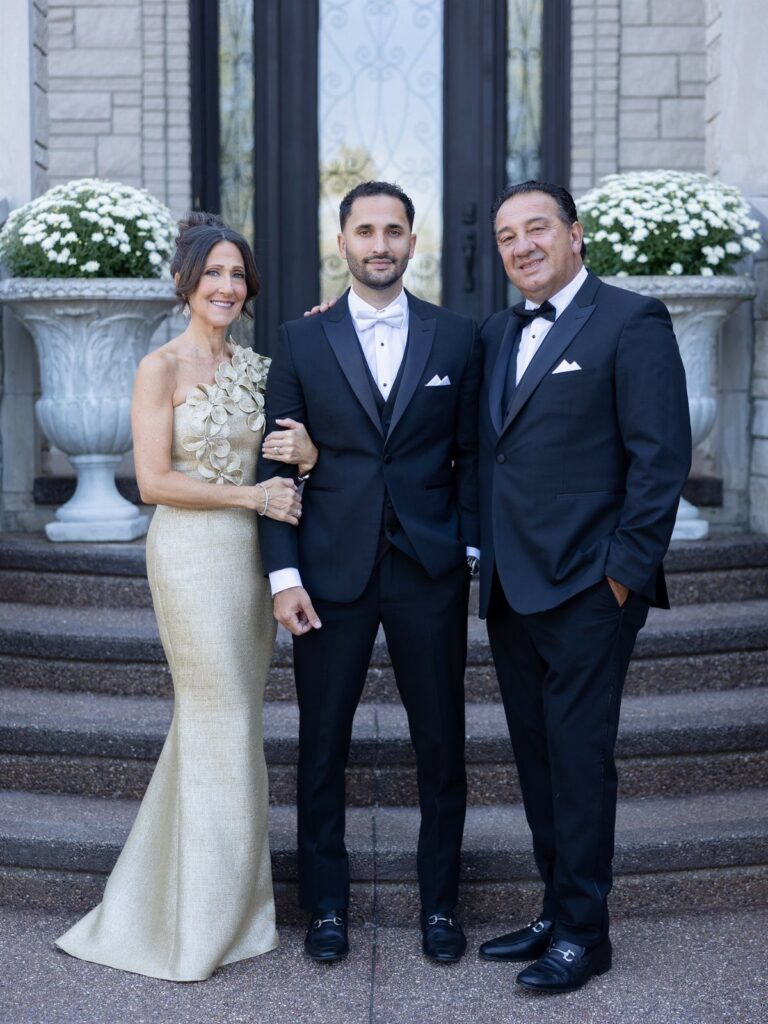
A wedding day schedule is built around a few fixed events, and the list below runs from a first look before the ceremony to a ribbon send-off as the last item.
Which moments earn a slot depends on whether you’re doing a first look, how many family portrait combinations you’re shooting, and whether the reception includes a grand entrance, first dance and cake cutting.
Pad the key stretches, since hair and makeup, family portraits and travel between locations all run long, and give the send-off its 10 minutes of lead time so guests are standing ready when the couple leaves.
1. Send-off
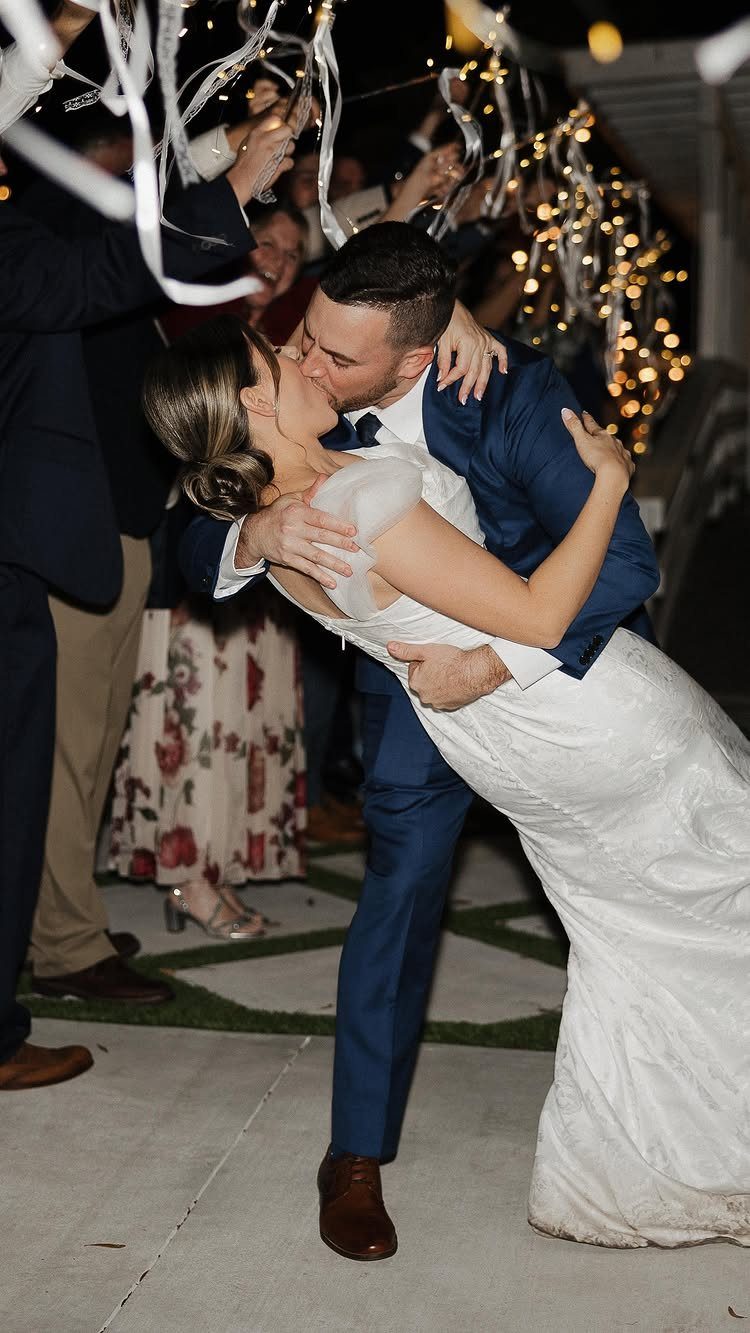
Ribbon sends work best when the exit is the last item on the schedule, with nothing waiting behind it.
Hand the ribbons out in a basket or at the door about 10 minutes before the couple leaves, so guests are standing ready and the line forms fast.
White streamers show up best against a dark sky, so save them for an evening send-off and skip them if the exit happens in daylight. Stop for a kiss halfway down the line; that is the frame everyone will want.
Tell your photographer the exact time so they can be in position.
2. Family Portraits After the Ceremony
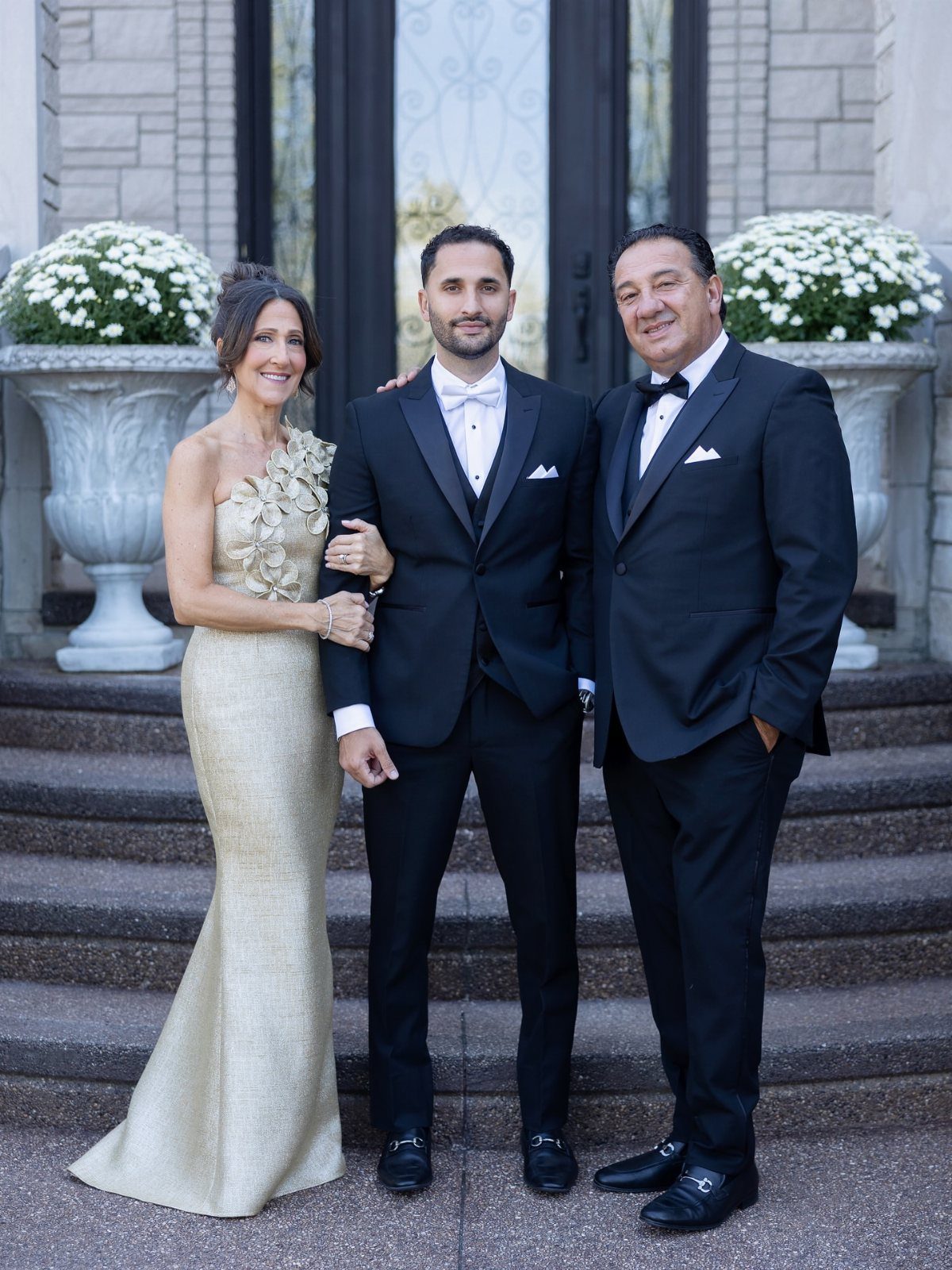
Family portraits go right after the ceremony, while everyone is still dressed, nearby and in a good mood. Write the list of groups before the wedding, largest first, and give it to your photographer.
Name one relative to round up each side of the family. Guests drift off toward the bar quickly, and a person who knows everyone saves you more minutes than any other trick.
Keep family portraits short, and limit the groups to the ones you truly want on your wall.
3. First Look Photos
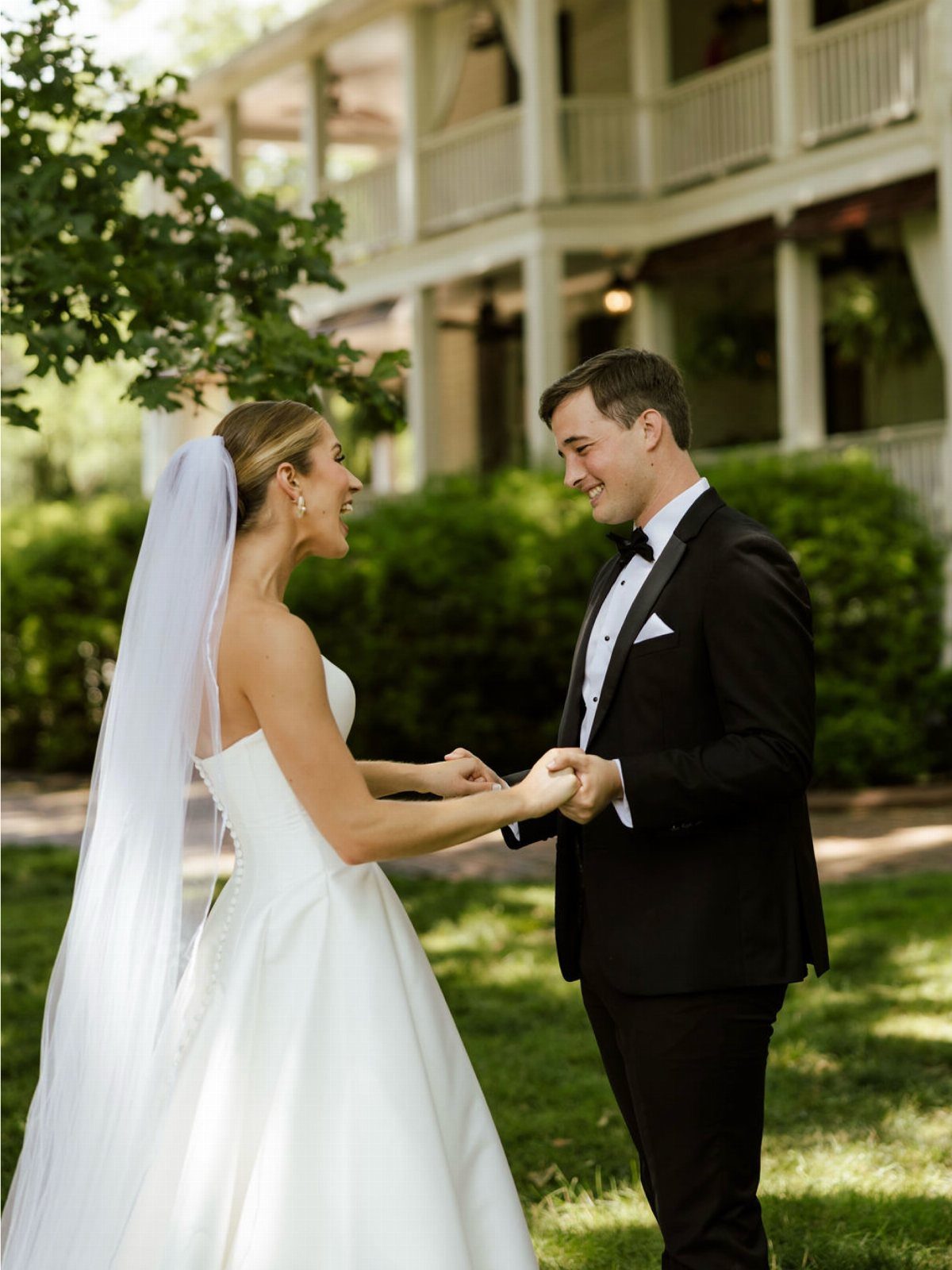
Seeing each other before the ceremony buys you something a traditional schedule can’t: quiet. A first look puts the couple together alone, hands held, with only the photographer nearby, and the nerves tend to settle fast.
I would schedule it well before the ceremony, with time for hair and makeup to be finished. Pick a spot with clean backgrounds, like a plain white building, so the focus stays on the two of you.
It also frees up cocktail hour, since couple portraits are already done.
4. Grand Entrance
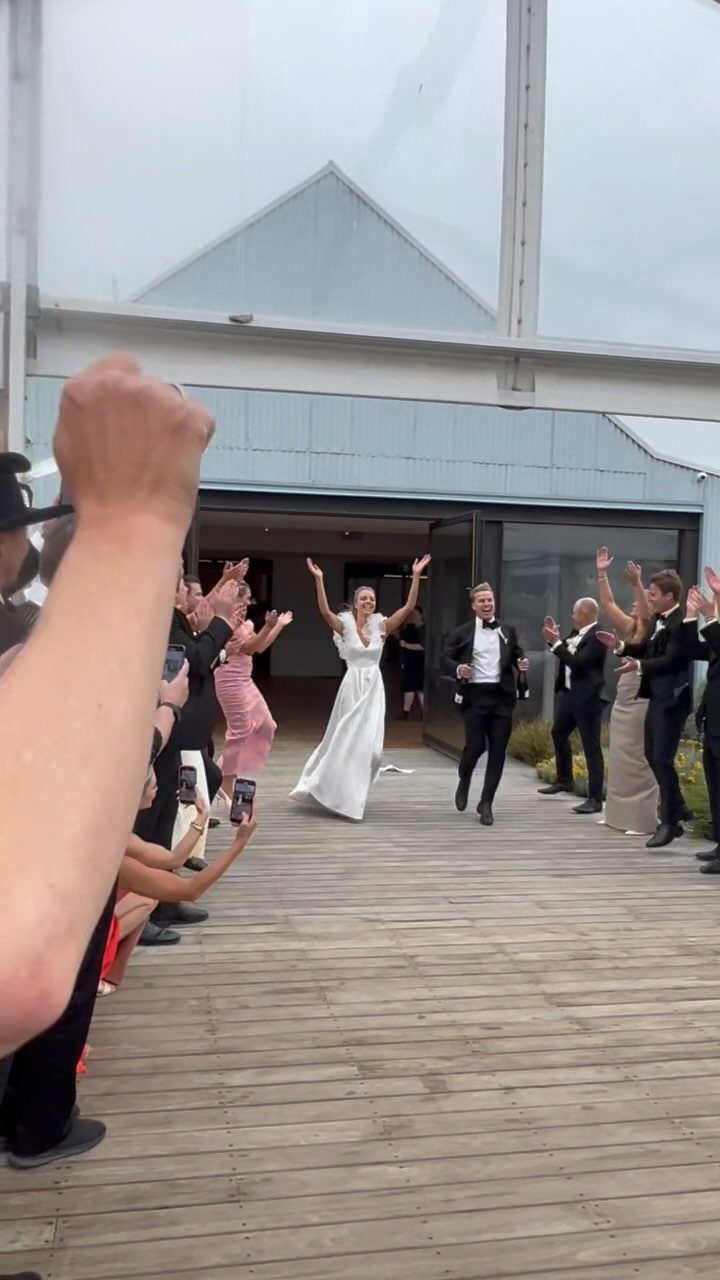
Guests who have waited through cocktail hour will cheer for almost anything, so give the entrance a clear moment. Have the DJ or emcee announce the couple by name, and cue a song you both like.
Ask guests to be seated or gathered at the entrance first. A crowd already in place, like the one on this deck, makes the moment feel big even at a small wedding.
Keep it brief: walk in, wave, and head to your seats.
5. First Dance
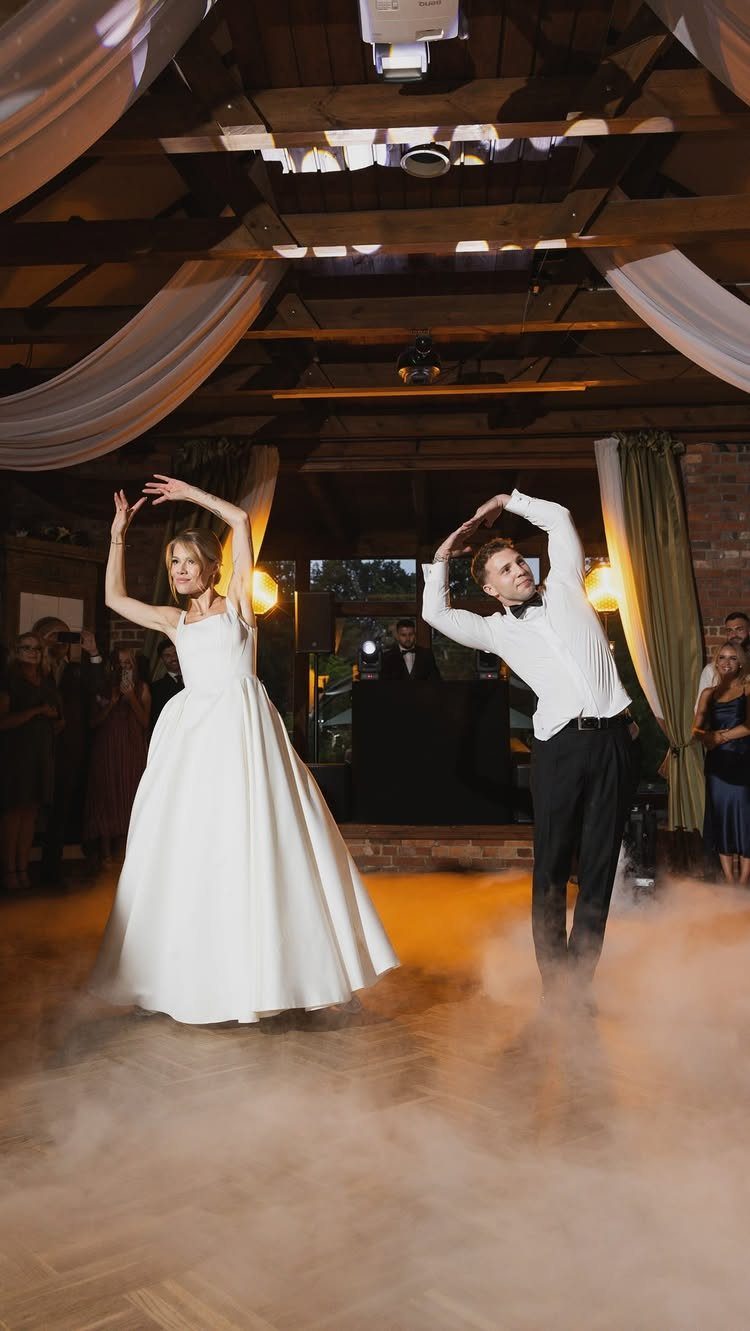
A first dance doesn’t need choreography, just a song you can stand to hear for its whole length.
Many couples cut it down to the best part of the song, and I think that is smart if either of you dreads being watched.
Fog is a lighting and effects choice, so ask your venue or DJ whether they can provide it. It adds cost, so weigh it against the rest of your budget.
Decide beforehand whether guests join in partway through.
6. Cake Cutting
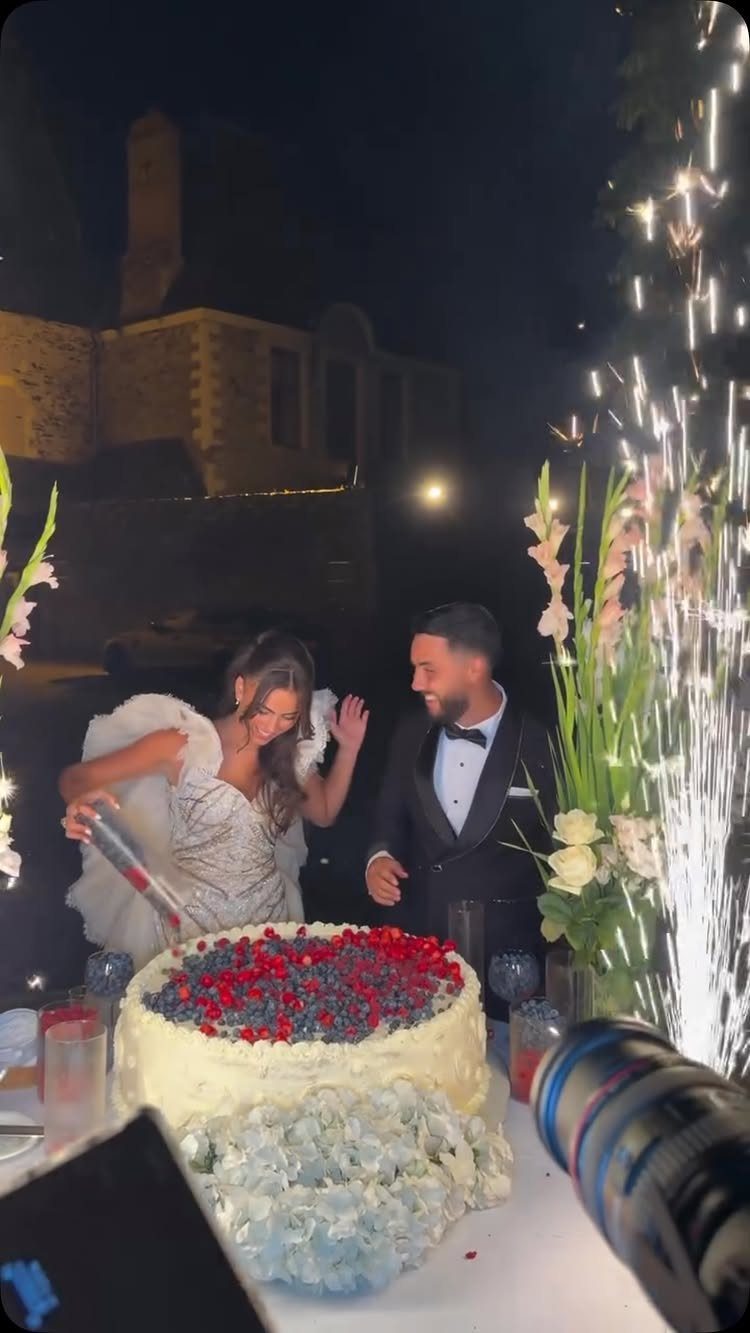
Cake cutting is a short, staged moment, so it needs a spot where everyone can gather around. Ask your DJ or emcee to announce it, and set the cake on a table with room for the photographer to stand close.
Both of you hold the knife and cut a single slice together.
Hand the cake to the caterer right afterward so it can be served.
Communication with Vendors
Send every vendor the same one-page timeline, and ask each of them to reply with what they need from it.
A photographer will tell you how long they want before the ceremony, and a caterer will tell you when the meal has to be served.
Those answers often clash. Settle the clashes on paper weeks ahead, not in the hallway on the wedding day.
Share any changes with all vendors at once, so nobody works from an old version. A last-minute surprise usually comes from one person holding a different draft.
Importance of Early Planning
Start by pinning down the anchor events: the ceremony, the reception, the toasts and the first dance, since everything else gets slotted around them.
Once those are fixed, everything else gets built around them, and you can see where the gaps are.
Starting early also gives you room to change things. If a vendor needs more time than you gave them, you can shift the day without a scramble.
Hand out jobs while you still have time. Hand out jobs to specific people in your wedding party or family, so nobody is guessing who is wrangling the cake cutting or the photo lineup.
Think about your guests too. When the ceremony and reception are in different spots, add real drive time between them, plus a cushion for loading up and parking.
Realistic Timing for Events
Most timelines run late because the small stuff takes longer than it looks. Rounding up relatives for group shots, lining up portraits with the wedding party, and even a short stroll between locations will each quietly eat into your minutes.
Getting ready is the other big one. Hair and makeup tend to run behind, and buttons, zippers and bow ties all slow things down.
I would add a cushion around portraits and getting ready, and another between events for traffic or a touch-up. You will use it, and the day feels calmer for it.
If you want extras like favors or a photo booth session, give them their own slot on the schedule.
Frequently Asked Questions
How long is a typical wedding day?
Most wedding days run 8–12 hours from prep to the end of the reception. Guest count, travel between venues and how complex the day is push it toward one end or the other, and a first look adds an earlier start.
What is a first look?
In a first look, the two of you meet privately before the ceremony, with just the photographer close enough to catch it.
I like it for 3 reasons: nerves calm down, most couple portraits are done early, and cocktail hour stays yours to enjoy.
Book it well ahead of the ceremony, once hair and makeup are finished, and pick a spot with a plain, uncluttered backdrop.
What time should hair and makeup start?
Count back from the dress: hair and makeup should wrap up 60–90 minutes before you put it on, and that sets your start time.
Beauty appointments almost always run long, and fiddly buttons, zippers and bow ties eat more minutes, so start earlier than the math says.





