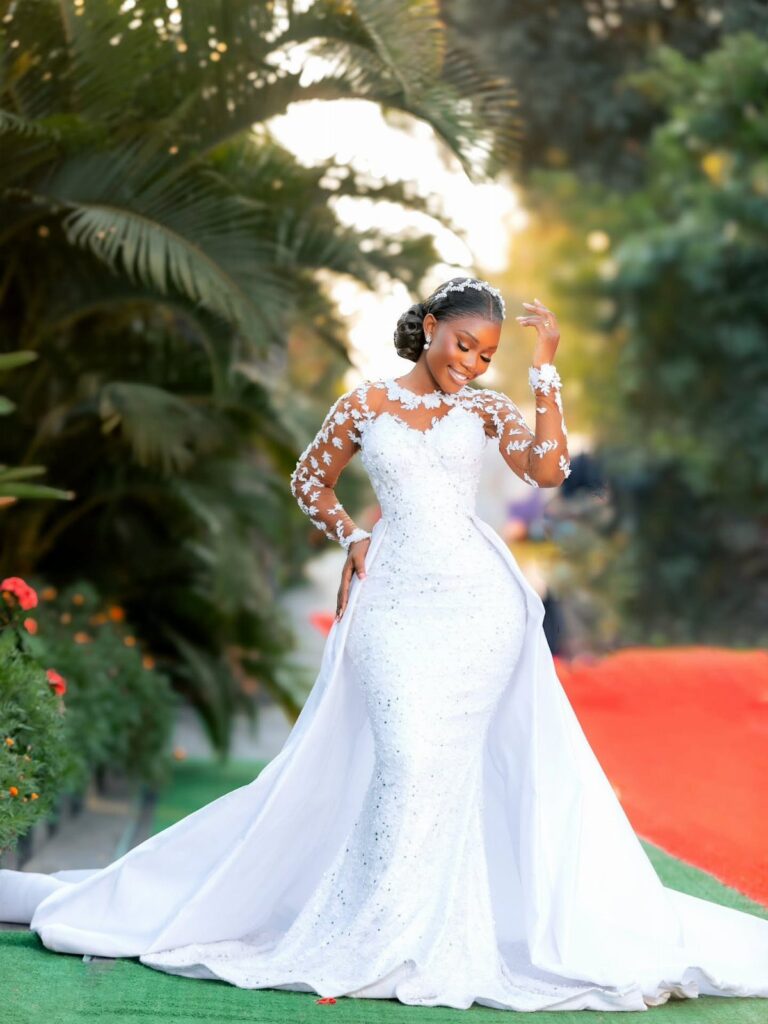
Planning order follows what takes longest and costs most: the dress and the venue sit near the top because attire can take months to arrive and then needs fittings, while the space fixes your date, your guest count and a good share of your budget.
1. Finalize Wedding Attire
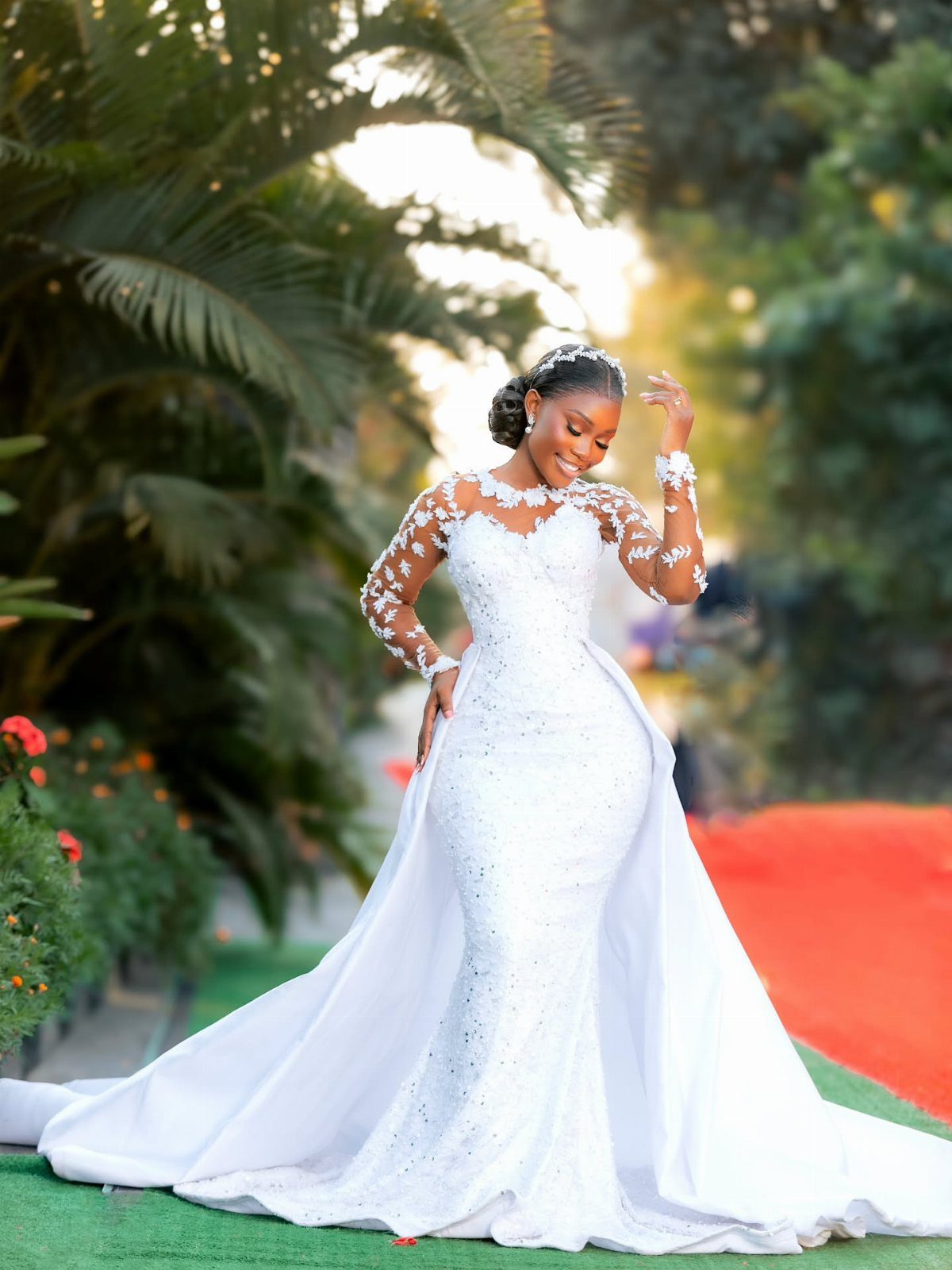
A long train like the one on this lace gown changes how you plan, so settle the dress early and let everything else follow it.
Order for the couple comes first, then the wedding party’s outfits, which should match its level of formality.
Dresses often take months to arrive and then need fittings, which is why I put attire near the top of the list.
Before you shop, set a firm cap for the whole group, and count alterations in it, especially when money is limited.
2. Select a Venue

Booking the venue comes before nearly every other decision, because the space sets your date, your guest count and a good share of your budget.
I would tour at least a few options and ask what is included: tables, chairs, lighting and drapery all add cost when they are not. Check your preferred dates before falling for a room.
3. Save-the-date Cards

Mailing a save-the-date is the first thing guests receive, and it only has to carry your names and the date, plus the city so guests can start thinking about travel.
A photo card with a punched hole and metal eyelets is a small DIY project that suits a modest budget.
Send them early, before the formal invitations, so people can hold the day. A hole puncher and a box of eyelets run well under the price of a custom print run, though assembling each card takes patience.
Importance of Communication
Start with just the two of you: each write down your 3 biggest priorities separately, then compare the lists before anyone else weighs in. Then compare the lists.
Expect some compromise. After you agree on the must-haves, point your money at those first and shrink everything else to fit what’s left.
Bring parents and anyone else who is contributing into the conversation early, with those priorities already settled. A united front makes it easier to say no to extras that nobody on your list asked for.
Managing Expectations
Set a realistic budget before you do much else, and talk through the numbers with your partner and with any family who will be paying. Everything after that depends on knowing what you’re working with.
Online budget tools with average percentages help, but national averages can miss badly depending on where you marry.
Ask recently married friends and vendors you like what things really cost in your area. A small town wedding can also cut costs.
Pinterest weddings need a reality check. Most couples can’t spend $50,000 on flowers, yet a pared-down take on the arrangement in a photo you love is often within reach.
Finances may not be the most glamorous part of planning, but they’re crucial. Setting a realistic wedding budget is one of the first steps to planning a wedding.
Time Management
The earlier you lock in a date, the better. Popular venues fill their weekends fast, and you will need time to check dates with must-attend family and friends.
Bring 3 candidate dates to every venue tour; that way you can compare what the same place charges on each, or see which other options open up.
If time is short and one venue has your heart, ask what’s open there first and build your dates around the answer.
A weekday wedding gives you more wiggle room when money is tight.
Settle on a rough budget and a guest count before you book a single tour. Those 2 figures rule venues in or out before you ever see a floor plan.
Frequently Asked Questions
What is the first step to wedding planning?
Write down your top 3 priorities separately, then swap lists and talk through what matters most to each of you.
Agreeing on the must-haves first gives every later choice, from budget to venue, something to be measured against. Taking a week or two to simply enjoy being engaged before you start is fine, too.
How long does it take to plan a wedding?
Most couples plan 12–18 months out, since the best vendors book up in that window. Peak-season Saturdays book 12–14 months out, sometimes more, so I’d start the venue search a full year ahead if that’s your target date.
An off-season or small wedding can come together in 6–9 months, and some couples have pulled one off in as little as 2 months.
Do I need a wedding planner?
No, a planner is optional, and you can make the early decisions yourself.
A planner pays off when you’re managing half a dozen vendors at once, or when the wedding is out of town, unusually large, or being planned in under 6 months.
A day-of coordinator who takes over about a month to 6 weeks before the wedding is a middle path worth pricing.





